Case file · Britain, the United States, France, Poland · 1981–2026

Road to Unfreedom

The demoralisation of Western societies, Britain and the United States first, read through Yuri Bezmenov’s four stages by a man born in the Polish People’s Republic who has lived in Britain since 2003. It follows the laws, rules and movements that changed what a person may say, do and refuse, from martial law in Poland to the curfews in Paris in October 2026.

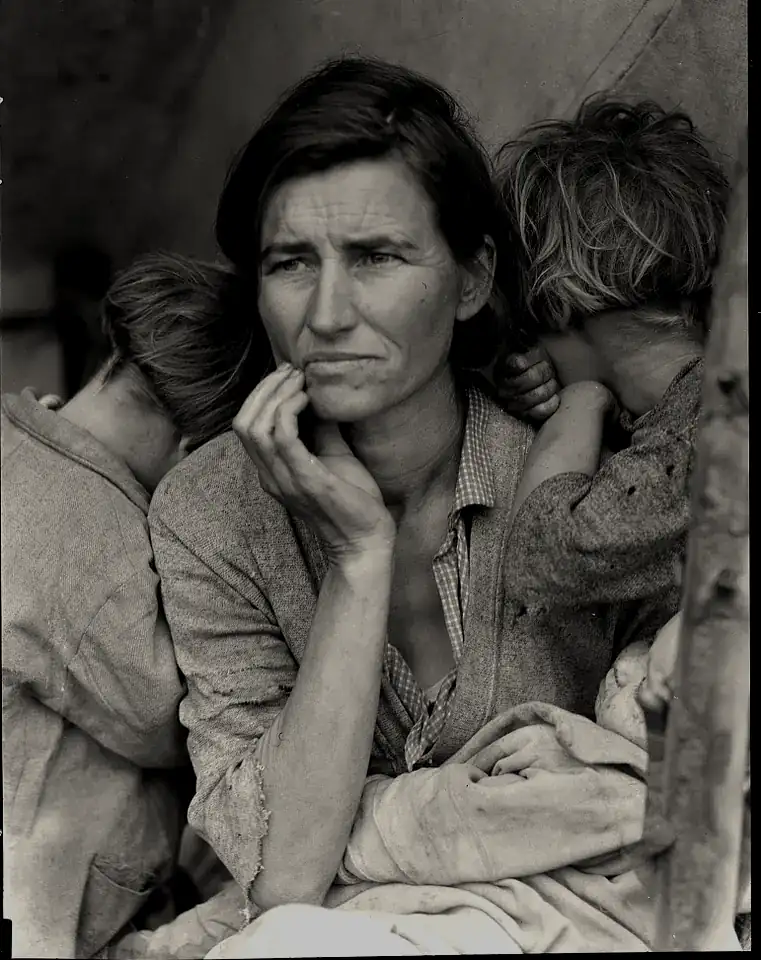
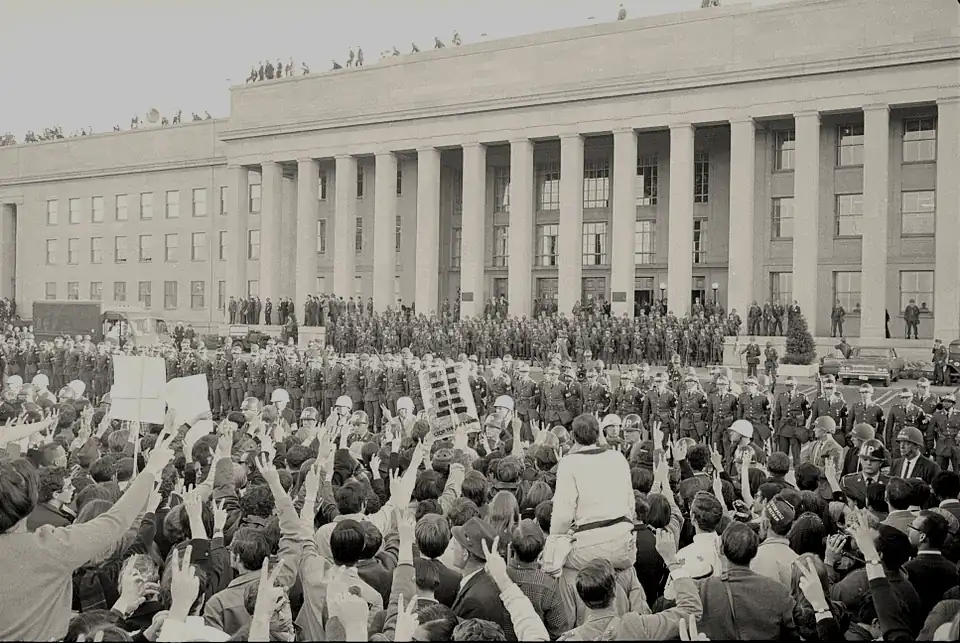
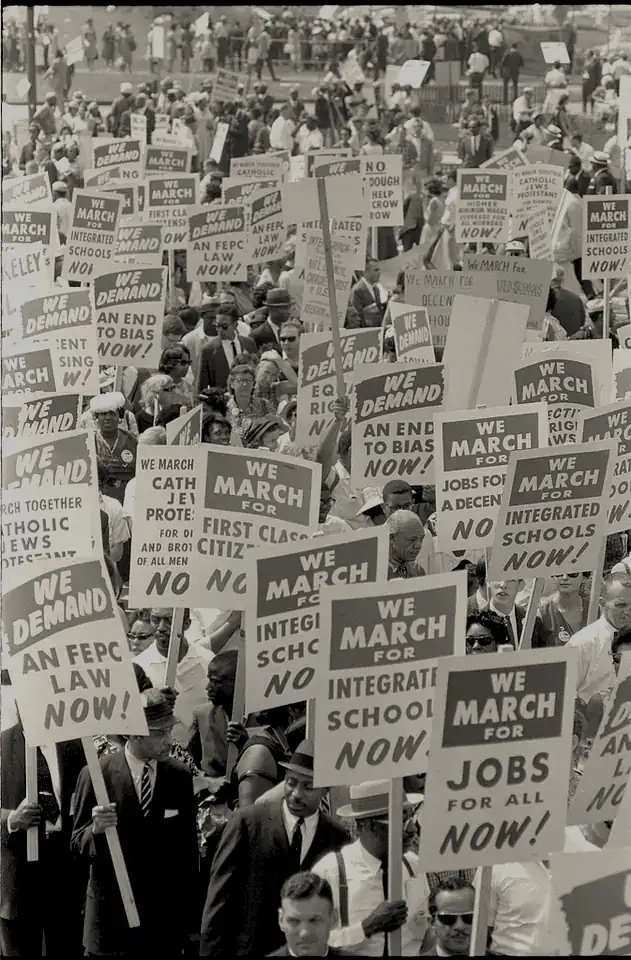
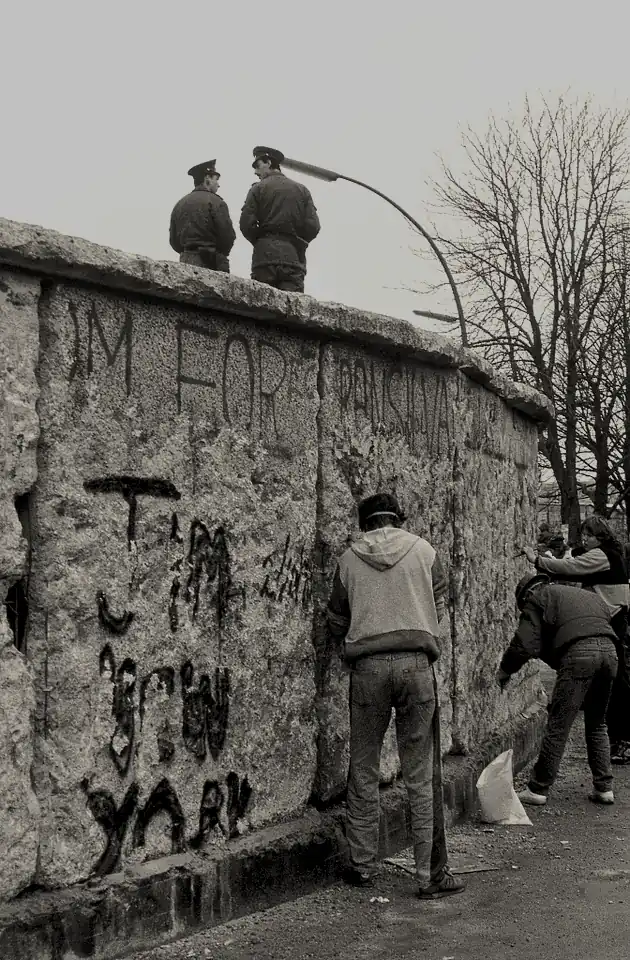
Filed 24 October 202624 entries70 sourcesCover · Library of Congress photographs

The road runs from 1981 to October 2026

Reader’s note · who writes this, and on what grid

Yuri Bezmenov’s four stages of subversion, applied to the West, 1959–2026

This file reads Western societies, Britain and the United States first, through one model: Yuri Bezmenov’s four stages of ideological subversion. Its subject is a process, not one man’s life. Bezmenov said the first stage works through schools, universities, churches and the press, so the chart below sets his stages against the revolutions in American media, from network television to the phone in every pocket. I was born in the Polish People’s Republic, was a child under martial law, and have lived in Britain since 2003; my own dates run through the file as one thread, marked as mine. I write in October 2026, during the curfews in Paris. Each entry has a dated log with sources; the paragraphs around it are my reading of that log.

Yuri Bezmenov (1939–1993) studied Indian languages in Moscow and worked for the Soviet press agency Novosti in India, which he described as a cover for the KGB. He defected in New Delhi in 1970 and settled in Canada. In 1984 he set out a model of ideological subversion in an interview with G. Edward Griffin and in lectures, and said that in the United States the first stage was already complete, after about 25 years. The model has four stages, each with a duration:

  1. 1Demoralisation · 15–20 years. The time needed to educate one generation of students in the target country’s schools, universities, churches and press. At the end, he said, a person can no longer judge true information.2003–2017 here
  2. 2Destabilisation · 2–5 years. The economy, foreign relations and defence are unsettled; groups are radicalised against each other; institutions stop working as before.2017–2020 here
  3. 3Crisis · up to 6 weeks. A sudden emergency in which ordinary rules are suspended and power can change hands.2020 here
  4. 4Normalisation · indefinite. The new order declares itself normal. Bezmenov took the word from Soviet usage after the invasion of Czechoslovakia in 1968.2020– here

Limits. Bezmenov gave testimony, not research. Historians of Soviet disinformation, for example Thomas Rid in Active Measures (2020), document such operations from archives; Bezmenov’s timetable is his own and has not been tested that way. The dates in this file are my mapping onto his grid, not his predictions, and the chart below shows where they fit and where they do not. Nothing here claims that one agency planned the events of 2003–2026.

Bezmenov’s stages in the West, with the revolutions in American media, 1955–2030

Medium, from launch to nowBefore the fileStages as this file dates themEnd of the stage as Bezmenov predicted it

Each medium runs from its American launch to now, and none has replaced the ones before it: since 1980 a new one has arrived every 4 to 12 years. Bezmenov dated the first stage in the United States himself (Bezmenov 1984); the later dates are this file’s mapping onto his grid. Launch dates: US media.

Soviet film posters, 1927–1929

The poster of the planned state, taken apart

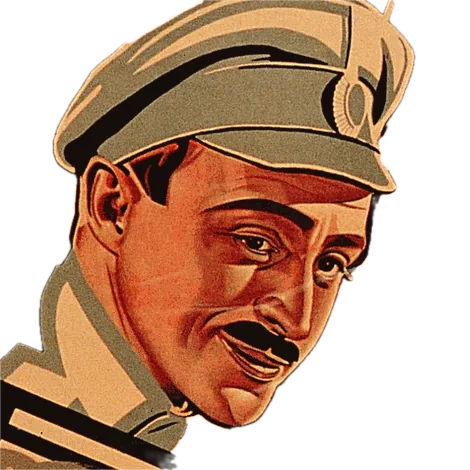
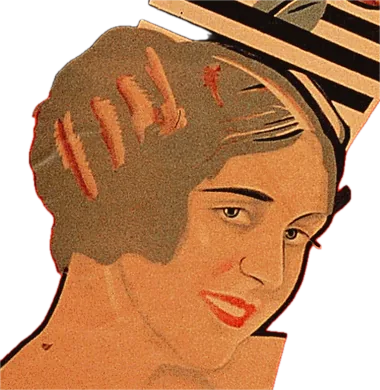
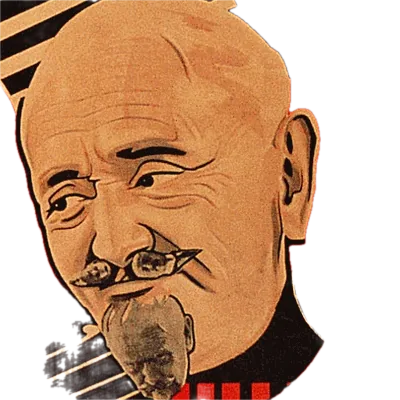
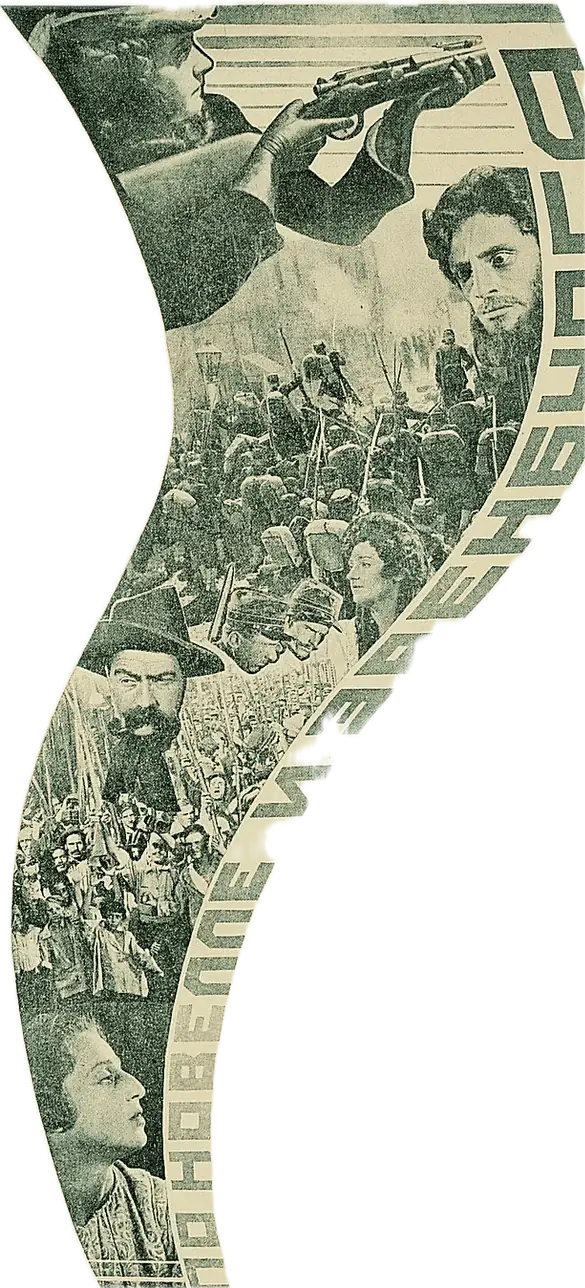
The Soviet state sold its revolution on paper. Nikolai Prusakov drew this poster for the Georgian film Pervyi kornet Streshnev (The First Cornet Streshnev) in 1928. My parents’ generation grew up under the same pictures. Scrolling takes it apart.

Cut-outs: N. Prusakov, 1928

1848–2026 · The books behind the file

The source texts, 1848–2026

The movements that changed Western societies refer back to these authors, from the Manifesto of 1848 to the decolonising university of the 2020s. Seven epochs, the last of them the witnesses; beside each, more books from the same years, coloured by school.

MarxistFeministLGBTQDecolonial and raceCulture and mediaCountercultureCriticsTestimony

Epoch I · 1848–1924

Revolution

The class war, the vanguard party and the seizure of the state.

Marx · Lenin · Trotsky

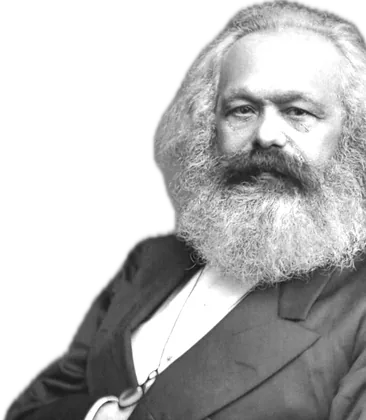
Karl Marx, photographed by John Mayall, 1875

Karl Marx1818–1883

The Communist Manifesto (1848, with Friedrich Engels) · Capital, volume 1 (1867)

The history of all hitherto existing society is the history of class struggles. Capital grows from the unpaid labour of workers. A proletarian revolution will abolish private property and, in time, classes and the state.

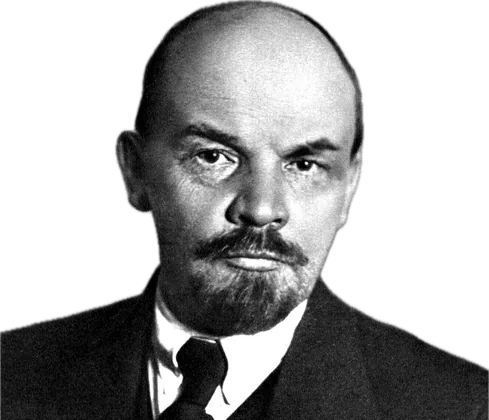
Vladimir Lenin, 1920

Vladimir Lenin1870–1924

What Is to Be Done? (1902) · Imperialism, the Highest Stage of Capitalism (1917) · The State and Revolution (1917)

Left to themselves, workers reach only trade-union demands; a vanguard party of professional revolutionaries must lead them. The old state is to be smashed and replaced by the dictatorship of the proletariat. In power from 1917: the Cheka, the Red Terror, one-party rule.

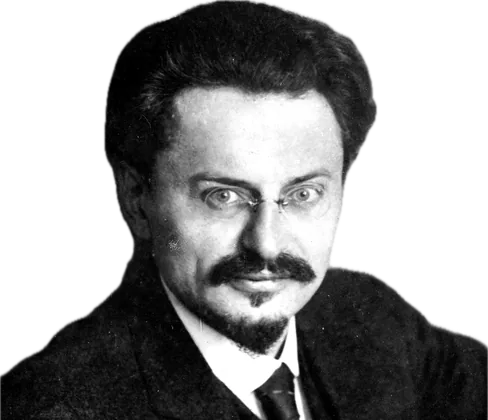
Leon Trotsky, 1918

Leon Trotsky1879–1940

Terrorism and Communism (1920) · The Permanent Revolution (1930) · The Revolution Betrayed (1936)

The revolution must spread from country to country or die. As commissar for war he defended the Red Terror and the militarisation of labour; in exile he blamed Stalin’s bureaucracy for betraying the revolution. Killed on Stalin’s orders in Mexico in 1940.

Epoch II · 1926–1961

Hegemony

Power held through culture: Gramsci’s hegemony, Münzenberg’s front organisations, Bernays’s engineered consent, Beauvoir’s Other, Fanon’s colonised mind.

Münzenberg · Gramsci · Bernays · Beauvoir · Fanon

Willi Münzenberg1889–1940

Workers International Relief (1921) · Arbeiter-Illustrierte-Zeitung (1924) · The Brown Book of the Reichstag Fire and Hitler Terror (1933)

The Comintern’s propagandist in the West. From Berlin, and from 1933 in Paris, he ran illustrated papers, film companies and a chain of front organisations, from the League Against Imperialism (Brussels, 1927) to the World Committee Against War and Fascism (1932), which drew in writers and scientists who were not communists. He called them Innocents’ Clubs. He broke with Stalin, was expelled from the German party in 1939, and was found dead in a wood near Saint-Marcellin in October 1940.

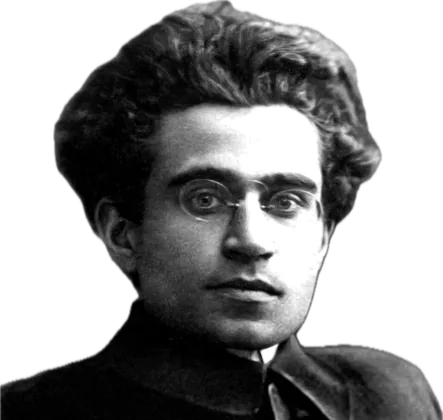
Antonio Gramsci

Antonio Gramsci1891–1937

Prison Notebooks (written 1929–1935, published from 1948)

A ruling class holds power by consent as much as by force: cultural hegemony, the common sense taught by schools, churches and newspapers. In the West revolutionaries must first win a war of position inside culture and its institutions.

Edward Bernays1891–1995

Crystallizing Public Opinion (1923) · Propaganda (1928) · “The Engineering of Consent” (1947)

Freud’s nephew, and the propagandist on the other side. Propaganda opens: The conscious and intelligent manipulation of the organized habits and opinions of the masses is an important element in democratic society. On Easter Sunday, 31 March 1929, he had young women walk down Fifth Avenue smoking what he called torches of freedom, for the American Tobacco Company. In his memoirs he wrote that Goebbels had used Crystallizing Public Opinion.

Simone de Beauvoir1908–1986

The Second Sex (1949) · The Mandarins (1954)

One is not born, but rather becomes, a woman. Man is taken as the norm and woman is defined as the Other; femininity is taught, not given. In 1971 she wrote the Manifesto of the 343, in which French women declared that they had had illegal abortions.

Frantz Fanon1925–1961

Black Skin, White Masks (1952) · The Wretched of the Earth (1961, preface by Jean-Paul Sartre)

A psychiatrist from Martinique who worked in French Algeria and joined the FLN, its independence movement. Colonial rule enters the mind of the colonised, and decolonization is always a violent phenomenon. He is read today in decolonial and critical race studies.

Epoch III · 1945–1975

The Bomband the Flower

Hiroshima in 1945, the Soviet bomb in 1949, thirteen days over Cuba in October 1962, Vietnam until 1975. The generation that won the war raised its children under the bomb; the children answered with flowers.

Kennedy · Ginsberg · Hayden

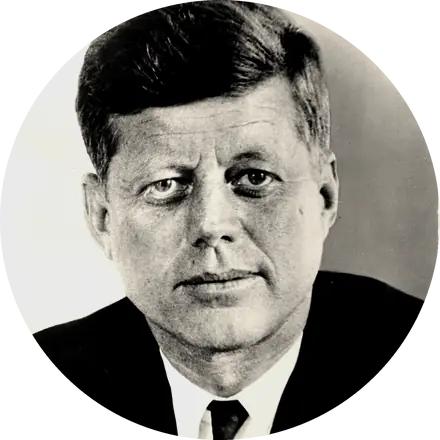
John F. Kennedy, 1961

John F. Kennedy1917–1963

Why England Slept (1940) · Profiles in Courage (1956) · Inaugural address (1961)

The first president born in the twentieth century. On 20 January 1961 he said the torch has been passed to a new generation of Americans—born in this century, tempered by war, disciplined by a hard and bitter peace. In October 1962 he faced Khrushchev over Soviet missiles in Cuba for thirteen days. When he was shot in Dallas on 22 November 1963 there were some 16,000 American advisers in Vietnam.

Allen Ginsberg1926–1997

Howl and Other Poems (1956) · “How to Make a March/Spectacle” (1965)

The Beat poet whose Howl was seized as obscene and cleared by a San Francisco judge in 1957. In 1965 he proposed that marchers against the Vietnam War bring masses of flowers to hand to police, press, politicians and onlookers: the birth of flower power. In January 1967 he chanted at the Human Be-In in Golden Gate Park, the prelude to the Summer of Love.

Tom Hayden1939–2016

The Port Huron Statement (1962, Students for a Democratic Society)

Its main author, at 22. The statement begins with a generation raised in modest comfort, housed in universities, uneasy about the world it is to inherit, and asks for participatory democracy. Hayden went on to organise in Newark, to the Chicago Seven trial of 1969–70 (the convictions were overturned), to marriage with Jane Fonda, and to eighteen years in the California legislature.

  1. Greatestborn before 1928

    The Depression and the war. They built the post-war institutions, and the bomb.

  2. Silent1928–1945

    Korea, McCarthy and the Cold War; schoolchildren taught to duck and cover.

  3. Boomers1946–1964

    The draft, Vietnam, flower power and 1968. By the 1990s they ran the universities, the newsrooms and the parties.

  4. Gen X1965–1980

    Punk, Thatcher and Reagan, the end of the Cold War, the first home computers.

  5. Millennials1981–1996

    Taught by Boomers at school and university; 9/11, the crash of 2008, social media.

  6. Gen Z1997–2012

    The smartphone in adolescence: Epoch VI.

Birth years: Pew Research Center, 2019 (Dimock 2019). What each generation met and what it handed down is this file’s reading: the generation that fought the war passed on its institutions; the one raised under the bomb took them over and passed on its causes.

Epoch IV · 1962–1984

The NewLeft

From the factory to the campus: students, minorities and the theory of power. From Beijing, Cairo and Tehran: the Little Red Book and the revolt against the West.

Marcuse · Hall · Foucault · Derrida · Deleuze · Mao · Qutb · Al-e Ahmad · Shariati · Bezmenov

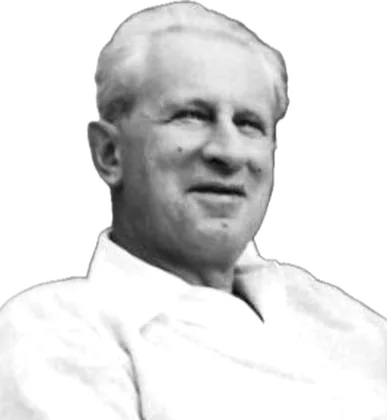
Herbert Marcuse, 1955

Herbert Marcuse1898–1979

Eros and Civilization (1955) · One-Dimensional Man (1964) · Repressive Tolerance (1965)

Consumer society absorbs the working class, so the revolutionary subject moves to students, minorities and outsiders. Liberating tolerance means intolerance towards the Right. A Frankfurt School exile, he became a teacher of the 1968 New Left.

Stuart Hall1932–2014

“Encoding and Decoding in the Television Discourse” (1973) · Policing the Crisis (1978, with Critcher, Jefferson, Clarke and Roberts)

Gramsci brought to Birmingham: culture is where consent is won and lost. A television message is encoded by those who make it and decoded by viewers who may read it against the grain. Born in Kingston, Jamaica, he ran the Centre for Contemporary Cultural Studies from 1968 to 1979 and in January 1979 coined the word Thatcherism.

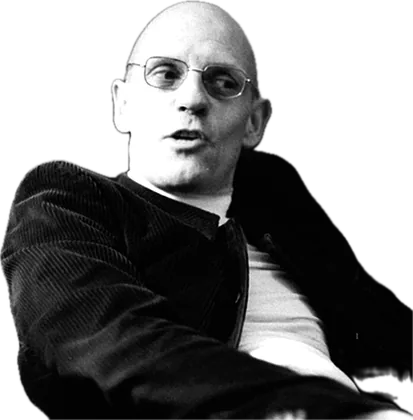
Michel Foucault

Michel Foucault1926–1984

History of Madness (1961) · Discipline and Punish (1975) · The History of Sexuality, volume 1 (1976)

Power works through knowledge: psychiatry, medicine and criminology define the normal, and prisons, clinics and schools observe, measure and correct. The panopticon trains people to watch themselves.

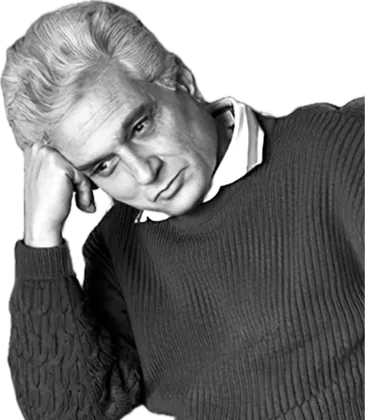
Jacques Derrida

Jacques Derrida1930–2004

Of Grammatology (1967) · Writing and Difference (1967) · Specters of Marx (1993)

Deconstruction: a text has no fixed meaning outside language. Western thought ranks paired opposites, speech over writing, presence over absence, and deconstruction overturns the ranking.

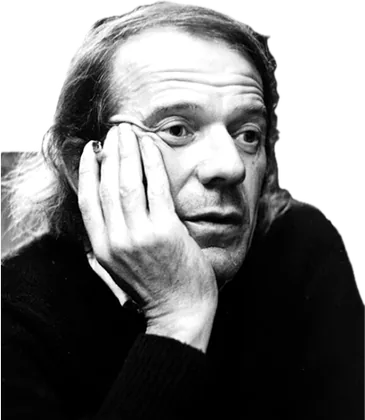
Gilles Deleuze

Gilles Deleuze1925–1995

Anti-Oedipus (1972) and A Thousand Plateaus (1980), both with Félix Guattari · Postscript on the Societies of Control (1990)

Desire produces rather than lacks; networks without a centre, the rhizome, against the hierarchy of the tree. In 1990 he described the coming societies of control: no walls, but codes, passwords and data that follow a person everywhere.

Mao Zedong1893–1976

Quotations from Chairman Mao Tse-tung, the Little Red Book (1964) · “Problems of War and Strategy” (1938)

Political power grows out of the barrel of a gun. The Great Leap Forward of 1958–1962 ended in a famine in which, by Frank Dikötter’s count, at least 45 million people died early. From 1966 the Cultural Revolution set Red Guards on teachers and children on parents. In the West the Little Red Book became a campus accessory: in 1967 Bobby Seale and Huey Newton sold copies at Berkeley to buy guns for the Black Panthers, and in 1970 Sartre took over the Maoists’ banned paper in Paris to keep it on the streets.

Sayyid Qutb1906–1966

The America I Have Seen (1951) · In the Shade of the Qur’an (from 1954) · Milestones (1964)

An Egyptian teacher who studied in the United States from 1948 to 1950, in Washington, Greeley and California, and came home repelled by its materialism and its morals. He ran the Muslim Brotherhood’s propaganda section. In Nasser’s prisons he wrote Milestones: every existing society, Muslim ones included, lives in jahiliyya, pagan ignorance, and a vanguard must end it by preaching and by jihad. He was hanged on 29 August 1966. Through Ayman al-Zawahiri his books reached al-Qaeda.

Jalal Al-e Ahmad1923–1969

Gharbzadegi, “Westoxification” (1962)

A Tehran writer who joined the communist Tudeh party after the war and left it in 1948 over its loyalty to Moscow. His pamphlet took a word from the philosopher Ahmad Fardid and diagnosed Iran with a disease caught from the West: machines, imports and imitation in place of its own crafts and faith. Khomeini took up the message; “neither East nor West” became a slogan of the 1979 revolution.

Ali Shariati1933–1977

Lectures at the Hosseiniyeh Ershad, Tehran (to 1972) · Red Shi’ism · Marxism and Other Western Fallacies

A doctorate in Paris in 1964; work with the Algerian FLN; an anthology of Fanon translated into Persian; an arrest at a demonstration for Patrice Lumumba. Back in Tehran he preached a revolutionary “red Shi’ism” against the clergy’s “black” one, and made a slogan of the old saying every day is Ashura, every place is Karbala. After eighteen months in solitary confinement he left for England in 1977 and died in Southampton on 18 June. He is called the ideologue of the Iranian revolution, and its Fanon.

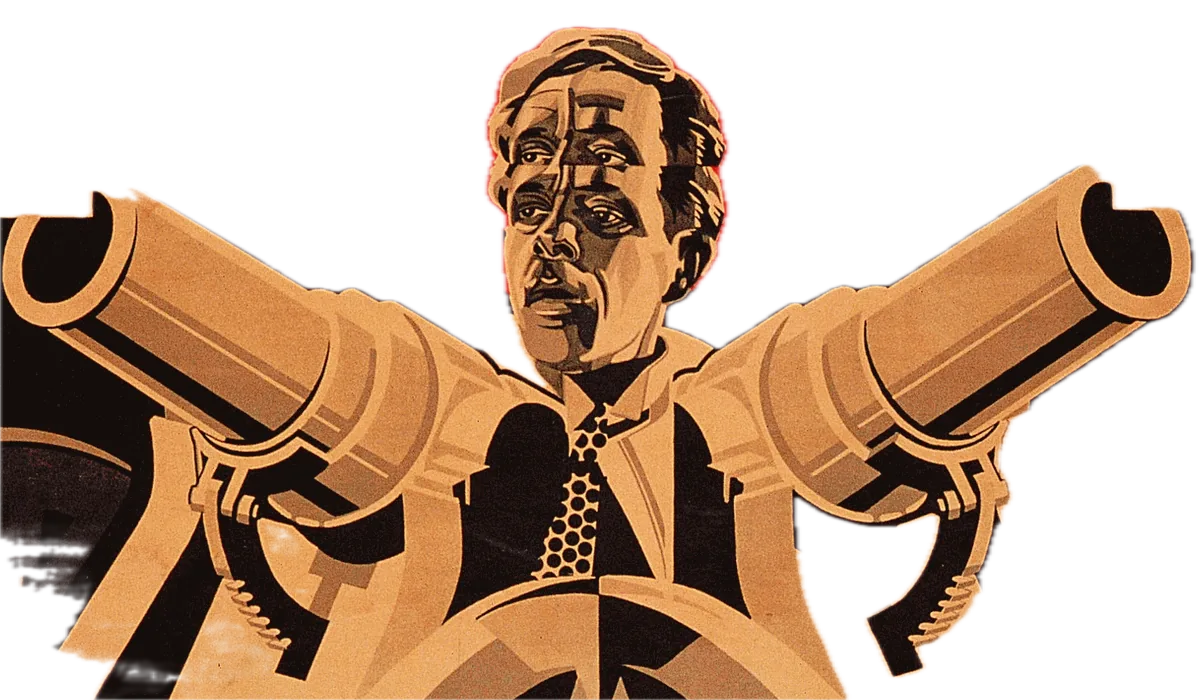
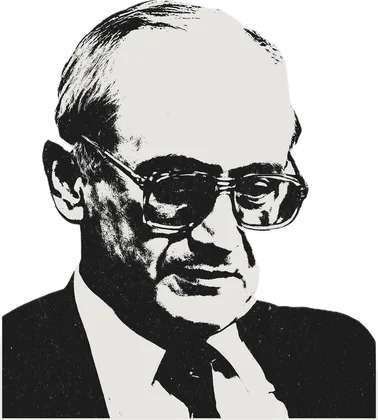
Yuri Bezmenov, from the poster of the documentary Comrade Yuri: A KGB Confession

Yuri Bezmenov1939–1993

Love Letter to America (1984, as Tomas Schuman) · interview with G. Edward Griffin (1984)

Ideological subversion in four stages: demoralisation (15–20 years, one generation of students), destabilisation (2–5 years), crisis (as little as six weeks), normalisation. A demoralised person, he said, can no longer judge true information.

Epoch V · 1986–2026

The LongMarch

Rudi Dutschke’s 1967 phrase for the long march through the institutions: gender, race and decolonisation become university subjects.

Butler · Arday

Judith Butlerborn 1956

Gender Trouble (1990) · Bodies That Matter (1993) · Who’s Afraid of Gender? (2024)

Gender is performative: it is made by repeated acts, not given by nature, and sex too is read through it. Gender Trouble became a founding text of queer theory and of gender studies in the university.

Jason Arday1985–2026

Dismantling Race in Higher Education: Racism, Whiteness and Decolonising the Academy (2018, edited with Heidi Safia Mirza)

In 2023 Cambridge made him professor of the sociology of education, the youngest Black professor it had appointed. His subject was race and the decolonising of universities.

In July and August 2026 a researcher and then the Telegraph, the Guardian and the Times alleged plagiarism in his PhD thesis and later work, and questioned claims about his life. He acknowledged mistakes in his early work, which he linked to his autism and to poor supervision. A panel at Liverpool John Moores University, which awarded the PhD, found honest and reasonable error, not deliberate plagiarism. On 5 August Cambridge opened an investigation and he resigned, saying this should not be mistaken for an acceptance of the narratives that have surrounded me. He died on 14 August 2026, aged 41. His family, and many politicians and unions, criticised the coverage as racist or disproportionate.

Epoch VI · 2007–2026

Gen ZVirtueSignalling

The iPhone went on sale in 2007; Instagram opened in 2010, the year the iPhone 4 put a camera on the front. A generation born from 1997 met adolescence through a screen, where a good opinion could be shown in a second and at no cost.

Twenge · Haidt · Bartholomew

  1. #KONY2012

    Invisible Children’s film about a Ugandan warlord. Tens of millions watched it within a week. Joseph Kony is still at large.

    shares
  2. #IceBucketChallenge

    A bucket of ice water on camera for ALS: $41.8 million to the ALS Association between 29 July and 21 August.

    challenges
  3. #JeSuisCharlie

    An art director’s three words, posted an hour after the attack on Charlie Hebdo; more than 5 million uses by the Friday.

    uses
  4. #MeToo

    In 24 hours 4.7 million people on Facebook used it, in some 12 million posts.

    posts
  5. #BlackoutTuesday

    Millions of black squares on Instagram. Activists said they buried the protest information under #BlackLivesMatter.

    squares

Jean M. Twengeborn 1971

iGen (2017) · Generations (2023)

A psychologist at San Diego State University who works from large surveys of the young. Around 2012, the year smartphones passed half of Americans, teenage loneliness and depression began to climb together. She named those born from 1995 iGen: safer, more tolerant, less happy, and in her words unprepared for adulthood.

Jonathan Haidtborn 1963

The Coddling of the American Mind (2018, with Greg Lukianoff) · The Anxious Generation (2024)

A social psychologist at New York University. With Lukianoff he argued that campuses taught the young to treat words as violence and themselves as fragile; then that a “great rewiring of childhood” between 2010 and 2015, from play to the phone, made a generation anxious. He asks for no smartphones before high school and no social media before 16.

James Bartholomewborn 1950

“The awful rise of ‘virtue signalling’”, The Spectator, 18 April 2015 · The Welfare State We’re In (2004)

A British journalist who named the habit of saying the right thing in public to show oneself good, at no cost: hating the right newspaper, changing a profile picture, posting a hashtag. The Guardian credits him with coining the phrase; within a few years it was a standing insult in every argument online.

Epoch VII · 1918–2026 · The witnesses

Gulag

The other shelf: books by the people the systems in this file sent to the camps. From 1929 to 1953 some 18 million passed through the Soviet camps. China’s laogai followed, and in 2014 a United Nations inquiry put North Korea’s political prisoners at 80,000 to 120,000.

Solzhenitsyn · Shalamov · Herling-Grudziński · Ginzburg · Wu

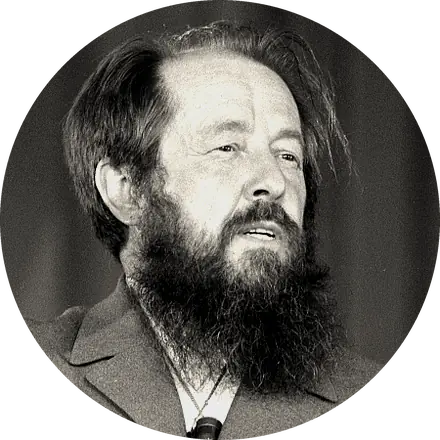
Aleksandr Solzhenitsyn speaking in 1975, photographed by Marion S. Trikosko

Aleksandr Solzhenitsyn1918–2008

One Day in the Life of Ivan Denisovich (1962) · The Gulag Archipelago (1973) · Harvard address (1978)

An artillery captain arrested at the front in February 1945 for criticising Stalin in letters to a friend: eight years in the camps, then exile. Khrushchev let Ivan Denisovich appear in Novy Mir in 1962. The Archipelago came out in Paris in December 1973; in February 1974 he was arrested and expelled. Nobel Prize, 1970. At Harvard in 1978 he told the West that the most striking thing about it was a decline in courage.

Varlam Shalamov1907–1982

Kolyma Tales (written 1954–1973; full Russian edition London 1978; USSR 1987)

Arrested in 1929 for spreading Lenin’s testament, the letter that warned against Stalin: three years at Vishera. Arrested again in 1937 and sent to the gold mines of Kolyma until 1951. For him the camp was a wholly negative school that no one should ever see. He died in a Moscow psychiatric home in January 1982, five years before his stories could be printed in his own country.

Gustaw Herling-Grudziński1919–2000

A World Apart (1951, introduction by Bertrand Russell) · Inny świat

A Polish student caught by the NKVD in March 1940 near Grodno, trying to cross to Lithuania: sentenced as a spy, two years in the camps at Yertsevo and Kargopol near Arkhangelsk. Freed in 1942 to join Anders’ army, he fought at Monte Cassino. His book appeared in London in 1951; in communist Poland it circulated only underground.

Evgenia Ginzburg1904–1977

Journey into the Whirlwind (1967)

A communist teacher and journalist in Kazan, arrested in February 1937: eighteen years of prison, Kolyma camps and exile. Her son, the future novelist Vasily Aksyonov, was four and went to a home for the children of enemies of the people. Her memoir could not be printed in the Soviet Union; it came out abroad in 1967.

Harry Wu1937–2016

Laogai: The Chinese Gulag (1992) · Bitter Winds (1994) · Troublemaker (1996)

A geology student in Beijing branded a counter-revolutionary rightist for what he had said in the Hundred Flowers campaign, arrested in 1960: nineteen years in twelve laogai camps, “reform through labour”. In the United States from 1985 he founded the Laogai Research Foundation and went back in secret to film the camps; arrested in 1995, he was sentenced to fifteen years and expelled.

1848–1979 · Events and texts

The same years, as events

1848Book

Manifesto of the Communist Party

Marx and Engels: The theory of the Communists may be summed up in the single sentence: Abolition of private property.

1871Event

The Paris Commune

72 days of revolutionary government in Paris. In the final week the Communards set fire to the Tuileries Palace and the Hôtel de Ville.

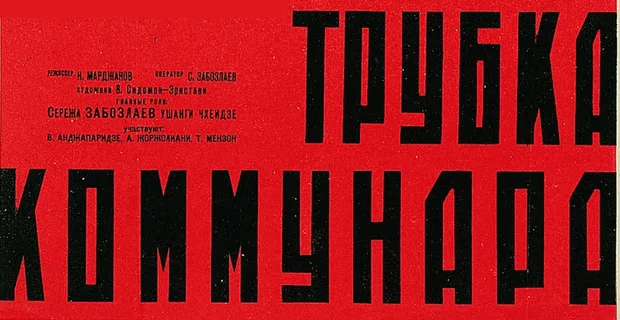
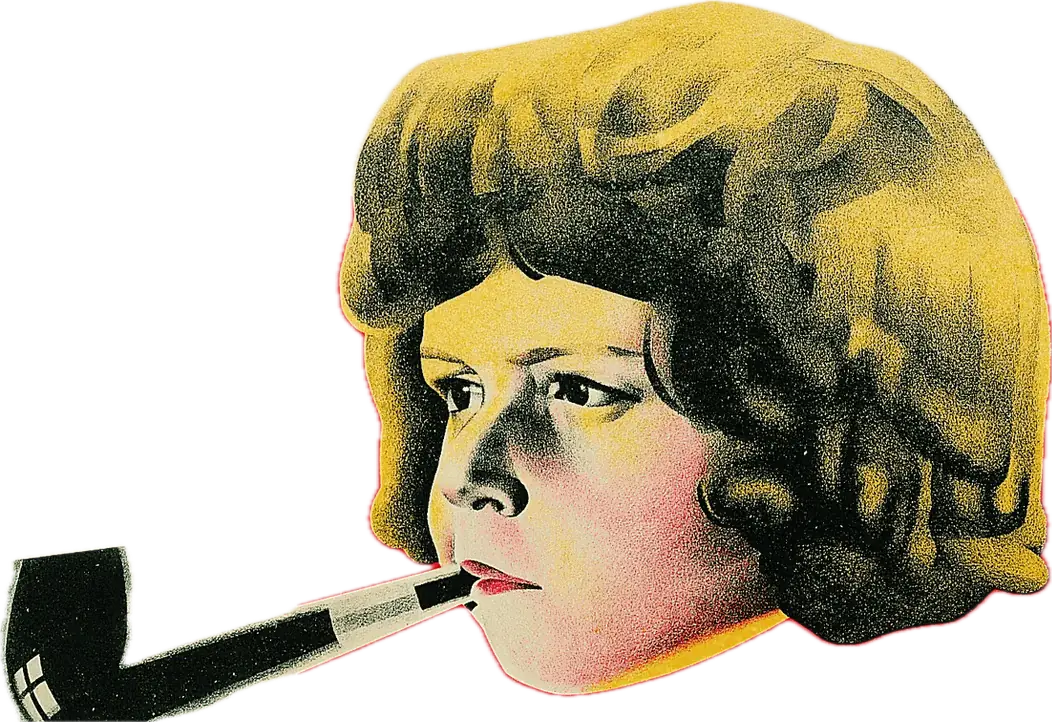
Title lettering of the poster: Trubka kommunara Boy smoking a pipe, from Anatoly Belsky's 1929 poster
Anatoly Belsky’s poster for Trubka kommunara (The Communard’s Pipe, 1929), a Georgian film after Ilya Ehrenburg’s story of a boy in the Paris Commune.

1902Book

Lenin, What Is to Be Done?

The revolution is to be led by a party of professional revolutionaries, a vanguard acting on behalf of the workers.

1917Book

Lenin, The State and Revolution

So long as the state exists there is no freedom. When there is freedom, there will be no state. Six weeks after the October Revolution his government founded the Cheka.

1920Book

Trotsky, Terrorism and Communism

A defence of the Red Terror and of the militarisation of labour.

1929Notebooks

Gramsci, Prison Notebooks

A ruling class holds power through cultural hegemony: the common sense taught by schools, churches and the press. Written in a fascist prison until 1935.

1944Book

Hayek, The Road to Serfdom

Central planning needs coercion, and coercion promotes the people most willing to use it.

1949Paris

Saloth Sâr in Paris

The future Pol Pot studies radio-electronics in Paris on a scholarship from 1949 to 1953 and joins the French Communist Party.

1965Essay

Marcuse, Repressive Tolerance

Tolerance should be withdrawn from movements of the Right and extended to movements of the Left.

1967Book

Debord, The Society of the Spectacle

In the same year in West Germany, Rudi Dutschke proposes the long march through the institutions.

1968Event

May 1968 in Paris

Students pull up the cobblestones for barricades and write Sous les pavés, la plage on the walls.

1975Event

Year Zero in Cambodia

On 17 April the Khmer Rouge empty Phnom Penh. Money, markets, schools and religion are abolished. About 1.7 million people are dead by January 1979.

1975Book

Foucault, Discipline and Punish

Bentham’s panopticon as the model of modern power: the prisoner never knows when he is watched, so he watches himself.

1979Book

Lyotard, The Postmodern Condition

The postmodern defined as incredulity toward metanarratives.

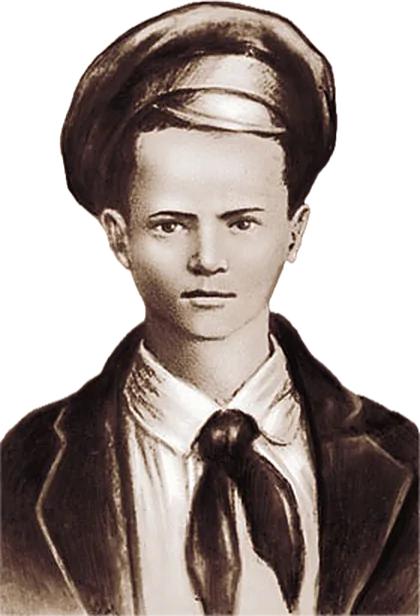
Retouched portrait of Pavel Morozov in a Pioneer tie, 1932
Pavel Morozov, retouched portrait, 1932

1932 · Gerasimovka, Urals · Pioneer hero No. 1

Pavlik Morozov, the boy the Soviet state praised for informing on his father, 1932

  • Soviet version: Pavel Morozov, 13, denounces his father Trofim, chairman of the village soviet, for helping exiled kulaks. Trofim is sentenced to ten years in a labour camp.
  • Pavlik and his younger brother Fyodor are killed in the forest near Gerasimovka.
  • Four relatives, his grandfather among them, are found guilty of the murder and shot.
  • Sergei Eisenstein films Bezhin Meadow on the story. The film is stopped before release.

The story made him Pioneer hero No. 1. Schools, songs, statues and streets carried his name until the end of the Soviet Union. The lesson for every child was plain: loyalty to the state comes before loyalty to the family. He is often called a Komsomol member; at 13 he was of Pioneer age.

Historians later took the story apart. Yuri Druzhnikov’s Informer 001 argued that the OGPU, the secret police, shaped both the case and the myth. Catriona Kelly’s Comrade Pavlik (2005) found little documentary evidence that the boy denounced his father at all. The story was useful whether or not it happened.

In the PRL my parents’ generation kept the second language for home for this reason. In Britain in 2019 one complaint from a member of the public about Harry Miller’s posts on Twitter brought police to his workplace and a “non-crime hate incident” onto police records. In 2020 the High Court ruled that the police action unlawfully interfered with his freedom of expression.

Snitch on your own parentsThe lesson taught to children, 1932–1992: the USSR, China, East Germany

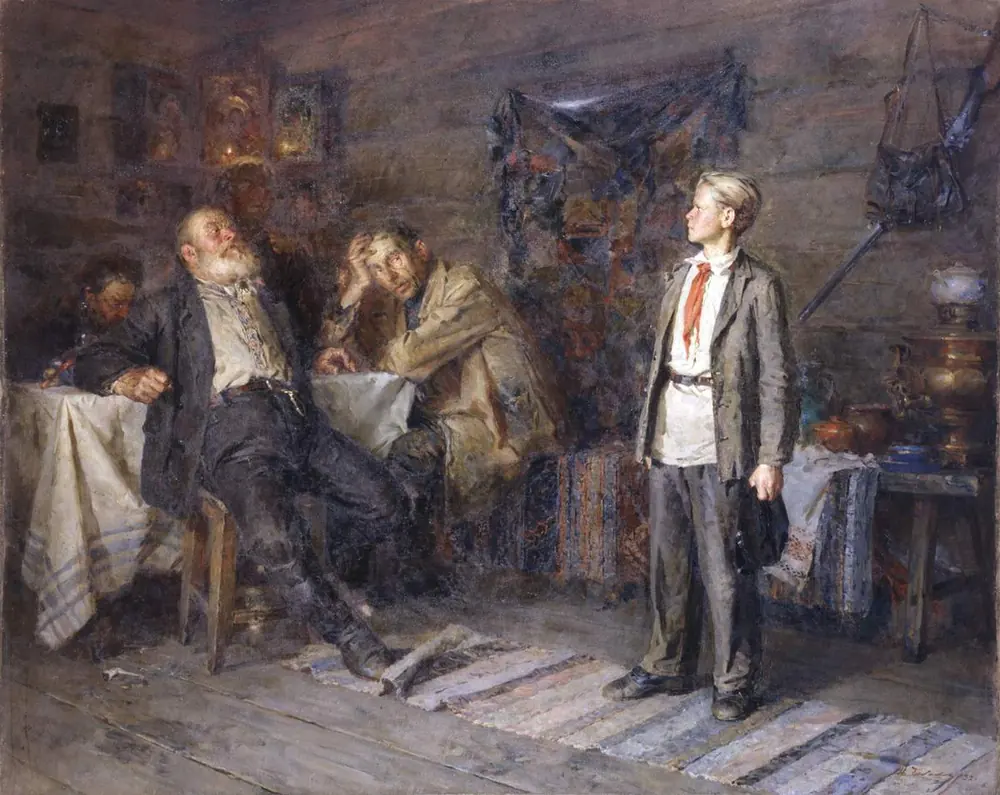
Painting: a boy in a red Pioneer tie stands in a log hut facing his seated father, grandfather and relatives
Nikita Chebakov, Pavlik Morozov, 1952 · oil on canvas, 186 × 233 cm · State Russian Museum
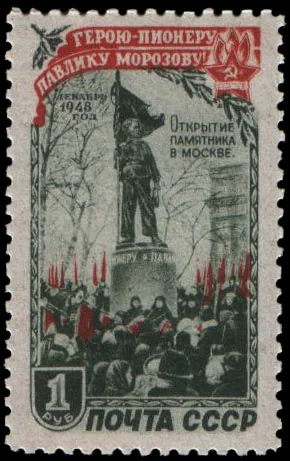
Soviet postage stamp of 1950 showing the Pavlik Morozov monument in Moscow
USSR stamp, 1950
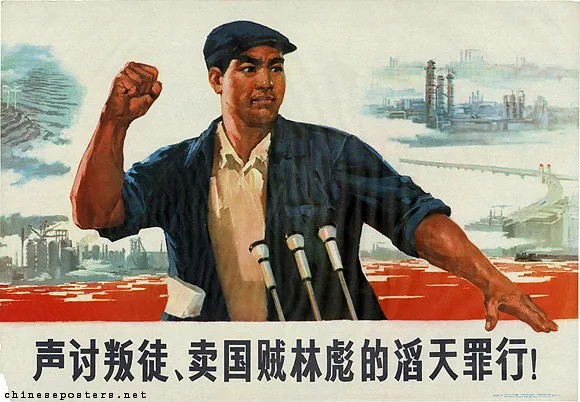
Chinese poster of 1973: a crowd of workers, peasants and soldiers raise fists and point at a sheet of charges against Lin Biao
声讨叛徒、卖国贼林彪的滔天罪行! He Kedi, 1973: Denounce the heinous crimes of the renegade and traitor Lin Biao! Workers, peasants and soldiers accuse Lin Biao two years after his death in 1971.

1948–1992 · USSR · China · East Germany

Children taught to inform on their parents

  • A monument to Pavlik opens in Moscow. In 1950 it appears on Soviet postage stamps: To the hero-pioneer Pavlik Morozov.
  • Nikita Chebakov paints the boy in his Pioneer tie facing his father’s household. The State Russian Museum acquires the canvas in 1954.
  • Anhui, China. Zhang Hongbing and his father report his mother, Fang Zhongmou, for criticising Mao in a family argument. She is executed in public the same year. A court declares her innocent in 1980. In 2013 her son apologises in public.
  • He Kedi’s poster Denounce the heinous crimes of the renegade and traitor Lin Biao! The poster is printed beside the painting: a public accusation, with the crowd behind the accuser.
  • The Stasi files open. East Germany had about 189,000 unofficial informers in 1989. Vera Lengsfeld reads in her file that her husband reported on her.

1937 · Paris International Exposition

Vera Mukhina’s Worker and Kolkhoz Woman, Paris 1937

A factory worker with a hammer and a collective-farm woman with a sickle, 24.5 metres of stainless steel, stood on top of the Soviet pavilion at the 1937 Paris Exposition, facing the pavilion of Nazi Germany. The statue now stands at VDNKh in Moscow.

In the same two years, 1937 and 1938, the NKVD shot 681,692 people. The ideal and the record were made by the same state.

681,692people shot by the NKVD in 1937–1938, according to its own records

The 3D statue in the top-right corner turns through 360 degrees over the length of this page and comes forward in this section. Model: “Worker and Kolkhoz Woman (Рабочий и колхозница)” by pkotelnikova5 on Sketchfab, CC BY.

1973–1981 · Kuwait, Tripoli, Islamabad, Tehran, Mecca, Kabul · Before the file

Oil, the Iranian revolution, the siege of Mecca and the war in Afghanistan, 1973–1981

  • Arab oil ministers meeting in Kuwait announce monthly production cuts. Arab states embargo the United States (Libya 19.10, Saudi Arabia 20.10). A barrel costs $2.90 before the embargo and $11.65 in January 1974.
  • Muammar Gaddafi publishes the first part of The Green Book. From 1977 Libya’s flag is a plain green field, until 2011.
  • General Zia-ul-Haq takes power in Pakistan. On 10.02.1979 he promulgates the Hudood Ordinances, Islamic criminal law.
  • Ayatollah Khomeini returns to Tehran. After a referendum on 30–31 March the Islamic Republic is proclaimed on 01.04.1979.
  • Students seize the US embassy in Tehran. 52 Americans are held for 444 days, until 20.01.1981.
  • Juhayman al-Otaybi’s group seizes the Grand Mosque in Mecca. The siege ends on 04.12.1979.
  • A Soviet airlift brings troops to Kabul and Bagram. On 27.12 Soviet special forces storm the Tajbeg Palace and kill Hafizullah Amin.
  • The CIA’s Operation Cyclone arms the Afghan mujahideen; Saudi Arabia matches the US money; Pakistan’s ISI hands out the weapons.

I was born after these years, and they shaped the Europe I moved to. The embargo of October 1973 quadrupled the price of oil and moved money from the importing countries to the Gulf states and Libya.

1979 was the turning year. Khomeini took power in Tehran in February, students seized the US embassy in November, gunmen seized the Grand Mosque in Mecca two weeks later, and the Soviet army entered Kabul at Christmas. According to historians such as Yaroslav Trofimov, the Saudi state answered the siege by tightening religious rules at home and spending more on religious missions abroad.

The Western left read the Iranian revolution as a liberation. Michel Foucault, whose portrait stands in the index above, reported from Iran for Corriere della Sera in autumn 1978 and wrote of a “political spirituality”. Iran’s communist Tudeh party backed Khomeini. In 1983 it was banned and its leaders arrested; in 1988 its members were among the main targets of the prison executions. The red–green alliance of the keffiyeh section below has this precedent.

In Afghanistan the United States, Saudi Arabia and Pakistan armed the mujahideen against the Soviet army through the 1980s.

Books on oil, Islamism and 1979

  • 1964MilestonesSayyid QutbA manifesto for an Islamic vanguard against “jahiliyya”, the age of ignorance. Qutb was hanged in Egypt on 29.08.1966.
  • 1970Islamic GovernmentRuhollah KhomeiniLectures in Najaf: rule by the Islamic jurist, the doctrine of the Islamic Republic.
  • 1975The Green BookMuammar GaddafiThree parts, 1975–1979: “direct democracy” through people’s committees, Libya’s state ideology.
  • 2000Jihad: The Trail of Political IslamGilles KepelThe rise of Islamist movements from the 1970s and the money behind them.
  • 2004Ghost WarsSteve CollThe CIA, Saudi Arabia and Pakistan in Afghanistan, 1979–2001.
  • 2005Foucault and the Iranian RevolutionJanet Afary, Kevin B. AndersonFoucault’s 1978–79 reports and the gender politics he did not see.
  • 2007The Siege of MeccaYaroslav TrofimovThe two weeks of November 1979 and the Saudi response.
  • 1995Jihad vs. McWorldBenjamin R. BarberTribal and religious fundamentalism on one side, global consumer markets on the other: both, he argued, hollow out democratic citizenship.
Libya, 1977–2011: the only national flag of one colour
Price of a barrel of oil, US dollars. Federal Reserve History.
12345
  1. 1Gaddafi’s Green Book; the plain green flag
  2. 2Zia’s coup; the Hudood laws
  3. 3Khomeini returns; the US embassy is seized
  4. 4The Grand Mosque is seized
  5. 5The Soviet army arrives
1975–1979 · Natural Earth
1968 · El Al 4261970 · Dawson’s Field1972 · Lod1972 · Munich1974 · The Hague1975 · OPEC, Vienna1976 · Entebbe1977 · Landshut, Mogadishu1977 · Schleyer, CologneStammheim1977 · JAL 472, Dhaka3.10.1977 · JAL 472 →Kuwait · Damascus · Algiers1978 · Moro, RomeJapanese Red Army: Tokyo → Beirut, 1971 →

Routes of the hijackings, 1968–1977 · Natural Earth

1968–2000 · Algiers, Jordan, Lod, Munich, Vienna, Entebbe, Mogadishu, Rome · Before the file

Hijackings and urban guerrillas: the PFLP, the Red Army Faction, the Japanese Red Army and the Red Brigades, 1968–1998

  • The Popular Front for the Liberation of Palestine (PFLP) hijacks El Al 426, Rome–Tel Aviv, to Algiers. The hostage crisis lasts about 40 days.
  • Andreas Baader is freed from custody in Berlin-Dahlem, the founding act of the Red Army Faction (RAF). In June–August 1970 its members train in a Fatah camp in Jordan.
  • The PFLP hijacks TWA 741 and Swissair 100 to Dawson’s Field in Jordan and Pan Am 93 to Cairo, where it is blown up. The attempt on El Al 219 fails. BOAC 775 follows on 09.09. On 12.09 three aircraft are blown up in the desert.
  • Lod Airport, Israel. Three members of the Japanese Red Army acting for the PFLP, Kōzō Okamoto, Tsuyoshi Okudaira and Yasuyuki Yasuda, kill 26 people and wound about 80.
  • Munich Olympics. Black September takes Israeli athletes hostage. By 06.09 eleven Israeli athletes and coaches and the West German police officer Anton Fliegerbauer are dead.
  • The Japanese Red Army, led from Lebanon by Fusako Shigenobu, seizes the French embassy in The Hague.
  • Carlos (Ilich Ramírez Sánchez), with Hans-Joachim Klein of the Revolutionary Cells and Gabriele Kröcher-Tiedemann of the 2 June Movement, raids the OPEC meeting in Vienna. Three people are killed.
  • Air France 139 is hijacked after Athens by the PFLP-EO and two West Germans of the Revolutionary Cells, Wilfried Böse and Brigitte Kuhlmann. Israeli commandos free the hostages at Entebbe in the night of 03–04.07.
  • The German Autumn. The RAF kills Federal Prosecutor Siegfried Buback (07.04) and the banker Jürgen Ponto (30.07), and kidnaps Hanns Martin Schleyer in Cologne (05.09), killing four escorts. A PFLP commando hijacks Lufthansa 181 “Landshut” (13.10). GSG 9 storms it in Mogadishu at 00:05 on 18.10. Baader, Gudrun Ensslin and Jan-Carl Raspe die in Stammheim prison the same night. Schleyer is found dead in Mulhouse on 19.10.
  • The Japanese Red Army hijacks JAL 472 after Bombay and lands in Dhaka. Japan pays $6 million and frees six prisoners; 118 hostages are released there. On 3 October the aircraft flies on to Kuwait and Damascus, where eleven more are released, and to Algiers, where it is impounded and the rest go free.
  • The Red Brigades kidnap Aldo Moro in Via Fani, Rome, and kill his five escorts. His body is found in Via Caetani on 09.05.1978.
  • Stasi operation “Stern 2”: ten RAF members who have left the armed struggle receive new identities in East Germany. They are arrested in June 1990.
  • The RAF announces its dissolution in an eight-page letter to Reuters, received on 20.04.1998.
  • Fusako Shigenobu is arrested in Japan. In 2006 she is sentenced to 20 years for the Hague siege; she is released on 28.05.2022.

The terror of the 1970s in Western Europe was mostly secular and left-wing. The Red Army Faction, the Red Brigades and the Japanese Red Army called themselves anti-imperialist and Marxist-Leninist. They trained in Palestinian camps, worked with the PFLP and drew on the Soviet bloc. According to KGB files copied by Vasili Mitrokhin, the KGB recruited the PFLP’s operations chief Wadi Haddad in 1970, under the codename NATSIONALIST, and shipped weapons to his group, including a consignment handed over at Aden in May 1975.

Their handbook was Carlos Marighella’s Minimanual of the Urban Guerrilla (1969): provoke the state into repression so that the population turns against it. West Germany answered with new laws and the Stammheim trial. The population did not turn.

Books on the guerrillas of 1968–1998

  • 1969Minimanual of the Urban GuerrillaCarlos MarighellaBrazilian handbook of urban guerrilla tactics, translated and read by the RAF and the Red Brigades.
  • 1971Das Konzept StadtguerillaRed Army FactionThe RAF’s founding text, April 1971.
  • 1981The Terror NetworkClaire SterlingThe claim that Moscow directed international terrorism.
  • 1985Der Baader-Meinhof-KomplexStefan AustThe standard history of the RAF’s first generation; filmed in 2008.
  • 1987Veil: The Secret Wars of the CIABob WoodwardThe CIA under William Casey, including the analysts’ view of Sterling.
  • 2005The World Was Going Our WayChristopher Andrew, Vasili MitrokhinThe KGB in the Third World, from Mitrokhin’s copies of KGB files, Haddad included.

Log

  • 06:00. General Wojciech Jaruzelski announces martial law on state television.
  • Telephone lines cut. Curfew from 22:00 to 06:00. About 10,000 Solidarity members interned.
  • Martial law formally lifted. Ration cards stay until 1989.
  • First partly free election. Solidarity wins all 161 contested Sejm seats and 99 of 100 Senate seats.

1981–1989 · Poland · Before the file

Martial law and ration cards in the Polish People’s Republic, 1981–1989

I was born in the Polska Rzeczpospolita Ludowa in the 1980s, in the years of martial law and ration cards. The state followed Lenin’s model: one party, one line in every newspaper, a censorship office on Mysia Street in Warsaw, and the Służba Bezpieczeństwa keeping files on neighbours.

Children learned two languages early. One was spoken at home. The other was spoken at school and on the evening news, Dziennik Telewizyjny. Czesław Miłosz called the habit of living in both Ketman. Nobody had to explain the rules, and everyone knew who wrote them: the Party.

The second lesson of the PRL came in 1989. The system ended at a round table and a ballot box, without a shot. On 8 May 1989 an independent daily, Gazeta Wyborcza, went on sale.

10mSolidarność members in 1981, in a country of 36 million

1983–1992 · New Delhi, Moscow, East Berlin, Harare · Before the file and Stage 1

How the KGB spread the story that the United States made AIDS, 1983–1992

The KGB called the work active measures, aktivnye meropriyatiya. Bezmenov called it ideological subversion. The AIDS story is the best-documented case: Western historians call it Operation INFEKTION, and the Stasi file name was “Denver”.

The word Mosfilm in Soviet display lettering

Mosfilm lettering and Spasskaya Tower: illustration generated with ChatGPT (gpt-image) after the Mosfilm studio ident, cut into elements for this file

17.07.1983 · New Delhi

Patriot

AIDS may invade India: mystery disease caused by US experiments

An anonymous letter. The paper had been set up under the auspices of the KGB resident in New Delhi.

30.10.1985 · Moscow

Литературная газета

Panic in the West or What Is Hiding behind the Sensation Surrounding AIDS

Valentin Zapevalov quotes Patriot as a foreign source.

09.1986 · Harare

AIDS – its nature and origin

Jakob Segal, Lilli Segal, Ronald Dehmlow: HIV was made at Fort Detrick

47 pages, circulated on the eve of the Non-Aligned summit.

1987 · 25 languages

80 countries

The story has run in over 200 periodicals

Boghardt, Studies in Intelligence, 2009.

19.03.1992 · Moscow

Известия

Primakov: the KGB ran the AIDS campaign

The head of Russia’s foreign intelligence service, to students in Moscow.

  • The Indian daily Patriot prints an anonymous letter: “AIDS may invade India: mystery disease caused by US experiments”. The paper had been set up under the auspices of the KGB resident in New Delhi, Radomir Bogdanov (Andrew and Gordievsky 1990).
  • Literaturnaya Gazeta in Moscow revives the claim, quoting Patriot.
  • The East German biophysicist Jakob Segal, with Lilli Segal and Ronald Dehmlow, puts out AIDS – its nature and origin in Harare on the eve of the Non-Aligned summit: HIV, they claim, was made at Fort Detrick.
  • By the end of the year the story has run in the media of 80 countries, in over 200 periodicals, in 25 languages.
  • Yevgeny Primakov, head of Russia’s foreign intelligence service, tells students in Moscow that the KGB ran the campaign (Izvestiya).
  • A telephone survey of 500 African Americans aged 15–44: nearly half agree that “HIV is a man-made virus”; about 12 percent say the CIA created and spread it.

The method had four steps: plant the story in a friendly paper abroad, quote that paper at home as a foreign source, add a scientist, and let others repeat it. The campaign was admitted only after the state that ran it had gone, and by then the story no longer needed the KGB.

Africa

  • A forged US “Presidential Review Memorandum 46” on policy toward Black Africa circulates. The White House declares it a professional forgery; US officials later list it among Soviet active-measures forgeries.
  • Harare: the Segal pamphlet reaches delegations from the whole Non-Aligned Movement.
  • South Africa’s government under President Thabo Mbeki questions that HIV causes AIDS and delays antiretroviral treatment. Chigwedere and colleagues (2008) estimate more than 330,000 lives lost, and 35,000 babies born with HIV.

Mbeki’s doubts were not a KGB operation. I put them here because they show what disbelief in medical evidence costs once it reaches a government.

1newspaper, New Delhi, 1983

80countries · 200+ periodicals · 25 languages, 1987

1948–2024 · Rome, Paris, London, Munich, Tehran, Santiago, Manila

The CIA’s own propaganda, from the Italian election of 1948 to the Philippines in 2020

  • The CIA funds Italy’s Christian Democrats and their propaganda before the April election.
  • The CIA funds the Congress for Cultural Freedom in Paris and, through it, the London monthly Encounter (from 1953). In March 1967 Ramparts exposes CIA money for the US National Student Association; on 20.05.1967 the former CIA officer Thomas Braden confirms the Congress funding in the Saturday Evening Post.
  • Radio Free Europe and Radio Liberty, broadcasting from Munich, are paid for by the CIA. CIA money ends on 30.06.1971; afterwards Congress funds the stations openly.
  • Operation TPAJAX in Iran: the CIA pays for newspaper articles and staged crowds against Prime Minister Mohammad Mosaddegh. The CIA’s own history of the coup is released on 19.08.2013.
  • Chile: President Nixon approves $700,000 for the newspaper El Mercurio in September 1971 and $965,000 more in April 1972.
  • The Senate’s Church Committee finds about 50 CIA assets among US journalists and media staff. Carl Bernstein, in Rolling Stone (20.10.1977), puts the number of American journalists who carried out assignments for the CIA at more than 400.
  • US-funded schoolbooks for Afghan children, produced through the University of Nebraska at Omaha, are full of violent jihadist images (Washington Post, 23.03.2002).
  • The US military runs fake social-media accounts in the Philippines to discredit China’s Sinovac vaccine (Reuters, 14.06.2024).

Disinformation was not a Soviet monopoly. In the PRL people listened to Radio Free Europe’s Polish service through the state’s jamming; until 1971 the CIA paid for it. The agency that paid for honest news in Polish also paid for invented news in Tehran and Santiago.

My reading. Both blocs lied. The difference is in what came after. The US Congress investigated the CIA in 1975–76, and the CIA released its own history of the Iran coup in 2013. The KGB’s AIDS campaign was admitted only after the Soviet Union had ended, and most KGB foreign-intelligence files are still closed. The US military’s campaign in the Philippines was exposed by a news agency, not by a hearing.

Bezmenov · Stage 1 of 4

Stage 1: Demoralisation, 2003–2017

Bezmenov’s first stage takes 15 to 20 years, the time needed to educate one generation of students. In his description, schools, media and culture shift a society’s values until people can no longer weigh facts for themselves. In this file it runs from 2003, the year MySpace opened, to October 2017 and #MeToo: one generation of students, the first raised on social networks. I arrived in Britain the same year.

Predicted 15–20 years · In this file 14.8 years

Log

  • The Balcerowicz plan frees prices overnight.
  • Registered unemployment in Poland reaches about 20 percent.
  • I arrive in Britain.
  • Poland joins the EU. The UK, Ireland and Sweden open their labour markets to the new members on the first day.

2003 · United Kingdom · Stage 1

Leaving Poland for the United Kingdom, 2003

I came to Britain in 2003, a year before Poland joined the European Union. I came for work, and for a country that looked, from Poland, like the opposite of the PRL: a parliament older than most states, newspapers nobody had to approve, and a common law that left people alone unless they did harm.

The first thing I noticed was the cameras. In 2002 researchers estimated 4.2 million CCTV cameras in Britain, about one for every fourteen people. Nobody minded. The cameras recorded, and only a person could watch the tape.

The surveillance I knew from home was of another kind. At the Berlin Wall at least 140 people were killed between 1961 and 1989. On 16 December 1981 a ZOMO riot-police platoon shot nine striking miners at the Wujek mine in Katowice. In 1989 the Stasi ran about 189,000 unofficial informers and held suspects at Hohenschönhausen, where interrogators used isolation and sleep deprivation. Those systems watched in order to punish. The British cameras of 2003 only recorded.

Log

  • Civil Partnership Act. Gender Recognition Act.
  • Equality Act 2010 in force: nine protected characteristics.
  • Marriage (Same Sex Couples) Act.

2004–2016 · United Kingdom · Stage 1

Equality law, gender policy and speech codes in Britain, 2004–2016

In the PRL the rules had an author. In Britain the new rules arrived through HR departments, training modules, university codes and charity guidance. Nobody signed them, and nobody could be voted out over them.

I had no objection to two men marrying. My objection began when tolerance, which asks you to leave people alone, became affirmation, which asks you to say particular words. At work I recognised the second language from home.

The Soviet state had its own feminism, ordered from above: in 1926 Adolf Strakhov’s poster told the emancipated woman to build socialism. The reading lists in Britain came from Paris: Foucault on power, Derrida on texts, Lyotard on the end of grand narratives, Beauvoir’s one is not born, but rather becomes, a woman. The method came from Gramsci: change the culture and the institutions, and politics follows.

Liberating tolerance, then, would mean intolerance against movements from the Right and toleration of movements from the Left.

Herbert Marcuse, Repressive Tolerance, 1965

I knew this rule. In the PRL it was called the Party line. Elisabeth Noelle-Neumann described its effect in 1974 as a spiral of silence: people who think they hold a minority view go quiet, the view looks smaller, and more people go quiet. In 2020 more than four in ten Americans reported self-censorship, about three times the share of the McCarthy era.

Courts and evidence later pulled part of it back:

  • 2021Forstater v CGD Europe: gender-critical belief is protected under the Equality Act.
  • 2021Miller v College of Policing: recording lawful speech as a “non-crime hate incident” interfered with freedom of expression.
  • 2024The Cass Review finds the evidence for puberty blockers in children weak.
  • 2025For Women Scotland v The Scottish Ministers: “woman” in the Equality Act means biological sex.

Soviet film poster, 1926 · Oxford Dictionaries, 2016

Post-truth: when facts weigh less than feelings

In November 2016 Oxford Dictionaries chose “post-truth” as its word of the year: circumstances “in which objective facts are less influential in shaping public opinion than appeals to emotion and personal belief”. Grigory Borisov and Nikolai Prusakov drew this poster in 1926 for the Soviet release of the Danish film Himmelskibet, Journey to Mars. Scrolling takes it apart.

Cut-outs: G. Borisov and N. Prusakov, 1926

Log

  • Bloodlands: Europe Between Hitler and Stalin. About 14 million people killed by the Nazi and Soviet regimes in the lands between Berlin and Moscow, 1933–1945: Poland, Ukraine, Belarus, the Baltic states and western Russia.
  • On Tyranny: Twenty Lessons from the Twentieth Century. Lesson 10, “Believe in truth”: “Post-truth is pre-fascism.”
  • The Road to Unfreedom: Russia, Europe, America. The “politics of inevitability” gives way to the “politics of eternity”; the émigré philosopher Ivan Ilyin as a source for Putin’s Russia.

2010–2018 · Timothy Snyder, Yale · Stage 1

Timothy Snyder’s Bloodlands, On Tyranny and The Road to Unfreedom, 2010–2018

Bloodlands covers the ground I come from. Poland lies in the middle of Snyder’s map: the German death camps stood on its territory, the Soviet famine of 1932–33 struck its eastern neighbour, and the book counts the dead of both regimes in one record.

This file and Snyder’s 2018 book share a title. He describes a “politics of eternity” that replaces the future with a cycle of threats from the past, and he finds its sources in the Kremlin: Ilyin, the war in Ukraine from 2014, the internet campaigns of 2016. My entries follow the pressure from inside Western institutions. The two readings meet in his tenth lesson.

To abandon facts is to abandon freedom. If nothing is true, then no one can criticize power, because there is no basis upon which to do so.

Timothy Snyder, On Tyranny, 2017, lesson 10

Log

  • Steve Tesich, “A Government of Lies”, The Nation: Americans “have freely decided that we want to live in some post-truth world”.
  • Ralph Keyes, The Post-Truth Era.
  • Peter Pomerantsev, Nothing Is True and Everything Is Possible, on television in Putin’s Russia.
  • Oxford Dictionaries names “post-truth” its word of the year. Its use rose by about 2,000 percent in 2016.
  • Kellyanne Conway, adviser to President Trump, defends the White House’s figures for the inauguration crowd on NBC as “alternative facts”.
  • Matthew d’Ancona, Post-Truth; Lee McIntyre, Post-Truth (MIT Press).

1992–2017 · New York, Oxford, Washington · Stage 1

Post-truth, from The Nation in 1992 to Oxford’s word of the year in 2016

The ideal subject of totalitarian rule is not the convinced Nazi or the convinced Communist, but people for whom the distinction between fact and fiction (i.e., the reality of experience) and the distinction between true and false (i.e., the standards of thought) no longer exist.

Hannah Arendt, The Origins of Totalitarianism, 2nd edition 1958, ch. 13

Three descriptions of one person: Arendt’s subject who cannot tell fact from fiction (1958), Bezmenov’s demoralised student who can “no longer judge true information” (1984), and Oxford’s public moved more by feeling than by fact (2016). What changed in 2016 was speed. The KGB needed four years to get its AIDS story into 80 countries. Content from the Internet Research Agency in St Petersburg reached about 126 million Americans on Facebook between 2015 and 2017.

Log

  • Cambridge Analytica is set up as part of the SCL Group, financed by Robert Mercer with at least $15 million; Steve Bannon is vice-president.
  • Aleksandr Kogan’s app “thisisyourdigitallife”: about 270,000 people take a personality quiz, and the app collects data on their Facebook friends as well.
  • Cambridge Analytica works for the Trump campaign.
  • The Observer (Carole Cadwalladr) and The New York Times publish the account of the former employee Christopher Wylie. On 19–20.03 Channel 4 News shows the chief executive, Alexander Nix, filmed undercover.
  • Facebook: the data of up to 87 million people may have been shared.
  • Mark Zuckerberg testifies to the US Congress, on 10 and 11 April.
  • Cambridge Analytica announces that it is closing.
  • The UK Information Commissioner fines Facebook £500,000, the maximum under the 1998 law.
  • The US Federal Trade Commission imposes a $5 billion penalty on Facebook.
  • The Information Commissioner finds no evidence that SCL or Cambridge Analytica were involved in the EU referendum campaign beyond initial enquiries.
  • Meta settles the US class action for $725 million.

2013–2022 · London, Cambridge, Washington · Stage 1

Cambridge Analytica and the Facebook data of 87 million people, 2014–2018

Cambridge Analytica sold campaigns psychological profiles built from Facebook data. What was proven is the data collection: about 270,000 people agreed to a quiz, and the data of up to 87 million people, most of them the quiz-takers’ friends, was taken. I have seen no evidence that the profiles changed votes.

The lesson I take is the cost. A Soviet campaign needed agents, newspapers and years. A data firm needed a quiz app and a platform that until 2015 let apps collect data about their users’ friends.

Books on disinformation, data and post-truth

  • 1958The Origins of TotalitarianismHannah ArendtSecond edition: “Ideology and Terror” on the subject who can no longer tell fact from fiction.
  • 1985The KGB and Soviet DisinformationLadislav BittmanAn insider’s account of active measures.
  • 2004The Post-Truth EraRalph KeyesDishonesty and deception in everyday American life.
  • 2010BloodlandsTimothy SnyderEurope between Hitler and Stalin: about 14 million dead, 1933–1945.
  • 2014Nothing Is True and Everything Is PossiblePeter PomerantsevInside Russian television: politics as a reality show.
  • 2017On TyrannyTimothy SnyderTwenty lessons; the tenth: believe in truth.
  • 2017Post-TruthMatthew d’AnconaThe new war on truth and how to fight back.
  • 2018Post-TruthLee McIntyreMIT Press: science denial, cognitive bias, the decline of the press, social media.
  • 2018The Road to UnfreedomTimothy SnyderRussia, Europe, America: inevitability and eternity.
  • 2019Mindf*ckChristopher WylieThe Cambridge Analytica whistleblower’s account.
  • 2019TargetedBrittany KaiserA former Cambridge Analytica director’s account.
  • 2019The Age of Surveillance CapitalismShoshana ZuboffBehavioural data as raw material.
  • 2020Active MeasuresThomas RidThe secret history of disinformation and political warfare.

Soviet film poster, 1929 · United Kingdom and United States, 2016

2016: the Brexit vote and the election of Donald Trump

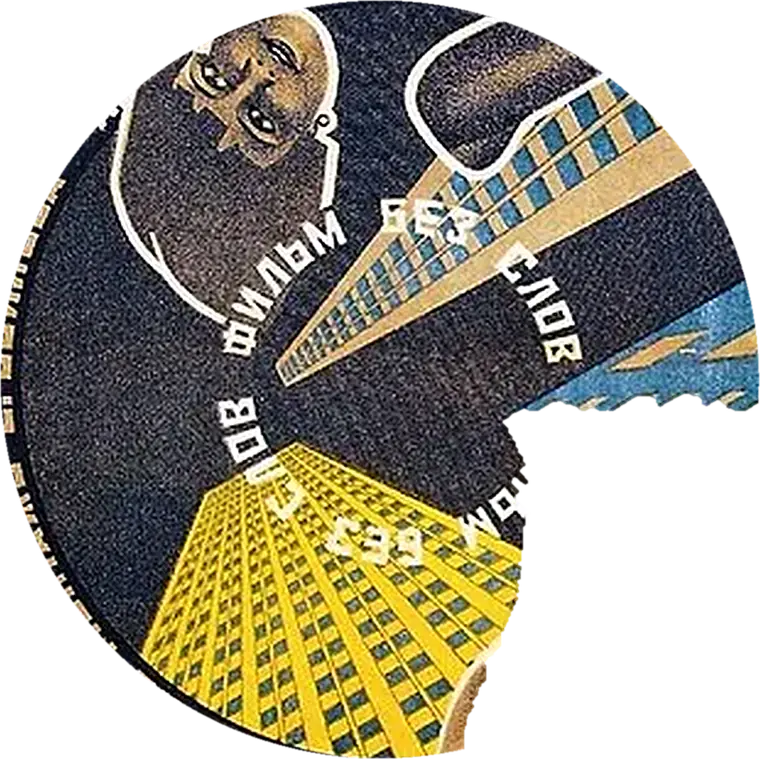
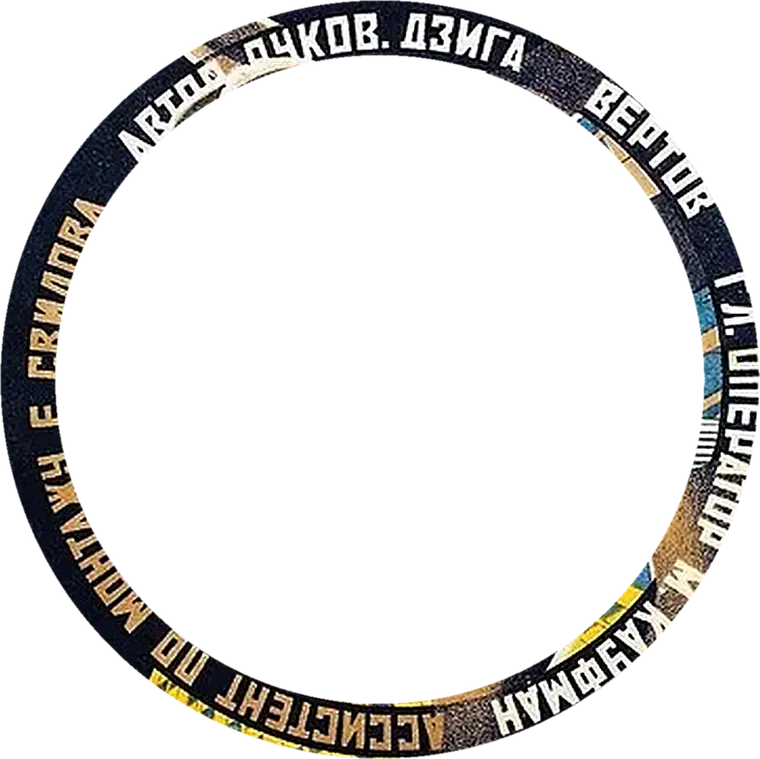
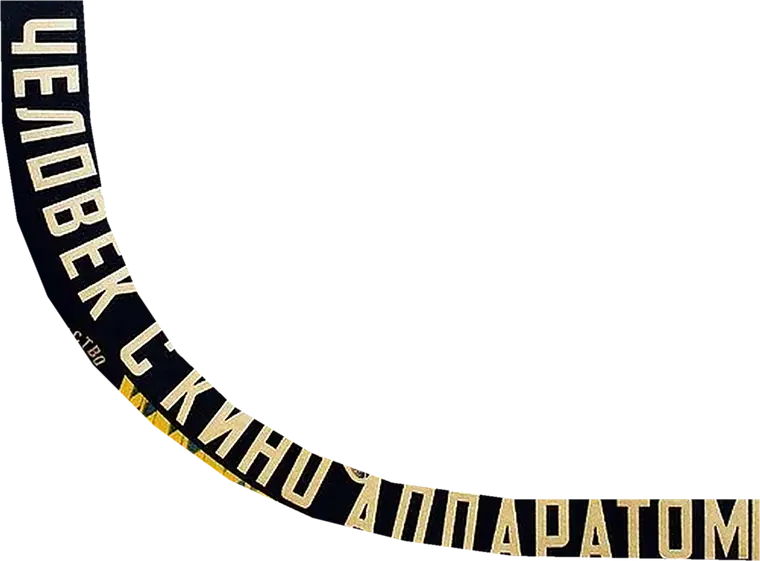
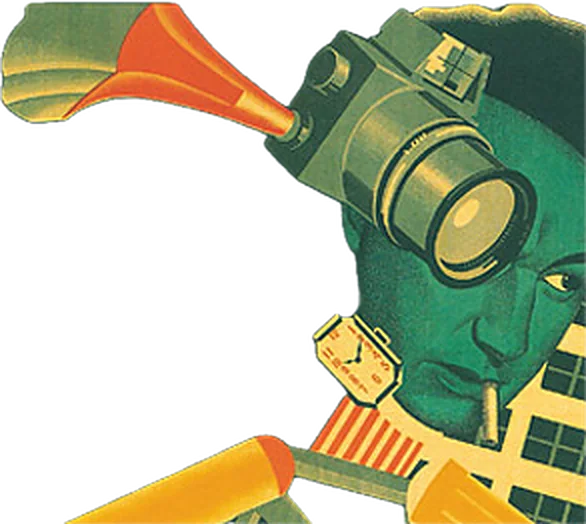
Georgii and Vladimir Stenberg drew this poster for Dziga Vertov’s film Man with a Movie Camera in 1929: a woman falling between skyscrapers, a ring of credits where her body should be. Scrolling takes it apart.

Cut-outs: G. and V. Stenberg, 1929

Log

  • The United Kingdom votes to leave the European Union, 51.9 to 48.1 percent.
  • WikiLeaks publishes emails of the Democratic National Committee stolen by Russia’s military intelligence, the GRU.
  • Donald Trump wins 304 electoral votes to Hillary Clinton’s 227. Clinton leads the popular vote by 2,868,686.
  • “Post-truth” is Oxford’s word of the year.
  • The US intelligence assessment: Russia ran an influence campaign to help Trump. It makes no assessment of the effect on the outcome.
  • Facebook tells Congress that content from the Internet Research Agency reached about 126 million Americans.
  • Robert Mueller indicts 13 Russians and three companies over the Internet Research Agency; on 13.07.2018, twelve GRU officers over the hacking.
  • The Mueller report: Russia interfered “in sweeping and systematic fashion”; the investigation “did not establish” that the Trump campaign conspired or coordinated with the Russian government.
  • Senate Intelligence Committee, volume 2: the Internet Research Agency targeted African Americans more than any other group.

2016–2019 · United Kingdom, United States · End of Stage 1

The Brexit vote, Russian interference and the election of Donald Trump, 2016

I watched 2016 from Britain: the referendum in June, Trump in November. Many of those who lost blamed Russian trolls and Cambridge Analytica. The record is narrower. Russia did interfere: the GRU stole the emails, the Internet Research Agency ran the accounts. The intelligence agencies made no assessment of what it did to the result, and Mueller did not establish coordination with the Trump campaign.

The Internet Research Agency aimed most at African Americans, the audience the KGB’s AIDS story had worked on thirty years before. Post-truth did not begin in 2016. This part of the file ends here, a year before Stage 2.

Bezmenov · Stage 2 of 4

Stage 2: Destabilisation, 2017–2020

Bezmenov’s second stage takes two to five years. The economy, the law, institutions and relations between people are unsettled. In this file it runs from the first #MeToo reports in October 2017 to the lockdown of March 2020.

Predicted 2–5 years · In this file 2.5 years

Books on the destabilisation of the West

  • 1918The Decline of the WestOswald SpenglerCultures grow, then harden into civilisations; the West, he argued, had entered its late age of money, mass cities and Caesarism. Spengler 1918
  • 2006LondonistanMelanie PhillipsMulticulturalism and official tolerance, she argues, let London become a base for Islamist radicals. Phillips 2006
  • 2022An Immigrant’s Love Letter to the WestKonstantin KisinA Russian-born British comedian defends Western freedoms and criticises the habit of running the West down from inside. Kisin 2022
LIBYATURKEYGERMANYPOLANDBELARUSUKITALYGREECESPAINMOROCCOSYRIAALGERIAFRANCENIGERSENEGAL CENTRAL MEDITERRANEAN66,318 in 2025AEGEAN · BALKANSmain route of 2015BELARUS · POLANDbarrier 186 km, 2022CHANNEL41,472 in 2025ATLANTICto the Canary Islands33,000+ dead or missing2014–2025 (IOM) CEUTA17–18 May 2021 · about 8,000 in two days COUVRE-FEU PARIStents in the north of the city CALAIS · DUNKIRKcamps behind the beaches DOVER

Main irregular routes into Europe, simplified · base map: Natural Earth

2015–2026 · European Union and United Kingdom

Migration to Europe across the Mediterranean, the Balkans, the Belarus border and the Channel, 2015–2026

Six routes, drawn as you scroll. Frontex counted 1.83 million irregular crossings at the EU’s external borders in 2015 and about 178,000 in 2025. The map zooms to each route in turn and ends at Paris and the Channel.

2015–2016 · Turkey, Greece, the Balkans

Aegean and Balkans

From the Turkish coast to Lesbos and the other islands, then north through North Macedonia, Serbia, Hungary and Austria to Germany. Germany registers 476,649 asylum applications in 2015. The EU–Turkey statement of 18 March 2016 closes most of the route.

2014–2025 · Libya, Tunisia, Italy

Central Mediterranean

From Libya and Tunisia to Lampedusa and Sicily: 66,318 crossings in 2025. The International Organization for Migration counts more than 33,000 people dead or missing in the Mediterranean from 2014 to 2025.

17–18 May 2021 · Morocco and Spain

Ceuta

Spain’s enclave on the African coast is closed by a double fence. In two days in May 2021 about 8,000 people, 1,500 of them minors, entered Ceuta from Morocco, most of them swimming around the breakwater at Tarajal beach. Spain sent soldiers to the beach.

2020–2025 · West Africa, Canary Islands

Atlantic

From Senegal, Mauritania and Morocco to the Canary Islands, up to 1,500 km of open ocean. Frontex recorded 18% more arrivals on this route in 2024 than in 2023, while most other routes fell.

2021–2025 · Belarus and Poland

Belarus and Poland

In 2021 Belarus flies migrants to Minsk and pushes them to the Polish border. Poland completes a 5.5-metre steel barrier along 186 km on 30 June 2022, and on 27 March 2025 suspends the right to claim asylum at that border.

2018–2026 · France and England

The Channel

The small boats leave from the beaches between Dunkirk and Boulogne for Kent, with camps behind the dunes. 41,472 people crossed the Channel to England in 2025, and more than 200,000 since 2018.

October 2026 · Paris

Paris

Tents in the north of the city, people walking north towards the coast, police in the streets, and the curfew orders of this month. This is where the route of the file ends.

2015–2026 · European Union and United Kingdom

The record, 2015–2026

  • Angela Merkel on the refugees arriving through the Balkans: Wir schaffen das (We can do this).
  • Frontex detects 1.83 million irregular crossings at the EU’s external borders, some people counted twice. Germany registers 476,649 asylum applications, and 745,545 in 2016.
  • Belarus brings migrants to its border with Poland and pushes them across.
  • Poland completes a 5.5-metre steel barrier along 186 km of that border.
  • Germany starts checks at all its land borders.
  • Poland suspends the right to claim asylum at the Belarus border.
  • About 178,000 irregular crossings into the EU, the lowest since 2021. The Central Mediterranean route from Libya stays at 66,318. 41,472 people cross the Channel to England in small boats.
  • The EU Pact on Migration and Asylum applies in all member states.

I am a migrant myself. I moved to Britain in 2003, and Poland joined the European Union in May 2004. The routes on this map are a different process: arrivals that no state chose or counted in advance, organised by smugglers and, on the Belarus border, by a government.

Each route moves when another closes. The Aegean route of 2015 fell after the EU–Turkey statement of March 2016; Libya, the Atlantic and the Channel took the traffic. The International Organization for Migration counts more than 33,000 people dead or missing in the Mediterranean from 2014 to 2025.

Poland, the country I left, took in more than a million refugees from Ukraine in 2022 and at the same time built a wall on the Belarus border. Both decisions were the state choosing who enters.

People crossing the Channel to England in small boats, by year

  1. 2992018
  2. 1,8432019
  3. 8,4662020
  4. 28,5262021
  5. 45,7742022
  6. 29,4372023
  7. 36,8162024
  8. 41,4722025
  9. 18,5652026*

* 2026 to 24 September: 18,565, provisional. Home Office figures as reported; more than 200,000 people since 2018.

Irregular crossings into the European Union, all routes, by year

  1. 72k2012
  2. 107k2013
  3. 284k2014
  4. 1.82m2015
  5. 511k2016
  6. 205k2017
  7. 150k2018
  8. 139k2019
  9. 124k2020
  10. 200k2021
  11. 330k2022
  12. 380k2023
  13. 239k2024
  14. 178k2025

Frontex detections at the EU’s external borders, rounded to the nearest thousand; 2019, 2020, 2022 and 2023 as first published. A detection is not a person: in 2015 many people were counted once entering Greece and again entering Hungary from Serbia. 2025: about 178,000, the lowest since 2021.

Around the routes: 2015, Poland, Sweden, the Sahel

31.08.2015 · Berlin

“Wir schaffen das.”

Angela Merkel at her summer press conference. Germany registers 1.2 million asylum applications in 2015 and 2016.

Merkel 2015 · BAMF 2017

Paris · 2015

Je suis Charlie

  • 07.01Charlie Hebdo: 12 killed at the magazine’s offices; four more at the Hyper Cacher on 09.01.
  • 13.11Bataclan, Stade de France and café terraces: 130 killed, 90 of them at the Bataclan.

Charlie Hebdo attack · November 2015 attacks

Warsaw · 2015–2025

Nie

  • 09.2015The EU decides to relocate 160,000 asylum seekers. Poland takes none.
  • 02.04.2020The EU Court of Justice rules that Poland, Hungary and the Czech Republic broke EU law by refusing.
  • 03.2025Poland suspends the right to claim asylum at the Belarus border.

CJEU C-715/17 · Notes from Poland 2025

Sweden · Muslim share of the population

  1. 8.1%2016
  2. 11.1%2050, no migration
  3. 20.5%2050, medium
  4. 30.6%2050, high

Pew Research Center estimates and projections, 2017.

  • 28.06.2023A Quran is burned outside Stockholm’s central mosque. Burnings follow through the summer.
  • 17.08.2023Sweden raises its terror threat level to 4 of 5.
  • 29.01.2025The man behind the burnings, Salwan Momika, is shot dead in Södertälje.

Pew 2017 · Quran burnings in Sweden

Nigeria and the Sahel · 2009–2024

350,000

deaths in north-east Nigeria from the Boko Haram insurgency by the end of 2020, direct and indirect (UNDP).

  • 14.04.2014Boko Haram abducts 276 schoolgirls in Chibok.
  • 24.12.2023Attacks on villages in Plateau State kill nearly 200 people, most of them Christians.

UNDP 2021 · Chibok · Plateau 2023

Older borders: Europe and its neighbours, 711–1830

  1. 711Umayyad armies cross into Iberia; most of the peninsula falls within a decade.
  2. 732Battle of Tours: the Franks stop the advance north of the Pyrenees.
  3. 1241The Mongols defeat the Poles and their allies at Legnica, then turn back.
  4. 1453Constantinople falls to the Ottomans.
  5. 1492Granada, the last Muslim state in Iberia, surrenders to Castile and Aragon.
  6. 1529First Ottoman siege of Vienna.
  7. 1530–1780Barbary corsairs enslave an estimated 1 to 1.25 million Europeans (Davis).
  8. 1571Lepanto: the Holy League destroys the Ottoman fleet.
  9. 1683Jan III Sobieski leads the relief of Vienna on 12 September.
  10. 1830France takes Algiers; the corsair raids end.

Davis 2003 · Legnica · Vienna 1683 · Reconquista

  • False accusations

  • 2–10%of sexual assault reports shown to be false, across studies; 5.9% (8 of 136) in a ten-year university sample. Lisak et al. 2010
  • 35prosecutions for false rape allegations in England and Wales, against 5,651 for rape, January 2011 to May 2012. CPS 2013
  • Dating after #MeToo

  • 65%of US adults say the focus on harassment made it harder for men to know how to behave on a date, 2019. Pew 2020
  • 47%say dating got harder in the last ten years; half of single adults are not looking. Pew 2020
  • 63%of US men under 30 are single, against 34% of women under 30, 2022. Pew 2023

Log

  • The New York Times publishes its investigation of Harvey Weinstein.
  • #MeToo spreads on Twitter.
  • Defence Secretary Michael Fallon resigns over his past conduct.
  • The Financial Times reports on the Presidents Club dinner. The charity closes the next day.

2017–2018 · United Kingdom and United States · Stage 2

#MeToo and the presumption of innocence, 2017–2018

The abuse was real, and Weinstein was convicted in Los Angeles in 2022. What changed for everyone else was procedure. An accusation published online acted as a sentence before any hearing, and “believe victims” became an instruction to institutions.

Britain had already tested that instruction. In December 2014 the Metropolitan Police called Carl Beech’s claims of a Westminster paedophile ring “credible and true”. Officers searched the homes of Field Marshal Lord Bramall and of Lady Brittan, widow of a former home secretary. Nobody was charged. In July 2019 Beech was jailed for 18 years for perverting the course of justice and fraud.

Managers adapted the way people adapted in the PRL: they withdrew from contact that could be reported.

60%of male managers in the US uncomfortable mentoring, working alone or socialising with a woman, 2019, up about a third on 2018

Log · 1985–2025

  • Poland. The Citizens’ Militia starts Operation Hyacinth: gay men are detained, fingerprinted and registered. About 11,000 files are opened by 1987.
  • Section 28, which banned councils from promoting homosexuality, is repealed in England and Wales.
  • Civil Partnership Act and Gender Recognition Act (2004). The first same-sex weddings in England and Wales on 29 March 2014.
  • About a hundred Polish councils and regions declare themselves free of LGBT ideology.
  • The NHS Gender Identity Development Service at the Tavistock closes.
  • The Cass Review: the evidence for puberty blockers and cross-sex hormones in children is weak.
  • The ban on puberty blockers for under-18s outside research is made indefinite.
  • Supreme Court: woman in the Equality Act means biological sex.

1985–2025 · Poland and United Kingdom · Stages 1–4

Gay rights and gender identity law, from Operation Hyacinth to the Supreme Court, 1985–2025

I grew up in a state that kept files on gay men. The Militia called the operation Hyacinth and the files became known as the pink files. Britain went the other way while I lived there: in 2003 it repealed Section 28 and in 2004 it gave same-sex couples civil partnership. I count both as the liberal order working. The state stopped telling adults what they could do.

The change I object to came later and had a different subject. It moved from what adults may do to what everyone must say, and from adults to children. The Tavistock clinic prescribed puberty blockers on evidence that the Cass Review later found weak; the government has since banned them outside research. Poland showed the opposite reflex in 2019, when councils declared their towns free of an ideology. In both cases an institution set out to settle what people believe.

Bezmenov · Stage 3 of 4

Stage 3: Crisis, 2020

Bezmenov’s third stage can take as little as six weeks: a sudden emergency in which ordinary rules are suspended. In this file it runs from the lockdown of 23 March 2020 to the fall of the Colston statue on 7 June 2020, and it returns in France in September 2026.

Predicted up to 6 weeks · In this file 11 weeks

Log

  • 06:00. A general on television: martial law.
  • 20:30. A prime minister on television: “You must stay at home.”
  • Coronavirus Act 2020 receives Royal Assent.
  • Face coverings compulsory on public transport in England, and in shops from 24 July.
  • Vaccination becomes a condition of work in care homes. Revoked on 15 March 2022.
  • NHS Covid Pass required for nightclubs and large venues.
  • Australia. The Federal Court upholds the second cancellation of Novak Djokovic’s visa, made because his presence might encourage opposition to vaccination. He is deported the same night and misses the Australian Open.

2020–2022 · England · Stage 3

Lockdown, compulsory masks and conditional vaccination, 2020–2022

On 23 March 2020 I heard a sentence I had last heard as a child in Poland: you may leave your home only for permitted reasons. Derbyshire Police flew a drone over walkers in the Peak District and published the footage.

Masks became law on buses and trains, then in shops. In 2023 a Cochrane review of community trials concluded that masks “probably make little or no difference” to influenza-like or COVID-like illness. Cochrane’s editor-in-chief then said the review could not show whether wearing a mask reduces a person’s own risk. A 2022 Johns Hopkins working paper estimated that lockdowns in Europe and the US reduced COVID-19 mortality by 0.2 percent on average. That estimate is disputed.

Vaccination never became a general legal duty in England. It became a condition of employment for care-home staff, and a pass for nightclubs and large events. On paper the choice was free. In practice the wrong choice cost a job or a ticket.

The rules did not bind the people who wrote them. In April 2022 Boris Johnson became the first sitting prime minister found to have broken the law, fined over a gathering in Downing Street.

The pandemic represents a rare but narrow window of opportunity to reflect, reimagine, and reset our world.

Klaus Schwab, World Economic Forum, June 2020

Log

  • George Floyd is killed by a police officer in Minneapolis.
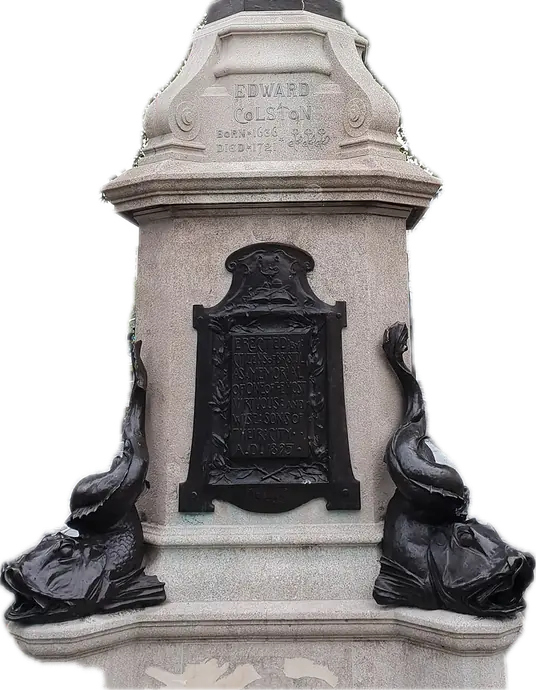
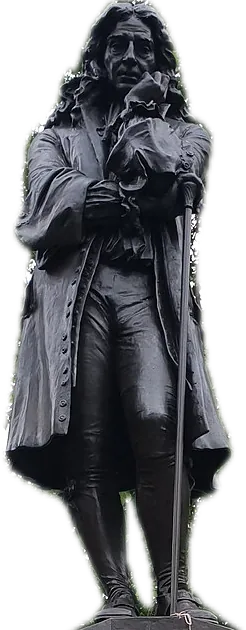
  • In Bristol the statue of Edward Colston, erected in 1895, is pulled down and rolled into the harbour.
  • The Commission on Race and Ethnic Disparities publishes the Sewell report.
  • The “Colston Four” are acquitted of criminal damage.

2020 · Minneapolis and Bristol · Stage 3

Black Lives Matter and the Bristol statue, 2020

The killing of George Floyd was a crime, and the officer was convicted of murder in 2021. Within two weeks the protest crossed the Atlantic and changed its subject, from American policing to British history.

I was told that I carried white privilege. The category was new to me. I came from a country that had been partitioned, occupied and governed from Moscow, and I arrived in Britain to do the work on offer to Eastern Europeans. Ibram X. Kendi’s How to Be an Antiracist states the new rule plainly: “The only remedy to past discrimination is present discrimination.”

The Sewell report concluded in 2021: “We no longer see a Britain where the system is deliberately rigged against ethnic minorities.” A UN working group condemned it within weeks.

The Khmer Rouge called 1975 Year Zero: history restarted by decree. Pulling down a statue is not a massacre. It rests on the same claim at a smaller scale: the people who hold the street decide what the past was. In September 2022 the Court of Appeal ruled that a protest defence cannot cover significant damage to property.

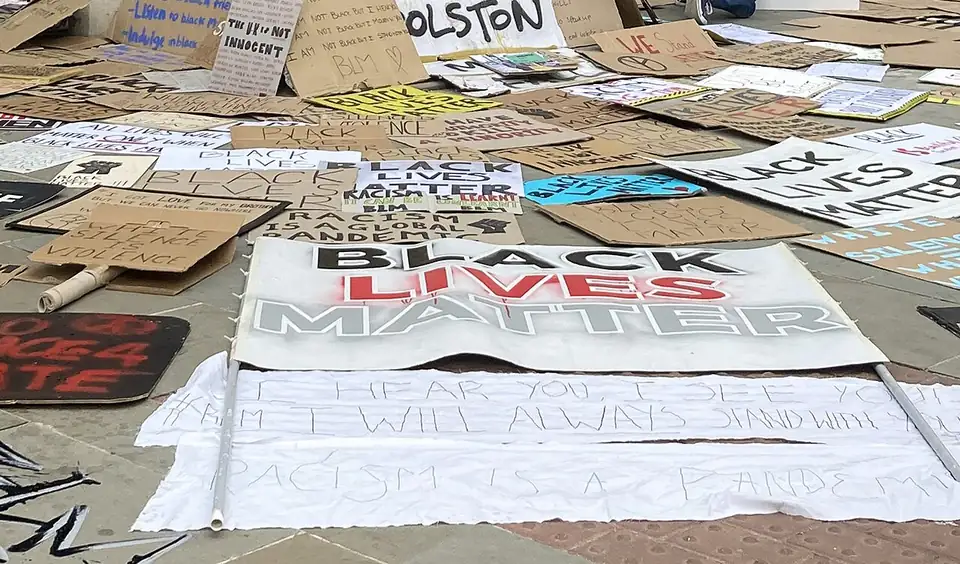
Placards on the ground around the empty plinth in Bristol, 7 June 2020
The plinth of the Colston statue in Bristol Bronze statue of Edward Colston by John Cassidy, 1895
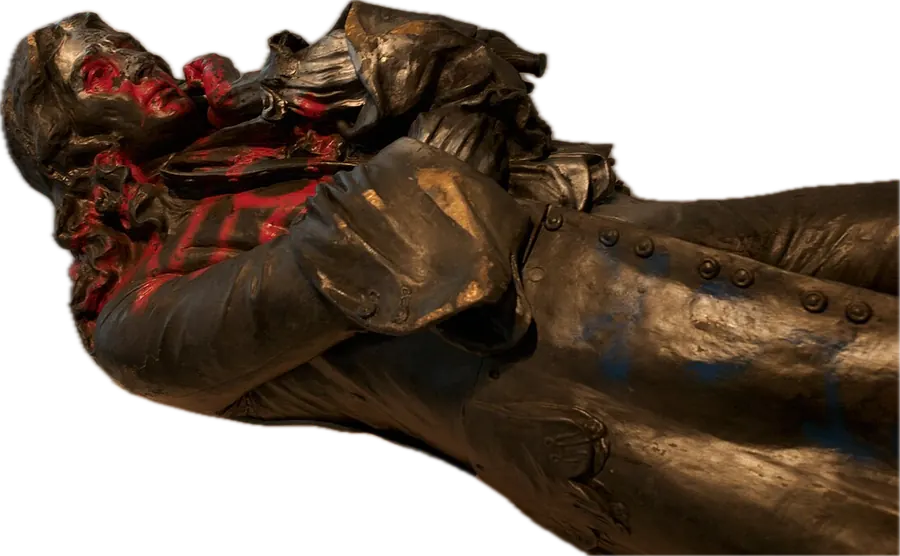
The statue lying on its back in a display at the M Shed museum, with paint still on it

1895–2022 · Bristol · Stage 3

The Colston statue, 1895–2022

  1. 1895Erected in the Centre, Bristol
  2. 07.06.2020Pulled down and rolled into the harbour
  3. 11.06.2020Recovered by the council
  4. 04.06.2021Displayed lying down at the M Shed museum
  5. 05.01.2022Four defendants acquitted of criminal damage

Statue: HJ Mitchell, 2019, CC BY 4.0 · placards: Caitlin Hobbs, 2020, CC BY 3.0 · M Shed: Adrian Boliston, 2021, CC BY 2.0

Bezmenov · Stage 4 of 4

Stage 4: Normalisation, 2020–2026

Bezmenov’s last stage lasts indefinitely. The emergency is declared over, and the tools built for it become ordinary. In this file it runs from summer 2020 to September 2026, when the crisis returned in France.

Predicted indefinite · In this file 6.3 years so far

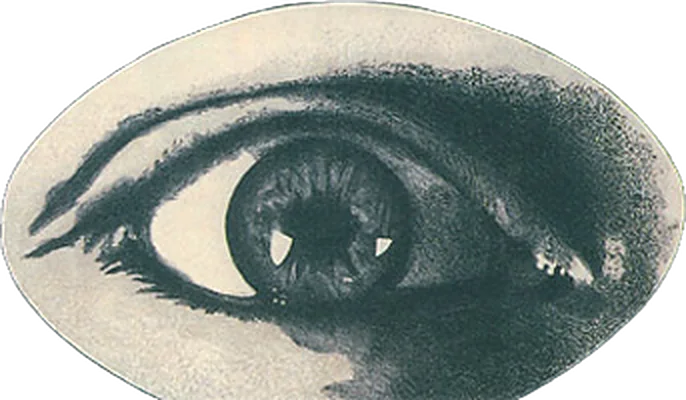
Kino-Eye, 1924 · Symphony of a Great City, 1928

The mechanical eye, from Vertov’s camera to face recognition

“I am kino-eye, I am a mechanical eye. I, a machine, show you the world as only I can see it.” Dziga Vertov wrote it in 1923, and Alexander Rodchenko drew the eye for Vertov’s film in 1924. A century later the machine also names the people it sees.

Cut-outs: A. Rodchenko, 1924; G. and V. Stenberg, 1928

Log

  • GDPR applies across the EU and the UK.
  • Court of Appeal: South Wales Police’s live facial recognition was unlawful (Bridges).
  • Online Safety Act 2023. Age checks enforced from 25 July 2025.
  • Prime Minister Keir Starmer announces a digital ID for right-to-work checks. Nearly 3 million people sign a petition against it.
  • Home Office white paper: 40 more face-recognition vans and £26 million for a national system.
  • The EU restores voluntary scanning of private messages until April 2028.

2018–2026 · EU and United Kingdom · Stage 4

Data law, online safety law, digital ID and face recognition, 2018–2026

GDPR protects me from the shop more than from the state. Article 23 lets governments restrict data rights for national security, defence, public security and the prevention of crime. Citizens received a consent banner on every website. The state received a compliance industry and the habit of licensing every use of information.

The Online Safety Act made platforms legally responsible for what their users say, and the EU’s Digital Services Act did the same across the Union. In January 2026 ministers said digital ID would not be compulsory for citizens. Digital right-to-work checks remain the plan.

Faces come next. The Met plans fixed cameras on street furniture in the West End and drones in every London borough. In 2003 the cameras recorded. In 2026 they recognise.

The research is public. In 2013 Kosinski, Stillwell and Graepel showed that Facebook likes predict sexual orientation, religion and political views. Wang and Kosinski (2018) classified sexual orientation from face photographs, and a 2019 replication reached similar results. Kosinski (2021) classified political orientation from the faces of 1,085,795 people, correct in 72 percent of liberal–conservative pairs. Kosinski, a Polish-born psychologist, published the work as a warning. Steven Feldstein counted at least 75 of 176 countries using AI surveillance in 2019. His article on it is titled The Road to Digital Unfreedom.

Paris · 17–26 October 2026

Paris under curfew, October 2026

Illustration: masked protesters throwing stones, a line of riot police, a burning car and fires across the roofs, drawn from the reported events of 17 October 2026.

Case file · France · October 2026

550,000marchers, 17 October

2,700arrested, 17–22 October

1,314arrested, 24–25 October

70,000police and gendarmes, 24 October

File updated 27.10.2026

Log · 18 September – 26 October 2026

  • Blockade at the Lycée Antoine-de-Saint-Exupéry in Créteil, over budget cuts, overcrowded classes and the Parcoursup admissions system.
  • 1,027 lycées disrupted, 222 blockaded. University students join.
  • The education minister reports 24 schools burned or ransacked.
  • 550,000 marchers by the Interior Ministry’s count, 800,000 by the organisers’. Limoges city hall set on fire. Looting in Paris, Lyon and Marseille. A police officer killed by a vehicle in Nantes.
  • Local curfews, Paris included.
  • Justice Minister Gérald Darmanin: 2,700 arrested, more than 1,000 before the courts, 217 jailed. The police prefecture renews the night curfew on the Place de la République and Les Halles, 23:00 to 06:00, every night until the morning of 26 October.
  • 70,000 police and gendarmes deployed, with soldiers of Opération Sentinelle. Protests banned in Lyon, Marseille, Nice and Toulon. Major museums closed. The yellow vests’ “Act II” marches with the students: 410,000 people by the Interior Ministry’s count, 800,000 by the CGT’s; 110,000 to 250,000 in Paris.
  • Interior Ministry: 1,314 arrested over the weekend, 53 officers injured, 75 fires, 24 shops looted. The night was calm. The yellow vests call a march for 31 October.
  • The prefecture keeps the République curfew for the night of 26–27 October. Prime Minister Sébastien Lecornu receives the lycée unions: classes of 28 in seconde, 3,600 teaching posts, €1 billion for university buildings, a new admissions system to replace Parcoursup in 2028. Les Lycéens! and Renouveau lycéen keep their dates: 31 October and 5 November.

18.09–26.10.2026 · France · Crisis, second round

Student protests, riots and curfews in France, September–October 2026

The communist youth movements marched with the students: the Mouvement Jeunes Communistes de France and the Union of Communist Students, next to the CGT, the French Communist Party and La France Insoumise. Hammer-and-sickle graffiti appeared on the walls. A fifteen-year-old in Lens lost a hand to a police stun grenade.

In May 1968 students in Paris pulled up the cobblestones and wrote Sous les pavés, la plage on the walls. In 2026 teenagers in masks throw stones at the riot police again. The texts are still on the shelf: Debord’s The Society of the Spectacle, the Invisible Committee’s The Coming Insurrection, Badiou’s The Communist Hypothesis.

The state answers in its own language: curfews, protest bans, and a promise from the President to ban “illegitimate” protests and require approval for the rest. Amnesty International called the police force disproportionate. On 26 October the Prime Minister offered classes of 28, 3,600 teaching posts and the end of Parcoursup in 2028; the lycée unions kept their dates for 31 October and 5 November. Both sides of the street ask for more state. They disagree about who should run it.

In the 1980s I was born into a country under curfew. In October 2026 I read the curfew orders for Paris.

1969–2026 · Riyadh, East Berlin, London, Paris

The keffiyeh: a host’s dress in Riyadh, a political banner in Europe

  • Yasser Arafat becomes chairman of the Palestine Liberation Organization. His black-and-white keffiyeh becomes its emblem.
  • Arafat at the UN General Assembly: “I have come bearing an olive branch and a freedom fighter’s gun.”
  • Erich Honecker receives Arafat in East Berlin. The Soviet bloc arms and trains the PLO.
  • Al Jazeera goes on air from Doha, founded by the emir of Qatar, Sheikh Hamad bin Khalifa Al Thani, with about $137 million from his government. From 2012 Qatar also hosts the political office of Hamas.
  • Hamas, an Islamist movement, takes control of Gaza from Arafat’s secular Fatah.
  • Mohammed bin Salman, Saudi crown prince since June, promises a return to a country of moderate Islam that is open to all religions and the world.
  • A Palestinian flag on a barricade in Rennes during the French protests (AFP). Muslim Students of France march alongside the communist youth.

I have worn the shemagh in Saudi Arabia, as a guest wears his host’s dress. In Riyadh it is clothing. In London and Paris the same pattern is carried as a political sign, next to the red flags of the communist youth.

Arafat’s movement was secular and nationalist, and the Soviet bloc armed it. Hamas is Islamist. On European streets both are carried under one flag by a left that rejects religion and nationalism at home. Its critics call this the red–green alliance.

Yasser Arafat and Erich Honecker, East Berlin, 1982
Yasser Arafat and Erich Honecker, East Berlin, 10 March 1982 · Bundesarchiv, Bild 183-1982-0310-027
The author wearing a red-and-white shemagh at a Saudi Press Agency stand
The author at a Saudi Press Agency stand

Ledger · 1848–2026

What has been promisedWhat has been delivered

1848–1961Communism and the Great Leap Forward

The theory of the Communists may be summed up in the single sentence: Abolition of private property. Marx and Engels, 1848.

In November 1957 Mao announces that China will overtake Britain in steel output within fifteen years. The posters of 1958 promise harvests too heavy to carry and 10.7 million tonnes of steel in a single year.

Died in China’s famine, 1959–1961

15–45 million

deaths in the Chinese famine of 1959–1961. Yang Jisheng’s Tombstone counts 36 million; Frank Dikötter estimates 45 million. Much of the steel of 1958 came from backyard furnaces and could not be used.

In the Soviet Union about 18 million people passed through the Gulag between 1930 and 1953.

1807–2020Post-colonialism and anti-slavery

Frantz Fanon’s The Wretched of the Earth (1961) and Edward Said’s Orientalism (1978) taught Western universities to read their own history as a record of empire and slavery. Rhodes Must Fall spread from Cape Town to Oxford in 2015. In June 2020 protesters in Bristol threw Edward Colston’s statue into the harbour.

Britain banned the slave trade in 1807 and slavery in 1833. From 1808 to 1860 the Royal Navy’s West Africa Squadron freed about 150,000 Africans from slave ships.

Saudi Arabia abolishes slavery

1962

Saudi Arabia abolishes slavery, 129 years after Britain. On the Arabian Peninsula slavery stays legal long after Europe: Qatar abolishes it in 1952, Oman in 1970. Mauritania follows in 1981.

In 2021 the International Labour Organization counts 27.6 million people in forced labour worldwide, with the highest rate in the Arab States. Migrant workers in the Gulf are tied to their employers under the kafala system.

2001–2026Gulf money in Western institutions

Qatar presents itself as a partner in progress. Its foundation brings American universities to Doha. AJ+, Al Jazeera’s English video channel for young Western audiences, reports on racism, gender and LGBT rights. Saudi Arabia buys into European sport through its Public Investment Fund, Newcastle United included, in 2021.

Qatari money to US universities

$7.7 billion

in gifts and contracts from Qatar to US universities since 1986, the largest foreign source in the US Department of Education’s disclosure data.

September 2020: the US Department of Justice orders AJ+ to register as an agent of Qatar. December 2022: Belgian police seize about €1.5 million in cash in the Qatargate inquiry into bribery at the European Parliament; Qatar and Morocco deny involvement, and in February 2026 an appeal court lets the prosecution proceed. Qatar Papers (2019) documents €71 million from Qatar Charity for 140 mosque and Islamic-centre projects in Europe.

At home both states keep the death penalty and criminalise sex between men. Saudi Arabia executed at least 356 people in 2025, a record, 240 of them for drug offences.

1968–2025Sexual liberation

The sexual revolution promised freedom from shame and from the state’s interest in private life. Paris, May 1968: Il est interdit d’interdire (It is forbidden to forbid).

UK adults on porn sites in one month

29%

of UK adults online, about 13.8 million people, visited pornography sites in May 2024 (Ofcom). Children first see pornography at 13 on average, one in ten by the age of 9 (Children’s Commissioner, 2023).

From 25 July 2025 the Online Safety Act requires age checks by face scan or ID. Ofcom reports visits down by almost a third and daily VPN users doubled to about 1.5 million. The state left private life in the 1960s and returned to it with an age check.

2010–2025Migration

We would like to see net immigration in the tens of thousands rather than the hundreds of thousands. David Cameron, January 2010.

Wir schaffen das. (We can do this.) Angela Merkel, 31 August 2015.

Net migration to the UK in one year

944,000people

net migration to the United Kingdom in the year to March 2023, the highest on record; 204,000 in the year to June 2025 (ONS).

Germany registers 1.2 million asylum applications in 2015 and 2016 and from September 2024 checks all its land borders.

2020–2021Pandemic rules

I think we can turn the tide within the next 12 weeks. Boris Johnson, 19 March 2020. Four days later the stay-at-home order is set for review after three weeks.

England under Covid law

16 monthsof legal restrictions

from the first stay-at-home order on 23 March 2020 until England lifts its last legal restrictions on 19 July 2021, after three national lockdowns.

1917 25 October, old style · the Bolsheviks take the Winter Palace, Petrograd

2026 24 October · 70,000 police and gendarmes deployed across France after a week of student-led protests

London, Paris · 2019–2026

Red and green: two marches become one

On 25 February 2019 Home Secretary Sajid Javid banned Hezbollah as a whole: Britain could no longer distinguish its banned military wing from its political party. Hezbollah flags had been reported at London’s annual Al-Quds Day march. The keffiyeh and the red flag of the student left now walk in the same column.

Illustration: a masked protester in a keffiyeh holding a Free Palestine sign Illustration: a masked militia fighter in olive fatigues and a yellow headband

Generated illustrations, not photographs · Z-Image via Higgsfield, 27 October 2026 · RUSI 2019

Illustration: the Leaning Tower of Pisa in flames beside the Eiffel Tower and the Brandenburg Gate under a red sky

Paris, Pisa, Berlin · a fear, not a record

Europe on fire

No fire has touched the tower of Pisa. This is the picture I carry when I read the curfew orders. Notre-Dame burned by accident on 15 April 2019 and reopened on 7 December 2024. Limoges city hall burned on 17 October 2026.

Generated illustration, not a photograph · Z-Image via Higgsfield, 27 October 2026

Illustration: uniformed officers at computer screens in front of a red map of Europe

Moscow, St Petersburg · 1991–2026

The KGB at the keyboard

The KGB was dissolved in 1991. Its trade passed to the SVR, the FSB and the GRU, and to contractors. In February 2018 a US grand jury indicted the Internet Research Agency of St Petersburg for running fake American accounts; in July 2018 it indicted twelve GRU officers for the hack of the Democratic Party. Bezmenov’s demoralisation now runs on social media feeds.

Generated illustration, not a photograph · Z-Image via Higgsfield, 27 October 2026 · IRA indictment 2018 · GRU indictment 2018 · Mueller 2019

October 2026 · Stage 4 · Normalisation · after Ya. Ruklevsky’s poster for Oktyabr, 1927

Two routes from October 2026: planned state or technocratic state

Bezmenov’s last stage is normalisation: the crisis is declared over, and what it produced is called normal. From October 2026 I see two routes. Both are already under construction, and France elects a president in spring 2027.

Route A · Planned state

The state decides

Already proposed or in force:

  • Wealth. A minimum tax of 2 percent on fortunes above €100 million, the taxe Zucman. Adopted by the National Assembly in February 2025, rejected by the Senate in June 2025, rejected again in the October 2025 budget vote. It stays in the left’s programmes.
  • Prices. A freeze on the prices of essential goods in La France Insoumise’s programme, L’Avenir en commun.
  • Spending. French public spending already near 57 percent of GDP, among the highest in the EU.
  • The street. The demand of September 2026: more teachers, more public money, no cuts.

Planning leads to dictatorship because dictatorship is the most effective instrument of coercion and the enforcement of ideals.

F. A. Hayek, The Road to Serfdom, 1944

Endpoint: the state owns the decision

Route B · Technocratic state

The system decides

Already built or legislated:

  • Identity. Every EU member state must offer a Digital Identity Wallet by the end of 2026. The UK plans digital right-to-work checks.
  • Faces. Ten face-recognition vans in England and Wales, 40 more proposed, a £26 million national system, fixed cameras in London’s West End.
  • Messages. Voluntary scanning of private messages extended to April 2028. Mandatory detection orders are still in negotiation.
  • Money. The ECB is preparing a digital euro. The Commission’s proposal of June 2023 is before the Parliament and the Council.
  • Speech. Platforms legally liable for what users post, under the Online Safety Act and the Digital Services Act.

Individuals have become “dividuals,” and masses, samples, data, markets, or “banks.”

Gilles Deleuze, Postscript on the Societies of Control, 1990

Endpoint: the system owns the record

Where the two routes meet

Ryszard Legutko, a Polish philosopher who lived under communism and later sat in the European Parliament, argues in The Demon in Democracy (2016) that liberal democracy and communism share the same habits: faith in progress, the engineering of society and impatience with the past. On route A the citizen asks the state for permission. On route B the citizen asks the system. On both, the citizen asks.

Such systems end when enough people stop speaking the second language in public. In 1989 that was enough.

Filed 24 October 2026, the day 70,000 police and gendarmes were deployed across France

Public Sénat on the taxe Zucman · L’Avenir en commun · Regulation (EU) 2024/1183 · COM(2023) 369 · Hayek 1944 · Deleuze 1990 · Legutko 2016

Index · Источники · the evidence of the file

Sources

Books, testimony, research papers, laws, court judgments and reporting cited in the entries above, grouped by subject. Reporting on France covers events up to 24 October 2026.

Political theory and philosophy

The books the page argues with, from Marx and Lenin to Beauvoir, Fanon, Hall, Butler, Arday, the Invisible Committee and Schwab. Cited in the source texts, the heads and most entries.

  1. Marx, K. and Engels, F. (1848). Manifesto of the Communist Party. London.
  2. Lenin, V. I. (1902). What Is to Be Done?
  3. Lenin, V. I. (1917). The State and Revolution.
  4. Spengler, O. (1918–1922). Der Untergang des Abendlandes, 2 vols. English: The Decline of the West (1926–1928). Knopf.
  5. Trotsky, L. (1920). Terrorism and Communism.
  6. Gramsci, A. (1929–1935). Prison Notebooks.
  7. Hayek, F. A. (1944). The Road to Serfdom. Routledge.
  8. Beauvoir, S. de (1949). Le Deuxième Sexe. Gallimard.
  9. Fanon, F. (1952). Peau noire, masques blancs (Black Skin, White Masks). Éditions du Seuil.
  10. Miłosz, C. (1953). Zniewolony umysł (The Captive Mind). Instytut Literacki, Paris.
  11. Marcuse, H. (1965). Repressive Tolerance. In A Critique of Pure Tolerance. Beacon Press.
  12. Debord, G. (1967). La Société du spectacle. Buchet-Chastel.
  13. Le manifeste des 343 (5 April 1971). Le Nouvel Observateur. Written by Simone de Beauvoir.
  14. Hall, S. (1973). Encoding and Decoding in the Television Discourse. Stencilled Occasional Paper 7, Centre for Contemporary Cultural Studies, University of Birmingham.
  15. Foucault, M. (1975). Surveiller et punir (Discipline and Punish). Gallimard.
  16. Hall, S., Critcher, C., Jefferson, T., Clarke, J. and Roberts, B. (1978). Policing the Crisis: Mugging, the State and Law and Order. Macmillan.
  17. Hall, S. (January 1979). The Great Moving Right Show. Marxism Today.
  18. Kołakowski, L. (1976–1978). Main Currents of Marxism, 3 vols.
  19. Lyotard, J.-F. (1979). La Condition postmoderne. Minuit.
  20. Deleuze, G. (1990). Post-scriptum sur les sociétés de contrôle. L’Autre journal 1. English: October 59 (1992), 3–7.
  21. Butler, J. (1990). Gender Trouble: Feminism and the Subversion of Identity. Routledge.
  22. Phillips, M. (2006). Londonistan: How Britain Is Creating a Terror State Within. Gibson Square.
  23. The Invisible Committee (2007). L’insurrection qui vient (The Coming Insurrection). La Fabrique.
  24. Badiou, A. (2009). L’Hypothèse communiste (The Communist Hypothesis). Lignes.
  25. Legutko, R. (2016). The Demon in Democracy: Totalitarian Temptations in Free Societies. Encounter Books.
  26. Arday, J. and Mirza, H. S., eds. (2018). Dismantling Race in Higher Education: Racism, Whiteness and Decolonising the Academy. Palgrave Macmillan.
  27. Wikipedia. Jason Arday. Read 27 October 2026. en.wikipedia.org
  28. DiAngelo, R. (2018). White Fragility. Beacon Press.
  29. Kendi, I. X. (2019). How to Be an Antiracist. One World.
  30. Zuboff, S. (2019). The Age of Surveillance Capitalism. PublicAffairs.
  31. Schwab, K. and Malleret, T. (2020). COVID-19: The Great Reset. Forum Publishing.
  32. Kisin, K. (2022). An Immigrant’s Love Letter to the West. Constable.

Informers, the mechanical eye and the keffiyeh

Pavlik Morozov’s story and its retellings; Vertov’s camera-eye manifesto and the film posters cut up across the page; Arafat at the UN and in East Berlin; the portraits in the heads row.

  1. Druzhnikov, Y. (1997). Informer 001: The Myth of Pavlik Morozov. Transaction Publishers. Russian edition Доносчик 001, 1988.
  2. Kelly, C. (2005). Comrade Pavlik: The Rise and Fall of a Soviet Boy Hero. Granta.
  3. Wikipedia. Pavlik Morozov. Read 24 October 2026. en.wikipedia.org
  4. R (Miller) v College of Policing [2020] EWHC 225 (Admin).
  5. Portrait of Pavel Morozov, 1932. Public domain, via Wikimedia Commons.
  6. Vertov, D. (1923). Kinoks: A Revolution. LEF 3.
  7. Rodchenko, A. (1924). Poster for Kino-Glaz (Kino-Eye), directed by D. Vertov.
  8. Stenberg, G. and V. (1928). Poster for Berlin: Symphony of a Great City, Soviet release.
  9. Strakhov, A. (1926). Poster Emancipated woman, build socialism!
  10. Arafat, Y. (13 November 1974). Address to the UN General Assembly, 29th session.
  11. Bundesarchiv, Bild 183-1982-0310-027: Yasser Arafat and Erich Honecker, Berlin, 10 March 1982. CC BY-SA 3.0 DE, via Wikimedia Commons.
  12. Portraits in the heads row: Marx (J. Mayall, 1875), Lenin (1920), Trotsky (1918), Gramsci, Marcuse (1955), Wikimedia Commons. Derrida, Foucault and Deleuze: lead image of Foreign Policy, 21 December 2021.
  13. “Keir Stalin” satirical T-shirt print, sold online. Seller and date not recorded.

Informers: Pavlik Morozov, the Red Guards and the Stasi

The child who reports his parents, from the Soviet hero Pavlik Morozov to Zhang Hongbing, who denounced his mother in 1970, and the Stasi’s unofficial collaborators. Cited in the Pavlik Morozov entry and the heads row.

  1. Chebakov, N. N. (1952). Pavlik Morozov. Oil on canvas, 186 × 233 cm, Zh-6029. State Russian Museum. rusmuseumvrm.ru
  2. USSR postage stamp (1950). To the hero-pioneer Pavlik Morozov: opening of the monument in Moscow. Public domain, via Wikimedia Commons.
  3. Foreign Policy (31 October 2013). Speak, Memory. foreignpolicy.com; ChinaFile, Apologies for a Horrific Past. chinafile.com
  4. Landsberger, S. R., IISH and private collections: chineseposters.net, Flickr channel. He Kedi (1973), PC-1973-011; Wang Xijing (1974), Xi’an Ribao; Qian Daxin (1958), BG E15/449; Shen Tao (1960), BG E37/220; Lu Xingchen and Shen Lin (1958), BG E16/270. flickr.com/photos/chinesepostersnet
  5. Bundesarchiv, Stasi Records Archive: unofficial collaborators (IM). stasi-unterlagen-archiv.de
  6. Malone Pictures. Comrade Yuri: A KGB Confession, documentary poster (Bezmenov portrait in the heads row). Supplied by the author.

Migration to Europe, 2015–2026

Counts of crossings, asylum claims, border fences and deaths on the routes into the EU and across the Channel, and the map data behind the migration chart. Cited in the migration band and the map.

  1. Merkel, A. (31 August 2015). Summer press conference, Federal Press Conference, Berlin.
  2. Frontex (2015). Number of illegal border crossings at record high in Q4; Frontex (2026). Initial figures for 2025, as reported by dpa. frontex.europa.eu
  3. BAMF (2017). Das Bundesamt in Zahlen 2016. Federal Office for Migration and Refugees, Nuremberg.
  4. Euronews (30 June 2022). Poland completes 186-kilometre border wall with Belarus. euronews.com
  5. Federal Ministry of the Interior (9 September 2024). Temporary controls at all German land borders from 16 September 2024.
  6. Notes from Poland (26 April 2025). Poland’s suspension of asylum rights correct under EU law, says European commissioner. notesfrompoland.com
  7. Home Office, small boat arrivals; ITV News (24 September 2026). Channel crossings: busiest day for 2026. itv.com
  8. IOM Missing Migrants Project. missingmigrants.iom.int
  9. EUAA (2026). The Pact on Migration and Asylum entered into application on 12 June 2026. dip.euaa.europa.eu
  10. Natural Earth, 1:50m land and boundary lines. Public domain. naturalearthdata.com

Promised and delivered: the ledger

Each row sets a promise beside an outcome: communism and the Chinese famine, anti-slavery and slavery in the Gulf, Gulf money in Western institutions, sexual liberation and age checks, migration targets, and the pandemic rules. Cited in the ledger near the end of the page.

  1. Derrida, J. (1967). De la grammatologie. Minuit. English: Of Grammatology (1976).
  2. Yang, J. (2012). Tombstone: The Great Chinese Famine, 1958–1962. Farrar, Straus and Giroux.
  3. Dikötter, F. (2010). Mao’s Great Famine. Bloomsbury.
  4. Applebaum, A. (2003). Gulag: A History. Doubleday.
  5. Fanon, F. (1961). Les Damnés de la Terre. Maspero.
  6. Said, E. W. (1978). Orientalism. Pantheon.
  7. Wikipedia. West Africa Squadron. Read 24 October 2026. en.wikipedia.org
  8. Wikipedia. Slavery in Saudi Arabia; Slavery in Qatar. Read 24 October 2026. en.wikipedia.org
  9. ILO, Walk Free and IOM (2022). Global Estimates of Modern Slavery: Forced Labour and Forced Marriage. Geneva.
  10. US Department of Education, Section 117 foreign gift and contract disclosures, as reported by The College Fix and Algemeiner, January 2026. algemeiner.com
  11. U.S. Press Freedom Tracker (2020). Al Jazeera’s AJ+ ordered to register as foreign agent. pressfreedomtracker.us
  12. Wikipedia. Qatar corruption scandal at the European Parliament. Read 24 October 2026. en.wikipedia.org
  13. Chesnot, C. and Malbrunot, G. (2019). Qatar Papers: comment l’émirat finance l’islam de France et d’Europe. Michel Lafon.
  14. Reprieve and Human Rights Watch (2025–2026): executions in Saudi Arabia in 2025. themedialine.org
  15. Ofcom (2024). Online Nation 2024.
  16. Children’s Commissioner for England (2023). ‘A lot of it is actually just abuse’: Young people and pornography.
  17. Ofcom figures on visits to pornography sites and VPN use after 25 July 2025, as reported by TechRadar. techradar.com
  18. Cameron, D. (10 January 2010). Interview on The Andrew Marr Show, BBC One.
  19. Full Fact. How many migrants come to the UK? (ONS figures). fullfact.org
  20. Johnson, B. (19 March 2020). Prime Minister’s statement on coronavirus, 10 Downing Street.

Posters, monument and 3D model

Credits for the Soviet film posters, Mukhina’s statue and the 3D model that turns in the corner.

  1. Prusakov, N. (1928). Poster for Pervyi kornet Streshnev. Goskinprom Gruzii.
  2. Belsky, A. (c. 1929–1930). Poster for Trubka kommunara, directed by K. Marjanishvili. Goskinprom Gruzii. The Met dates its copy c. 1930.
  3. Ruklevsky, Ya. (1927). Poster for Oktyabr, directed by S. Eisenstein and G. Alexandrov. Dated 1927 in AnOther, Kino Film: Soviet Posters of the Silent Screen.
  4. Mukhina, V. (1937). Worker and Kolkhoz Woman. Stainless steel, 24.5 m. Soviet pavilion, Paris International Exposition; now VDNKh, Moscow.
  5. pkotelnikova5. Worker and Kolkhoz Woman (Рабочий и колхозница). 3D model, CC BY. sketchfab.com
  6. Getty, J. A., Rittersporn, G. T. and Zemskov, V. N. (1993). Victims of the Soviet Penal System in the Pre-war Years. American Historical Review 98(4), 1017–1049.

Communism in practice and testimony

Martial law in Poland, the death tolls of communist states, and Bezmenov’s account of subversion, the frame for the four stages.

  1. Rada Państwa (13 December 1981). Obwieszczenie o wprowadzeniu stanu wojennego. Wall proclamation of martial law.
  2. Kiernan, B. (1996). The Pol Pot Regime: Race, Power, and Genocide in Cambodia under the Khmer Rouge, 1975–79. Yale University Press.
  3. Courtois, S. et al. (1997). Le Livre noir du communisme. Robert Laffont.
  4. Bezmenov, Y. (1984). Interview with G. Edward Griffin, released as Soviet Subversion of the Free-World Press.
  5. Schuman, T. D. [Y. Bezmenov] (1984). Love Letter to America. NATA.

Research papers and surveys

Peer-reviewed studies and polls: self-censorship, face recognition, CCTV, the workplace effects of #MeToo, and the reviews of lockdowns and masks.

  1. Noelle-Neumann, E. (1974). The Spiral of Silence: A Theory of Public Opinion. Journal of Communication 24(2), 43–51. doi:10.1111/j.1460-2466.1974.tb00367.x
  2. McCahill, M. and Norris, C. (2002). CCTV in London. UrbanEye Working Paper 6.
  3. Kosinski, M., Stillwell, D. and Graepel, T. (2013). Private traits and attributes are predictable from digital records of human behavior. PNAS 110(15), 5802–5805. doi:10.1073/pnas.1218772110
  4. Wang, Y. and Kosinski, M. (2018). Deep neural networks are more accurate than humans at detecting sexual orientation from facial images. Journal of Personality and Social Psychology 114(2), 246–257. doi:10.1037/pspa0000098
  5. Leuner, J. (2019). A Replication Study: Machine Learning Models Are Capable of Predicting Sexual Orientation From Facial Images. University of Pretoria. arXiv:1902.10739
  6. Feldstein, S. (2019a). The Global Expansion of AI Surveillance. Carnegie Endowment for International Peace.
  7. Feldstein, S. (2019b). The Road to Digital Unfreedom: How Artificial Intelligence Is Reshaping Repression. Journal of Democracy 30(1), 40–52.
  8. Atwater, L. E. et al. (2019). Looking ahead: How what we know about sexual harassment now informs us of the future. Organizational Dynamics 48(4).
  9. LeanIn.Org and SurveyMonkey (17 May 2019). Men continue to pull back from interacting with women in the wake of #MeToo. surveymonkey.com
  10. Kosinski, M. (2021). Facial recognition technology can expose political orientation from naturalistic facial images. Scientific Reports 11, 100. doi:10.1038/s41598-020-79310-1
  11. Herby, J., Jonung, L. and Hanke, S. H. (2022). A Literature Review and Meta-Analysis of the Effects of Lockdowns on COVID-19 Mortality. Studies in Applied Economics 200, Johns Hopkins Institute for Applied Economics.
  12. Jefferson, T. et al. (2023). Physical interventions to interrupt or reduce the spread of respiratory viruses. Cochrane Database of Systematic Reviews CD006207. doi:10.1002/14651858.CD006207.pub6
  13. Soares-Weiser, K. (10 March 2023). Statement on the Cochrane review of physical interventions. Cochrane.
  14. Gibson, J. L. and Sutherland, J. L. (2023). Keeping Your Mouth Shut: Spiraling Self-Censorship in the United States. Political Science Quarterly 138(3), 361–376. wustl.edu

Laws, judgments and official reports

UK and EU legislation, court rulings and government reviews on equality, speech, data, online safety, digital ID and policing.

  1. Equality Act 2010 (c. 15). legislation.gov.uk
  2. Coronavirus Act 2020 (c. 7). legislation.gov.uk
  3. The Health Protection (Coronavirus, Restrictions) (England) Regulations 2020, SI 2020/350.
  4. Regulation (EU) 2016/679 (General Data Protection Regulation), Article 23. eur-lex.europa.eu
  5. Regulation (EU) 2022/2065 (Digital Services Act). eur-lex.europa.eu
  6. Online Safety Act 2023 (c. 50). legislation.gov.uk
  7. Regulation (EU) 2024/1183 (European Digital Identity Framework). eur-lex.europa.eu
  8. Regulation (EU) 2026/1881, interim derogation for voluntary detection of child sexual abuse material, to 3 April 2028. Summary: eucrim.eu
  9. European Commission (2023). Proposal for a Regulation on the establishment of the digital euro, COM(2023) 369.
  10. R (Bridges) v Chief Constable of South Wales Police [2020] EWCA Civ 1058.
  11. Forstater v CGD Europe, Employment Appeal Tribunal, 10 June 2021.
  12. Miller v College of Policing [2021] EWCA Civ 1926.
  13. Attorney General’s Reference No 1 of 2022 [2022] EWCA Crim 1259.
  14. For Women Scotland Ltd v The Scottish Ministers [2025] UKSC 16.
  15. Henriques, R. (2016). Independent Review of the Metropolitan Police Service’s handling of non-recent sexual offence investigations alleged against persons of public prominence.
  16. Commission on Race and Ethnic Disparities (2021). The Report. 31 March 2021.
  17. Cass, H. (2024). Independent review of gender identity services for children and young people: Final report.
  18. Home Office policing white paper, 26 January 2026. Reported in: The Register, 28 January 2026
  19. UK Government digital ID consultation, 10 March to 5 May 2026. Summary: Lewis Silkin, 23 March 2026
  20. La France Insoumise (2022). L’Avenir en commun. Programme.

False allegations and dating

Measured rates of false sexual-assault reports, prosecutions for false rape allegations, and surveys of dating and singleness after #MeToo. Cited in the #MeToo entry.

  1. Lisak, D., Gardinier, L., Nicksa, S. C. and Cote, A. M. (2010). False allegations of sexual assault: an analysis of ten years of reported cases. Violence Against Women 16(12), 1318–1334.
  2. Crown Prosecution Service (March 2013). Charging perverting the course of justice and wasting police time in cases involving allegedly false rape and domestic violence allegations. cps.gov.uk
  3. Pew Research Center (20 August 2020). Nearly half of U.S. adults say dating has gotten harder for most people in the last 10 years. Survey of October 2019. pewresearch.org
  4. Pew Research Center (8 February 2023). For Valentine’s Day, 5 facts about single Americans. Survey of July 2022. pewresearch.org

Surveillance, migration routes, gay rights, Djokovic and Colston

The Berlin Wall dead and Wujek; EU migration routes; Operation Hyacinth, Section 28 and gender law; the Djokovic judgment; the Colston photographs; the Chinese posters used in the #MeToo entry; the type.

  1. Hertle, H.-H. and Nooke, M. (eds.) (2011). The Victims at the Berlin Wall, 1961–1989. ZZF Potsdam and Berlin Wall Foundation. chronik-der-mauer.de
  2. Wikipedia. Pacification of Wujek. en.wikipedia.org
  3. Wikipedia. Berlin-Hohenschönhausen Memorial. en.wikipedia.org
  4. Rid, T. (2020). Active Measures: The Secret History of Disinformation and Political Warfare. Farrar, Straus and Giroux.
  5. European Council (18 March 2016). EU–Turkey statement. consilium.europa.eu
  6. Statewatch (May 2021). Migrants reach Spain’s Ceuta enclave in record numbers. statewatch.org
  7. Frontex. Annual Risk Analysis 2016 and 2017; news releases of January 2021, January 2024 and January 2025 (2024 in brief). ARA 2016, 2020, 2023, 2024
  8. Wikipedia. Operation Hyacinth. en.wikipedia.org
  9. Majewska, E. (2018). Public against our will? The caring gaze of Leviathan. InterAlia 13. interalia.queerstudies.pl
  10. Local Government Act 2003, section 122 (repeal of section 2A of the Local Government Act 1986). legislation.gov.uk
  11. Marriage (Same Sex Couples) Act 2013. legislation.gov.uk
  12. Wikipedia. LGBT-free zone. en.wikipedia.org
  13. Wikipedia. Gender Identity Development Service. en.wikipedia.org
  14. Department of Health and Social Care (11 December 2024). Ban on puberty blockers to be made indefinite on experts’ advice. gov.uk
  15. Djokovic v Minister for Immigration, Citizenship, Migrant Services and Multicultural Affairs [2022] FCAFC 3 (16 January 2022). judgments.fedcourt.gov.au
  16. Hu Su (1951). Resolutely ban reactionary secret societies. chineseposters.net on Flickr, photo 6282884013. flickr.com
  17. Revolutionary Committee of Shanghai No. 21 Cotton Mill (1971). Thoroughly criticise the “theory of human nature” of the landlord and capitalist classes. chineseposters.net on Flickr, photo 8458836928. flickr.com
  18. Wikimedia Commons: Colston statue, Bristol 01 (HJ Mitchell, 11 June 2019, CC BY 4.0); Edward Colston, empty pedestal (Caitlin Hobbs, 7 June 2020, CC BY 3.0); Statue of Edward Colston at the M Shed (Adrian Boliston, 8 June 2021, CC BY 2.0).
  19. Type: Red October, Kroftsmann, Metadannye and Propaganda, from the owner’s Agitprop design system (claude.ai, 24 October 2026).

France, October 2026

Newspaper, agency and broadcast reports. The France reports cover the student protests, riots and curfews up to 24 October 2026; figures are the Interior Ministry’s unless marked otherwise.

  1. Kantor, J. and Twohey, M. (5 October 2017). Harvey Weinstein Paid Off Sexual Harassment Accusers for Decades. The New York Times.
  2. Public Sénat (2025). Taxe « Zucman » : le Sénat rejette la création d’un nouvel impôt sur les ultra-riches. publicsenat.fr
  3. Wikipedia. 2026 French student protests. Read 24 and 27 October 2026. en.wikipedia.org
  4. AFP via Hespress (17 October 2026). 550 000 manifestants en France dont 110 000 à Paris. fr.hespress.com
  5. Sortir à Paris (October 2026). Strike on 17 October 2026: what is planned. sortiraparis.com
  6. CNN (23 October 2026). France braces for another weekend of protests as authorities launch massive security operation. cnn.com
  7. NBC News (October 2026). Clashes and fires break out as protesters rally across France, joining students. nbcnews.com
  8. RTÉ News (25 October 2026). Over 1,300 people arrested during protests in France. rte.ie
  9. Euronews (25 October 2026). More than 1,300 arrests across France as protesters clashed with police. euronews.com
  10. franceinfo (22 October 2026). À Paris, le couvre-feu nocturne est reconduit toutes les nuits jusqu’à lundi matin aux Halles et sur la place de la République. franceinfo.fr
  11. CNews (26 October 2026). Violences urbaines : la préfecture de police de Paris reconduit le couvre-feu, mais sur une zone plus restreinte. cnews.fr
  12. Europe 1 (26 October 2026). Des organisations lycéennes appellent à poursuivre la mobilisation après leur rencontre avec Sébastien Lecornu. europe1.fr

Islam and oil, 1973–1981

The oil embargo, the Iranian revolution, the siege of Mecca and the Soviet war in Afghanistan, with the texts of Qutb, Khomeini and Gaddafi. Book covers: Open Library.

  1. Federal Reserve History (2013). Oil Shock of 1973–74. federalreservehistory.org
  2. Flags of the World. Libya, 1977–2011. crwflags.com
  3. US Department of State, Office of the Historian. Short History: Iranian Crises. history.state.gov
  4. Trofimov, Y. (2007). The Siege of Mecca. Doubleday.
  5. Office of the Historian. The Soviet Invasion of Afghanistan and the U.S. Response, 1978–1980. history.state.gov
  6. Coll, S. (2004). Ghost Wars. Penguin Press.
  7. Afary, J. and Anderson, K. B. (2005). Foucault and the Iranian Revolution: Gender and the Seductions of Islamism. University of Chicago Press. press.uchicago.edu
  8. Abdorrahman Boroumand Center. The Tudeh Party. iranrights.org
  9. Qutb, S. (1964). Ma‘alim fi al-Tariq (Milestones). Cairo.
  10. Khomeini, R. (1970). Hokumat-e Eslami (Islamic Government). Najaf lectures.
  11. Gaddafi, M. (1975–1979). The Green Book. Tripoli.
  12. Kepel, G. (2000). Jihad: expansion et déclin de l’islamisme. Gallimard. English 2002.
  13. Barber, B. R. (1995). Jihad vs. McWorld. Times Books. First an essay in The Atlantic, March 1992.

Terrorism, 1968–2000

Hijackings, the Red Army Faction, the Japanese Red Army, Munich, Entebbe and the Moro kidnapping, and the Eastern bloc’s support for them.

  1. Wikipedia. El Al Flight 426 hijacking. en.wikipedia.org
  2. Jewish Virtual Library. The PFLP Hijacking of Five Planes. jewishvirtuallibrary.org
  3. Bundeszentrale für politische Bildung. Geschichte der RAF. bpb.de
  4. Wikipedia. Lod Airport massacre. en.wikipedia.org
  5. Encyclopaedia Britannica. Munich Massacre. britannica.com
  6. Wikipedia. Fusako Shigenobu. en.wikipedia.org
  7. Wikipedia. OPEC siege. en.wikipedia.org
  8. Encyclopaedia Britannica. Entebbe raid. britannica.com
  9. Encyclopaedia Britannica. Aldo Moro. britannica.com
  10. Wikipedia. Japan Air Lines Flight 472 (1977). Read 27 October 2026. en.wikipedia.org
  11. Konrad-Adenauer-Stiftung. SED-RAF-Kooperation. kas.de
  12. Bundeszentrale für politische Bildung. Das Ende der RAF. bpb.de
  13. Andrew, C. and Mitrokhin, V. (2005). The World Was Going Our Way: The KGB and the Battle for the Third World. Basic Books, pp. 246–252.
  14. Sterling, C. (1981). The Terror Network. Holt, Rinehart and Winston.
  15. Powers, T. (19 November 1987). Casey’s Case (review of Woodward, Veil). The New York Review of Books. nybooks.com
  16. Aust, S. (1985). Der Baader-Meinhof-Komplex. Hoffmann und Campe.
  17. Marighella, C. (1969). Minimanual of the Urban Guerrilla.

Disinformation: the KGB and the CIA

Operation INFEKTION and Soviet active measures, and the CIA’s own cultural and media operations, from the Congress for Cultural Freedom to Chile and the Sinovac campaign.

  1. Boghardt, T. (2009). Operation INFEKTION: Soviet Bloc Intelligence and Its AIDS Disinformation Campaign. Studies in Intelligence 53(4). cia.gov
  2. Andrew, C. and Gordievsky, O. (1990). KGB: The Inside Story. Hodder and Stoughton, p. 503.
  3. National Security Council, memo to Jody Powell on the “PRM-46” forgery (17 September 1980). Carter Library, via FAS. irp.fas.org
  4. Bogart, L. M. and Thorburn, S. (2005). Are HIV/AIDS conspiracy beliefs a barrier to HIV prevention among African Americans? JAIDS 38(2), 213–218. doi.org
  5. Chigwedere, P. et al. (2008). Estimating the lost benefits of antiretroviral drug use in South Africa. JAIDS 49(4), 410–415. doi.org
  6. Bittman, L. (1972). The Deception Game. Syracuse University Research Corporation; (1985). The KGB and Soviet Disinformation. Pergamon-Brassey’s.
  7. Foreign Relations of the United States, 1945–1950: Emergence of the Intelligence Establishment. history.state.gov
  8. Warner, M. (1995). Origins of the Congress for Cultural Freedom, 1949–50. Studies in Intelligence 38(5). cia.gov
  9. Saunders, F. S. (1999). Who Paid the Piper? The CIA and the Cultural Cold War. Granta.
  10. Wilson Center. Radio Free Europe and Radio Liberty. wilsoncenter.org
  11. National Security Archive (19 August 2013). CIA Confirms Role in 1953 Iran Coup. Electronic Briefing Book 435. nsarchive2.gwu.edu
  12. Foreign Relations of the United States, 1969–1976, vol. XXI, Chile, document 259. history.state.gov
  13. Bernstein, C. (20 October 1977). The CIA and the Media. Rolling Stone. archive.org
  14. Stephens, J. and Ottaway, D. B. (23 March 2002). From U.S., the ABC’s of Jihad. The Washington Post, A01.
  15. Bing, C. and Schectman, J. (14 June 2024). Pentagon ran secret anti-vax campaign to undermine China during pandemic. Reuters. reuters.com
  16. Weiner, T. (2007). Legacy of Ashes: The History of the CIA. Doubleday.
  17. Mosfilm illustration sheet: generated with ChatGPT (gpt-image) on 24 October 2026 after the Mosfilm studio ident (C2PA record in the file); cut into elements for this site.
  18. Borisov, G. and Prusakov, N. (1926). Puteshestvie na Mars (Journey to Mars), film poster. Shown in Seeking for Utopia, Museum of Modern Art, Kamakura and Hayama, 2013. moma.pref.kanagawa.jp
  19. Stenberg, G. and V. (1929). Chelovek s kinoapparatom (Man with a Movie Camera), film poster, lithograph. MoMA 217943. moma.org

Around the routes: 2015, Poland, Sweden, the Sahel, and older borders

Background cards and the 711–1830 timeline under the migration charts.

  1. Wikipedia. Charlie Hebdo shooting. Read 27 October 2026. en.wikipedia.org
  2. Wikipedia. November 2015 Paris attacks. Read 27 October 2026. en.wikipedia.org
  3. Court of Justice of the EU (2 April 2020). Commission v Poland, Hungary and Czech Republic, joined cases C-715/17, C-718/17 and C-719/17.
  4. Pew Research Center (29 November 2017). Europe’s Growing Muslim Population. pewresearch.org
  5. Wikipedia. 2023 Quran burnings in Sweden. Read 27 October 2026. en.wikipedia.org
  6. UNDP (2021). Assessing the Impact of Conflict on Development in North-east Nigeria.
  7. Wikipedia. Chibok schoolgirls kidnapping. en.wikipedia.org
  8. Wikipedia. December 2023 Plateau State massacres. Read 27 October 2026. en.wikipedia.org
  9. Davis, R. C. (2003). Christian Slaves, Muslim Masters: White Slavery in the Mediterranean, the Barbary Coast and Italy, 1500–1800. Palgrave Macmillan.
  10. Encyclopaedia Britannica. Battle of Legnica. britannica.com
  11. Encyclopaedia Britannica. Siege of Vienna (1683). britannica.com
  12. Encyclopaedia Britannica. Reconquista. britannica.com

The Western clock and the language of the file

Launch dates for the media chart under the reader’s note, and the two writers quoted in the Language appendix.

  1. US media launch dates: CNN, 1 June 1980; the FCC’s repeal of the fairness doctrine, 4 August 1987; the World Wide Web made public, 6 August 1991; Fox News, 7 October 1996; Google, September 1998; MySpace, August 2003; Facebook, 4 February 2004; YouTube, 2005; Twitter, 2006; the iPhone, 29 June 2007; Facebook’s Like button, February 2009; Instagram, October 2010; Douyin, September 2016, and TikTok in the US, August 2018; ChatGPT, 30 November 2022. CNN · Fairness doctrine · CERN · Fox News · Facebook · iPhone · TikTok · OpenAI
  2. Orwell, G. (April 1946). Politics and the English Language. Horizon 13 (76).
  3. Klemperer, V. (1947). LTI – Notizbuch eines Philologen. Aufbau. English: The Language of the Third Reich, trans. M. Brady (2000). Athlone.

Post-truth, Cambridge Analytica and 2016

Snyder and Arendt on truth and power, the history of the word post-truth, the Facebook data case and the official inquiries into 2016.

  1. Snyder, T. (2010). Bloodlands: Europe Between Hitler and Stalin. Basic Books.
  2. Snyder, T. (2017). On Tyranny: Twenty Lessons from the Twentieth Century. Tim Duggan Books.
  3. Snyder, T. (2018). The Road to Unfreedom: Russia, Europe, America. Tim Duggan Books.
  4. Arendt, H. (1958). The Origins of Totalitarianism, 2nd edition, ch. 13, “Ideology and Terror”. Meridian.
  5. Tesich, S. (6/13 January 1992). A Government of Lies. The Nation. See Kreitner, R. (30 November 2016), thenation.com
  6. Keyes, R. (2004). The Post-Truth Era. St. Martin’s Press.
  7. Pomerantsev, P. (2014). Nothing Is True and Everything Is Possible. PublicAffairs.
  8. The Guardian (15 November 2016). ‘Post-truth’ named word of the year by Oxford Dictionaries. theguardian.com
  9. NBC News (22 January 2017). Meet the Press, interview with Kellyanne Conway.
  10. d’Ancona, M. (2017). Post-Truth: The New War on Truth and How to Fight Back. Ebury.
  11. McIntyre, L. (2018). Post-Truth. MIT Press.
  12. Facebook (4 April 2018). An Update on Our Plans to Restrict Data Access. about.fb.com
  13. Cadwalladr, C. and Graham-Harrison, E. (17 March 2018). Revealed: 50 million Facebook profiles harvested for Cambridge Analytica in major data breach. The Observer.
  14. Information Commissioner’s Office (25 October 2018). Monetary penalty notice to Facebook, £500,000.
  15. Federal Trade Commission (24 July 2019). FTC Imposes $5 Billion Penalty and Sweeping New Privacy Restrictions on Facebook.
  16. Information Commissioner’s Office (2 October 2020). Letter to Julian Knight MP on the investigation into data analytics for political purposes. ico.org.uk
  17. In re Facebook, Inc. Consumer Privacy User Profile Litigation, settlement of $725 million filed 22 December 2022, N.D. Cal.
  18. Wylie, C. (2019). Mindf*ck: Cambridge Analytica and the Plot to Break America. Random House.
  19. Kaiser, B. (2019). Targeted. Harper.
  20. Electoral Commission (2016). Results and turnout at the EU referendum.
  21. Federal Election Commission (2017). Federal Elections 2016.
  22. Office of the Director of National Intelligence (6 January 2017). Assessing Russian Activities and Intentions in Recent US Elections, ICA 2017-01D. dni.gov
  23. Stretch, C. (31 October 2017). Testimony of Facebook’s general counsel to the Senate Judiciary Subcommittee on Crime and Terrorism.
  24. United States v. Internet Research Agency LLC et al. (16 February 2018). Indictment, D.D.C.
  25. United States v. Viktor Borisovich Netyksho et al. (13 July 2018). Indictment, D.D.C.
  26. Mueller, R. S. (2019). Report on the Investigation into Russian Interference in the 2016 Presidential Election, vol. I. US Department of Justice. justice.gov
  27. US Senate Select Committee on Intelligence (8 October 2019). Russian Active Measures Campaigns and Interference in the 2016 U.S. Election, vol. 2.

The red–green alliance, Hezbollah and the generated illustrations

The cooperation of the far left and Islamists that its critics call the red–green alliance, from the Socialist Workers Party’s strategy of 1994 to the march of 2003 and the Respect party; the ban on Hezbollah in Britain and the Al-Quds Day march; and the credit for the generated illustrations near the end of the page.

  1. Harman, C. (Autumn 1994). The Prophet and the Proletariat. International Socialism 2:64. The Socialist Workers Party’s case for working with Islamist movements.
  2. Wikipedia. Stop the War Coalition. Founded 21 September 2001; with the Muslim Association of Britain and CND it organised the London march of 15 February 2003, estimated at 750,000 to 2 million people. Read 27 October 2026. en.wikipedia.org
  3. Taguieff, P.-A. (2002). La Nouvelle Judéophobie. Mille et une nuits. The book usually credited with the word islamo-gauchisme. See Wikipedia, Islamo-leftism, read 27 October 2026. en.wikipedia.org
  4. Wikipedia. Respect Party, declared on 24–25 January 2004; the Socialist Workers Party and the Muslim Association of Britain were its main unofficial allies. Read 27 October 2026. en.wikipedia.org
  5. Wikipedia. Al Jazeera: on air from 1 November 1996, founded by Hamad bin Khalifa Al Thani, then emir of Qatar, with about $137 million from the Qatari government. Read 27 October 2026. en.wikipedia.org
  6. Al Jazeera (25 October 2017). Saudi crown prince promises ‘return to moderate Islam’. aljazeera.com
  7. Cohen, N. (2007). What’s Left? How Liberals Lost Their Way. Fourth Estate.
  8. Berman, P. (2010). The Flight of the Intellectuals. Melville House.
  9. Keatinge, T. (12 June 2019). The UK’s Proscription of Hizbullah: All Talk and No Action? RUSI. rusi.org
  10. Generated illustrations: protester, fighter, Europe on fire, the operatives, and the October 2026 crowd in three layers. Z-Image (Tongyi-MAI) via Higgsfield, 27 October 2026, prompted by the author’s brief. Not photographs of real people or events.

Propagandists, the bomb, the phone and the camps

For the heads and shelves added to the source texts: the propagandists of Epoch II, Beijing, Cairo and Tehran in the New Left, the Bomb and the Flower, Gen Z and the witnesses of the Gulag.

  1. McMeekin, S. (2003). The Red Millionaire: A Political Biography of Willi Münzenberg, Moscow’s Secret Propaganda Tsar in the West. Yale University Press.
  2. Bernays, E. (1928). Propaganda. Horace Liveright. Also Crystallizing Public Opinion (1923) and Biography of an Idea (1965), his memoirs.
  3. Mao Zedong (1964). Quotations from Chairman Mao Tse-tung. General Political Department of the People’s Liberation Army. The line on the gun is from “Problems of War and Strategy”, 6 November 1938.
  4. Dikötter, F. (2010). Mao’s Great Famine: The History of China’s Most Devastating Catastrophe, 1958–62. Bloomsbury.
  5. Seale, B. (1970). Seize the Time: The Story of the Black Panther Party and Huey P. Newton. Random House.
  6. Qutb, S. (1964). Ma’alim fi al-Tariq (Milestones). See Wikipedia, Sayyid Qutb, read 27 October 2026. en.wikipedia.org
  7. Al-e Ahmad, J. (1962). Gharbzadegi. Tehran. In English as Occidentosis: A Plague from the West, Mizan Press, 1984. See Wikipedia, Jalal Al-e-Ahmad, read 27 October 2026. en.wikipedia.org
  8. Rahnema, A. (1998). An Islamic Utopian: A Political Biography of Ali Shariati. I.B. Tauris. See Wikipedia, Ali Shariati, read 27 October 2026. en.wikipedia.org
  9. Kennedy, J. F. (20 January 1961). Inaugural address. Project Gutenberg eBook 3. gutenberg.org
  10. Ginsberg, A. (1956). Howl and Other Poems. City Lights. On “flower power”, 1965: Wikipedia, Flower power, read 27 October 2026. en.wikipedia.org
  11. Students for a Democratic Society (1962). The Port Huron Statement. See Wikipedia, Port Huron Statement, read 27 October 2026. en.wikipedia.org
  12. Dimock, M. (17 January 2019). Defining generations: where Millennials end and Generation Z begins. Pew Research Center. pewresearch.org
  13. Twenge, J. M. (2017). iGen. Atria Books. Also Generations (2023).
  14. Lukianoff, G. and Haidt, J. (2018). The Coddling of the American Mind. Penguin Press. Haidt, J. (2024). The Anxious Generation. Penguin Press. anxiousgeneration.com
  15. Bartholomew, J. (18 April 2015). The awful rise of “virtue signalling”. The Spectator. spectator.co.uk
  16. The five campaigns on the phone: Wikipedia, Kony 2012; Ice Bucket Challenge (the $41.8 million from the New York Times); Je suis Charlie; Me Too movement; Blackout Tuesday. Read 27 October 2026.
  17. Solzhenitsyn, A. (1973). Arkhipelag GULag. YMCA-Press, Paris. Harvard commencement address, “A World Split Apart”, 8 June 1978.
  18. Shalamov, V. Kolyma Tales. First full Russian edition, London, 1978; published in the USSR from 1987. See Wikipedia, Varlam Shalamov, read 27 October 2026. en.wikipedia.org
  19. Herling, G. (1951). A World Apart. London. Introduction by Bertrand Russell. See Wikipedia, Gustaw Herling-Grudziński, read 27 October 2026. en.wikipedia.org
  20. Ginzburg, E. S. (1967). Journey into the Whirlwind. Harcourt, Brace & World.
  21. Wu, H. and Wakeman, C. (1994). Bitter Winds: A Memoir of My Years in China’s Gulag. Wiley. See Wikipedia, Harry Wu, read 27 October 2026. en.wikipedia.org
  22. Applebaum, A. (2003). Gulag: A History. Doubleday. United Nations (2014). Report of the Commission of Inquiry on Human Rights in the Democratic People’s Republic of Korea, A/HRC/25/63.
  23. Photographs: Trikosko, M. S., Aleksandr Solzhenitsyn speaking at an AFL-CIO meeting, 1975, U.S. News & World Report, LC-DIG-ds-07188, loc.gov; President John F. Kennedy, 1961, LC-DIG-ppmsca-38698, loc.gov. Library of Congress, no known restrictions on publication.

The cover photographs

All from the Library of Congress, Prints and Photographs Division, where each is marked as having no known restrictions on publication (the three Petrograd prints of 1917: no known restrictions in the United States). Cropped, levelled and toned for the cover; the red tiles are this file’s own years.

  1. Bain News Service. May Day ’13, strikers in Union Square. New York, 1 May 1913. LC-DIG-ggbain-12864. loc.gov
  2. Photographer unknown. Long live the Council of Workmen’s and Soldiers’ Deputies! Petrograd, 1917; print with a Russian caption. LC-USZ62-31831. loc.gov
  3. Photographer unknown. Days of revolution: barricades on the Liteinyi Prospect, Petrograd. 1917. LC-USZ62-29424. loc.gov
  4. Bain News Service. Milk line, Petrograd. Between about 1915 and 1920. LC-DIG-ggbain-26091. loc.gov
  5. Lange, D. Destitute pea pickers in California. Mother of seven children. Age thirty-two, known as “Migrant Mother”. Nipomo, California, March 1936. Farm Security Administration. LC-DIG-fsa-8b29516. loc.gov
  6. Frissell, T. Woman holding a child and gesturing near the Berlin Wall in West Berlin, looking towards East Berlin. October 1961. LC-DIG-ppmsca-96383. loc.gov
  7. Trikosko, M. S. Demonstrators marching with signs during the March on Washington, 28 August 1963. U.S. News & World Report. LC-DIG-ds-04001. loc.gov
  8. Trikosko, M. S. Anti-Vietnam War protesters and military police in front of the Pentagon, March on the Pentagon, 21 October 1967. U.S. News & World Report. LC-DIG-ppmsca-89500. loc.gov
  9. Zukowsky, J. The Berlin Wall, February 1990. LC-DIG-ppss-01285. loc.gov
  10. De Geyter, P. (music, 1888) and Pottier, E. (words, 1871). L’Internationale. Public domain. The melody and chords played by the page follow the ABC transcription by John Chambers. abcnotation.com
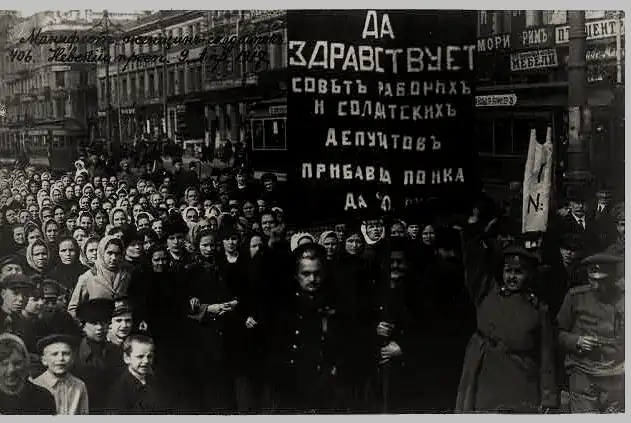
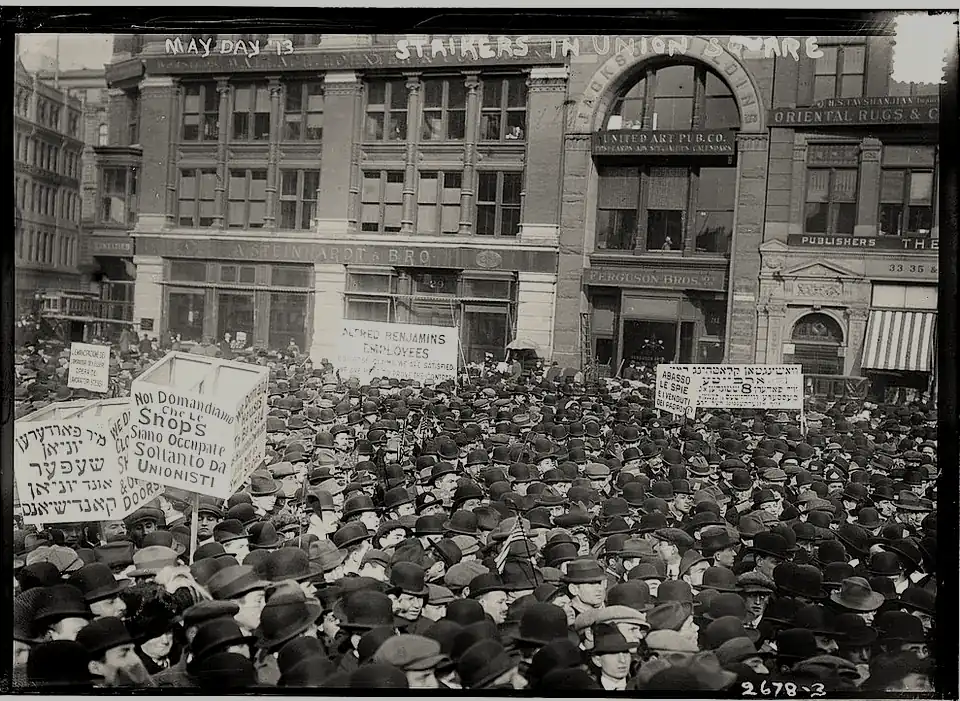
End of file · 24 October 2026

Facts are dated and sourced; the interpretation is the author’s. Illustrations are drawn in code or cut from Soviet and Chinese posters of 1926–1974 and from photographs credited in the sources.
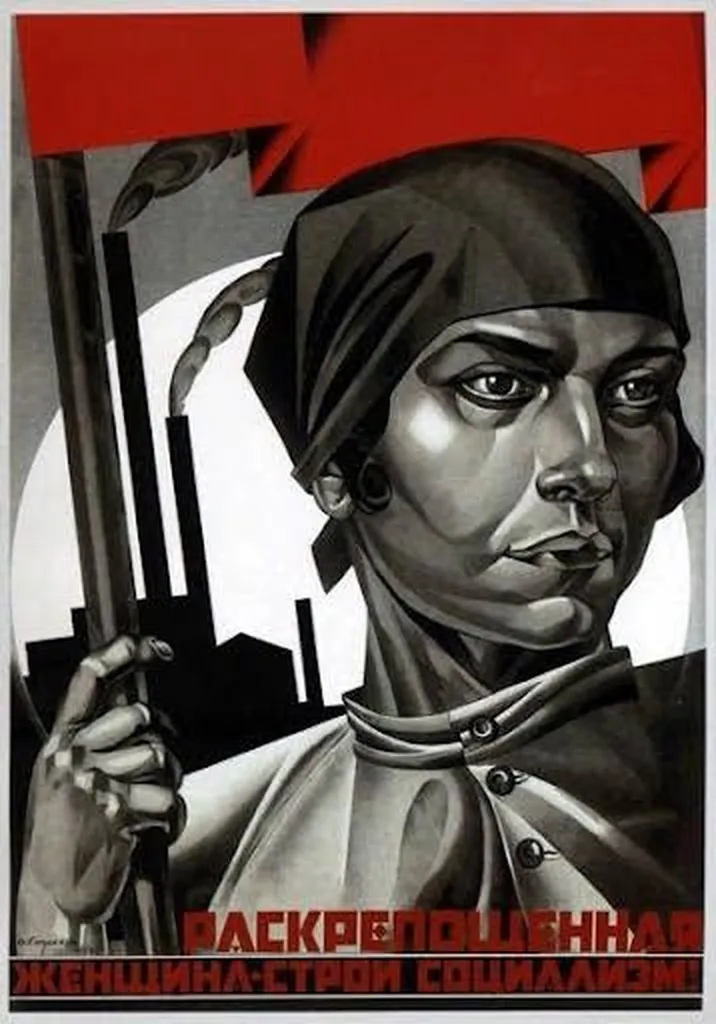
Appendix · Язык · the words of the file

Language

Bezmenov’s first stage works through words before it works through laws. Here the file counts its own: every word in the entries above, then every word in the sources list, set as mosaics as you scroll. Common English words such as the, of and and are left out. Your browser makes the tally when the page opens, so it follows every revision of the file.

“Political language … is designed to make lies sound truthful and murder respectable, and to give an appearance of solidity to pure wind.”

George Orwell, “Politics and the English Language”, 1946 · Orwell 1946

“Words can be like tiny doses of arsenic: they are swallowed unnoticed, appear to have no effect, and then after a little time the toxic reaction sets in after all.”

On this page

Counting…

    In the sources

    Counting…