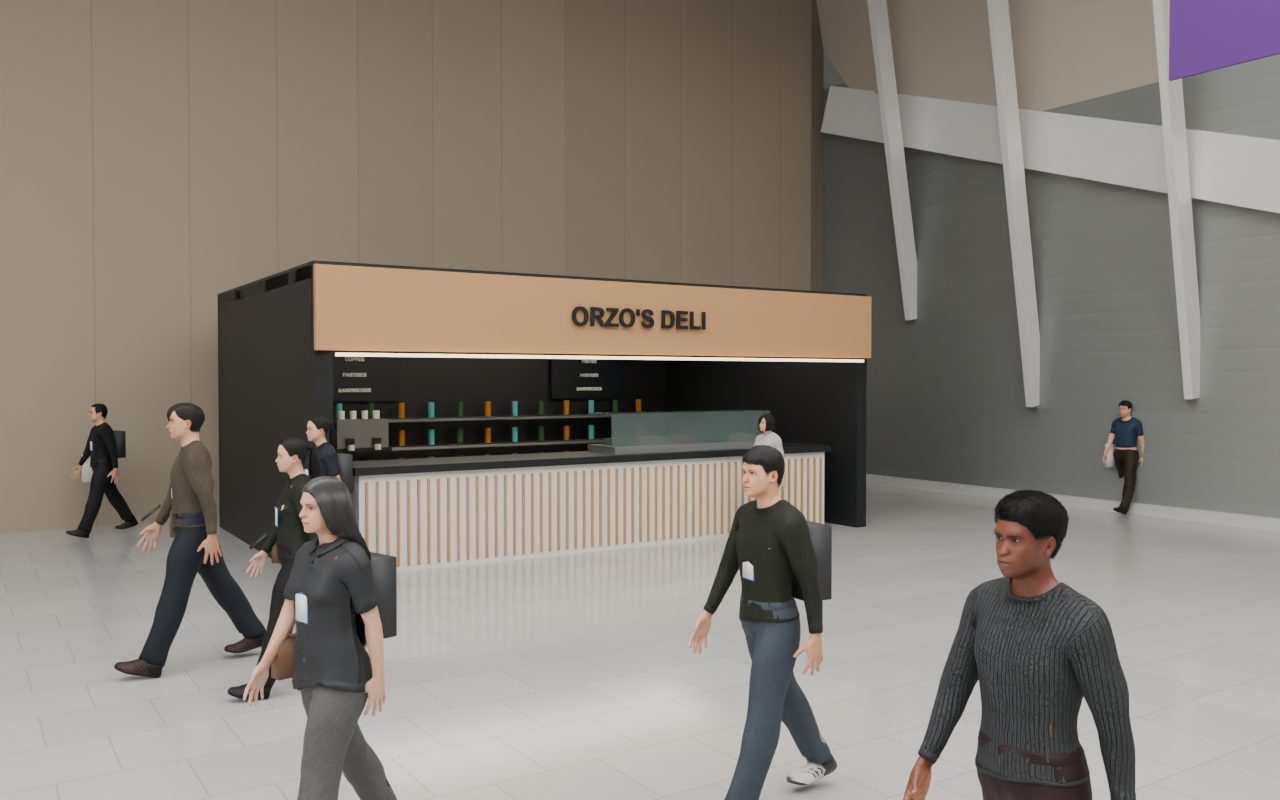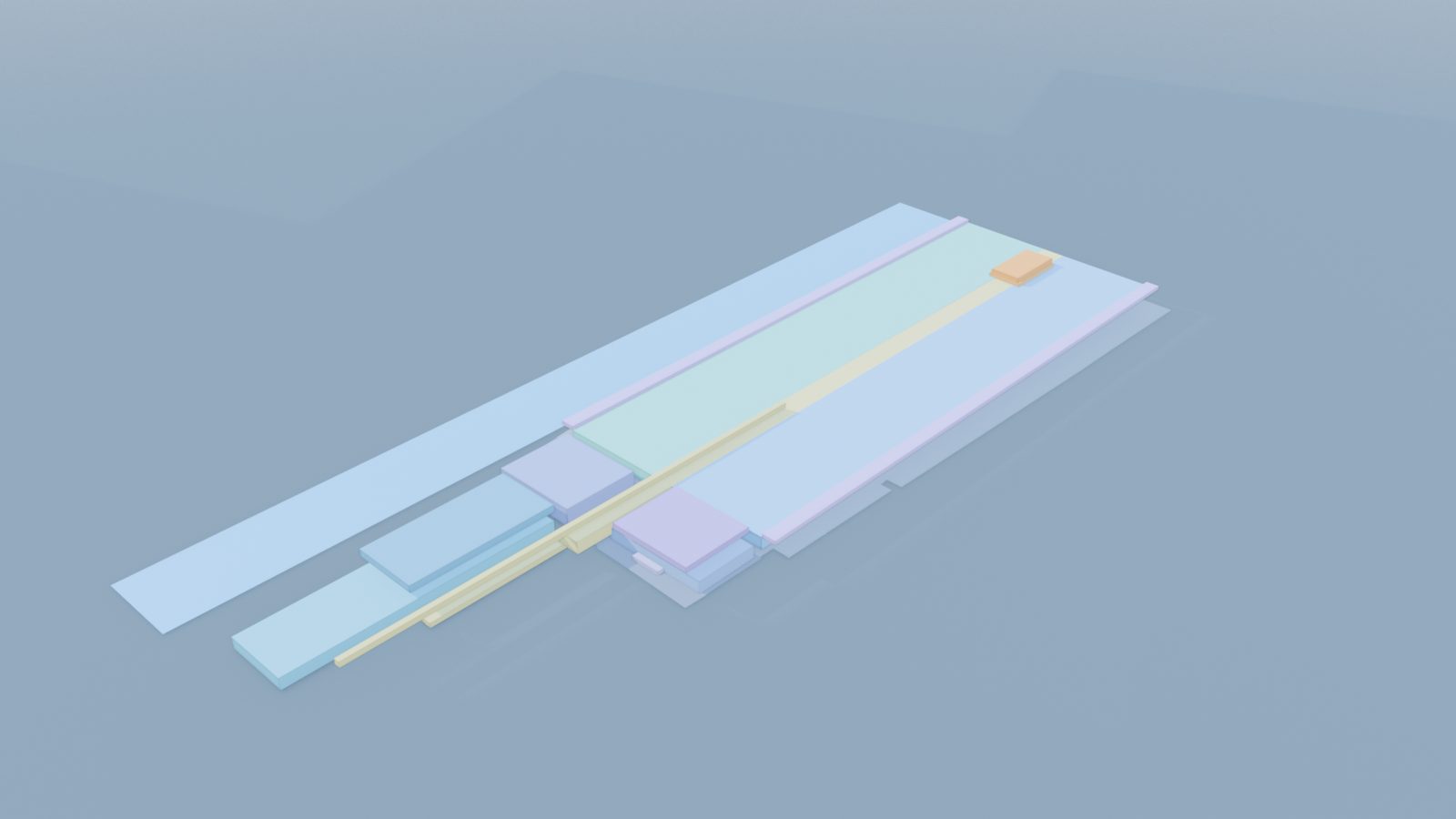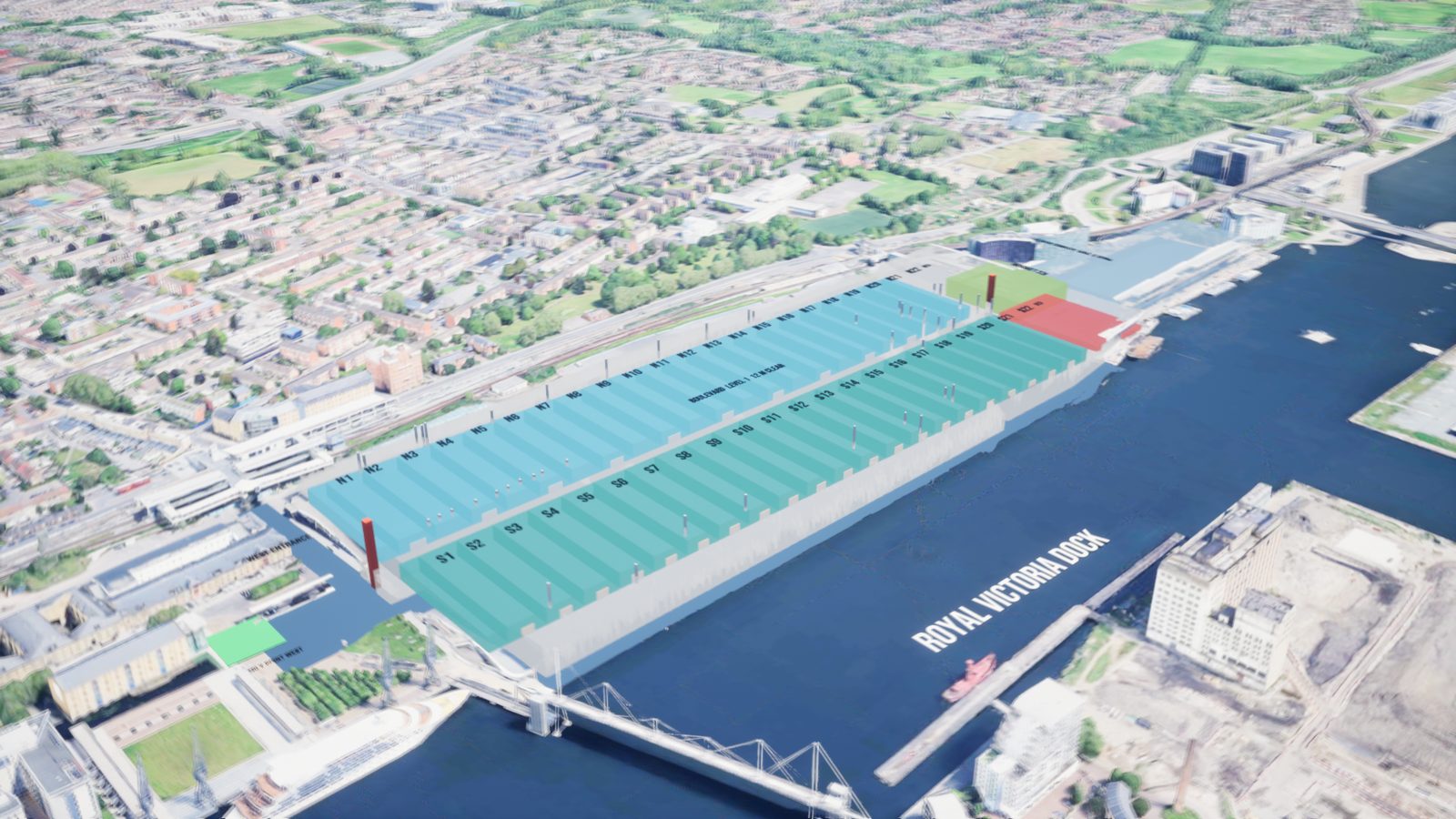
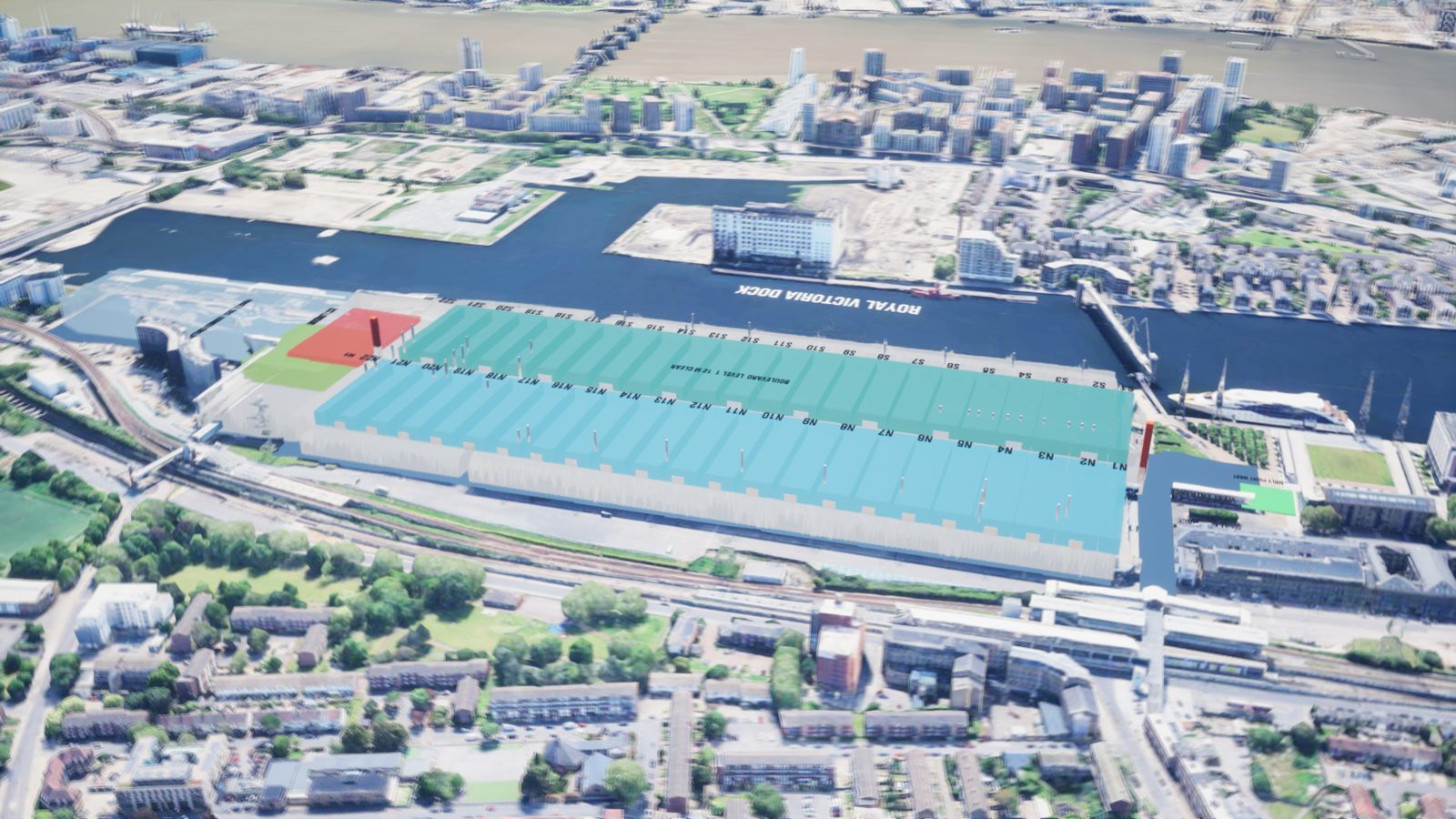

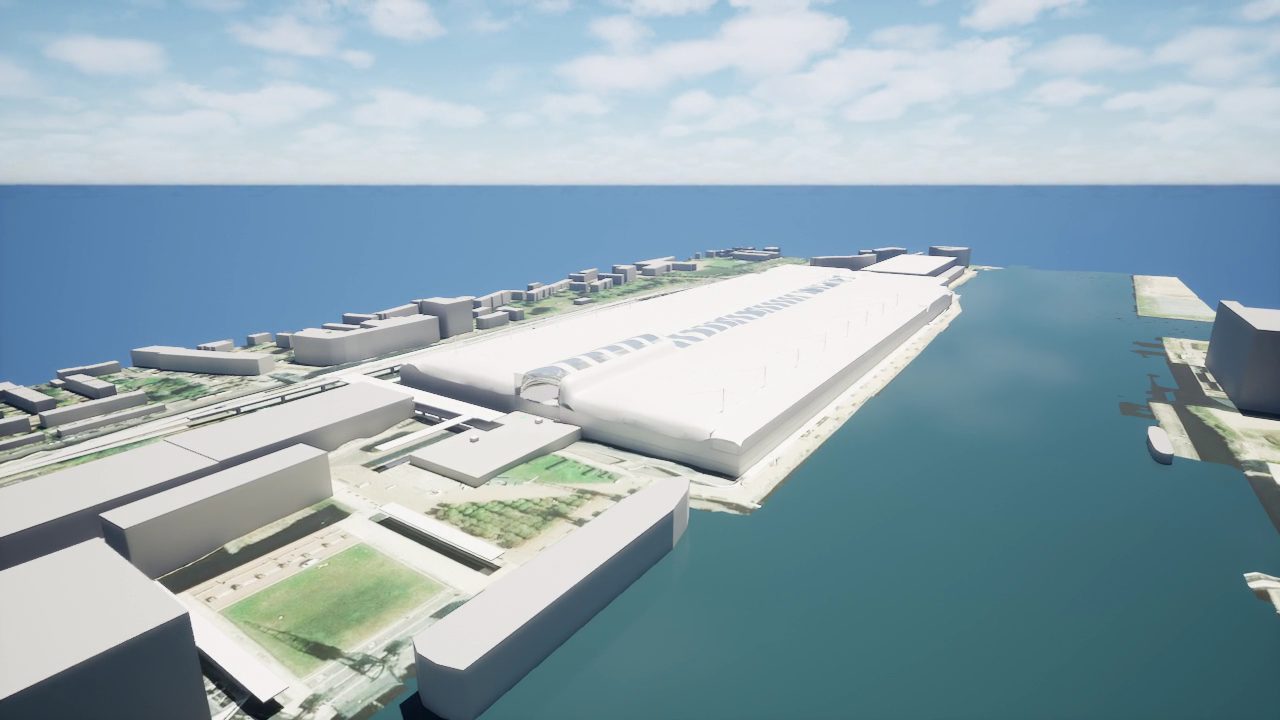
Blender 5.2 twin built by script from published dimensions, OpenStreetMap and Environment Agency LIDAR; Unreal Engine 5.8 project placed in Google Photorealistic 3D Tiles through Cesium.
Open the Claude Fable 5.1 model →One brief given to nine AI models between 21 Sep and 29 Oct 2026: an engineering and security digital twin of ExCeL London and the Royal Victoria Dock from published sources only. Five runs produced a 3D model. Each has its own page here with the model in the browser and two overview shots.
| Model | Date | Deliverable | Web model |
|---|---|---|---|
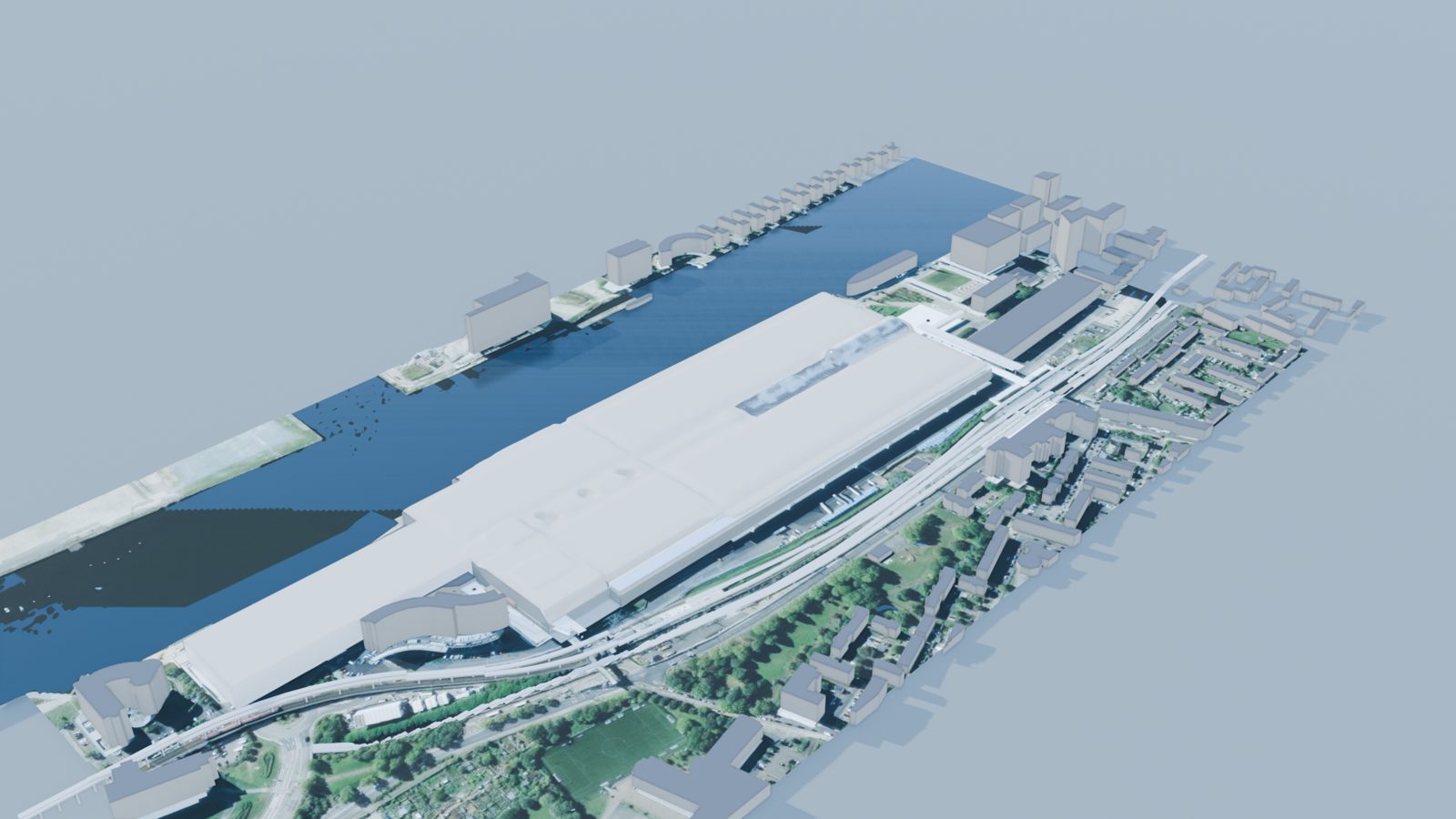
| Claude Fable 5.1 Anthropic, Claude Code | 29 Oct 2026 | Blender 5.2 twin built by script from published dimensions, OpenStreetMap and Environment Agency LIDAR; Unreal Engine 5.8 project placed in Google Photorealistic 3D Tiles through Cesium. | GLB in three.js, 2.2 MB |
| Claude Opus 5.5 Anthropic, Claude Code | 22 to 23 Oct 2026 | Blender twin v07 traced from the venue's CAD floor plans with OpenStreetMap, LIDAR and a satellite mosaic; Unreal Engine 5.8 project with a MetaHuman crowd and JuPedSim pedestrian scenarios. | GLB in three.js, 7.4 MB |
| GPT-6.1 Sol OpenAI, Codex | 22 to 23 Oct 2026 | Plan-derived continuation of the Opus 5.5 baseline: a traced Maritime facilities layer, a coverage audit and visual passes v08 and v09 over the Boulevard and retail units in Blender 5.3. | GLB in three.js, 10 MB |
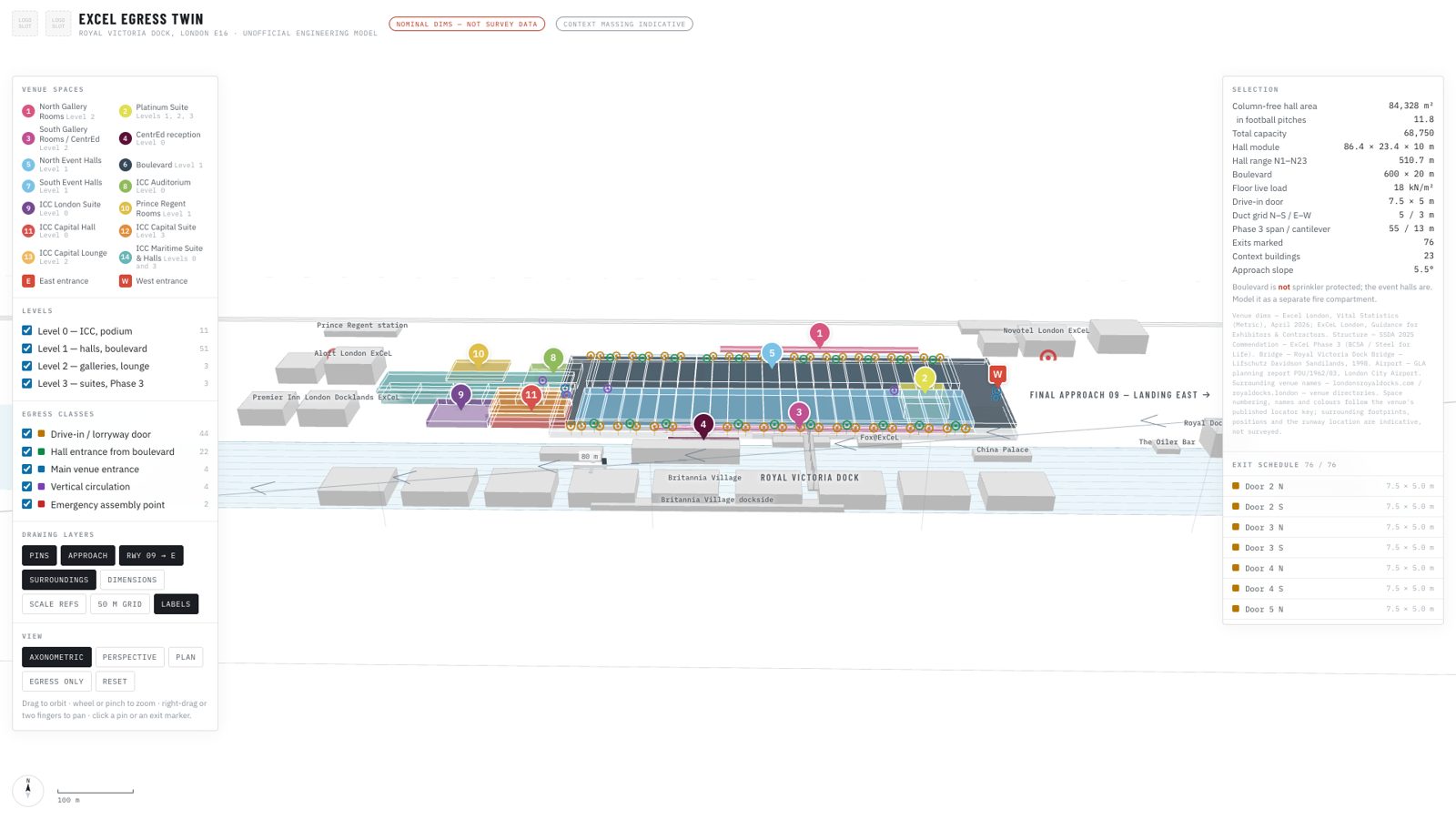
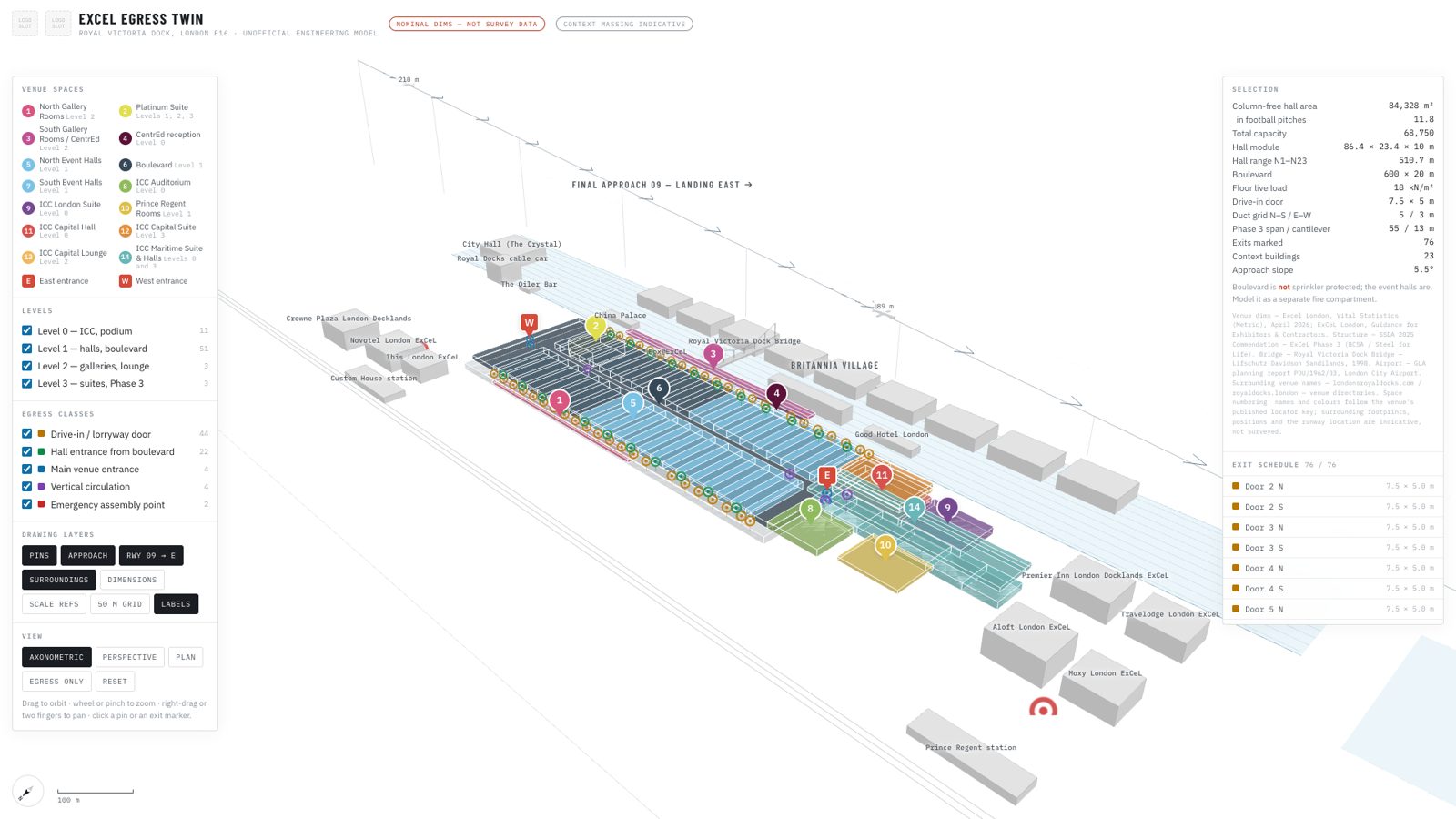
| Claude Opus 5 Anthropic, Claude Code | 21 Sep 2026 | A single-file WebGL egress twin: 67 massing volumes, 76 marked exits, the Boulevard, assembly points and the London City Airport runway 09 approach, with the capacity figures from the source corpus in its panel. | its own WebGL page, 0.06 MB |
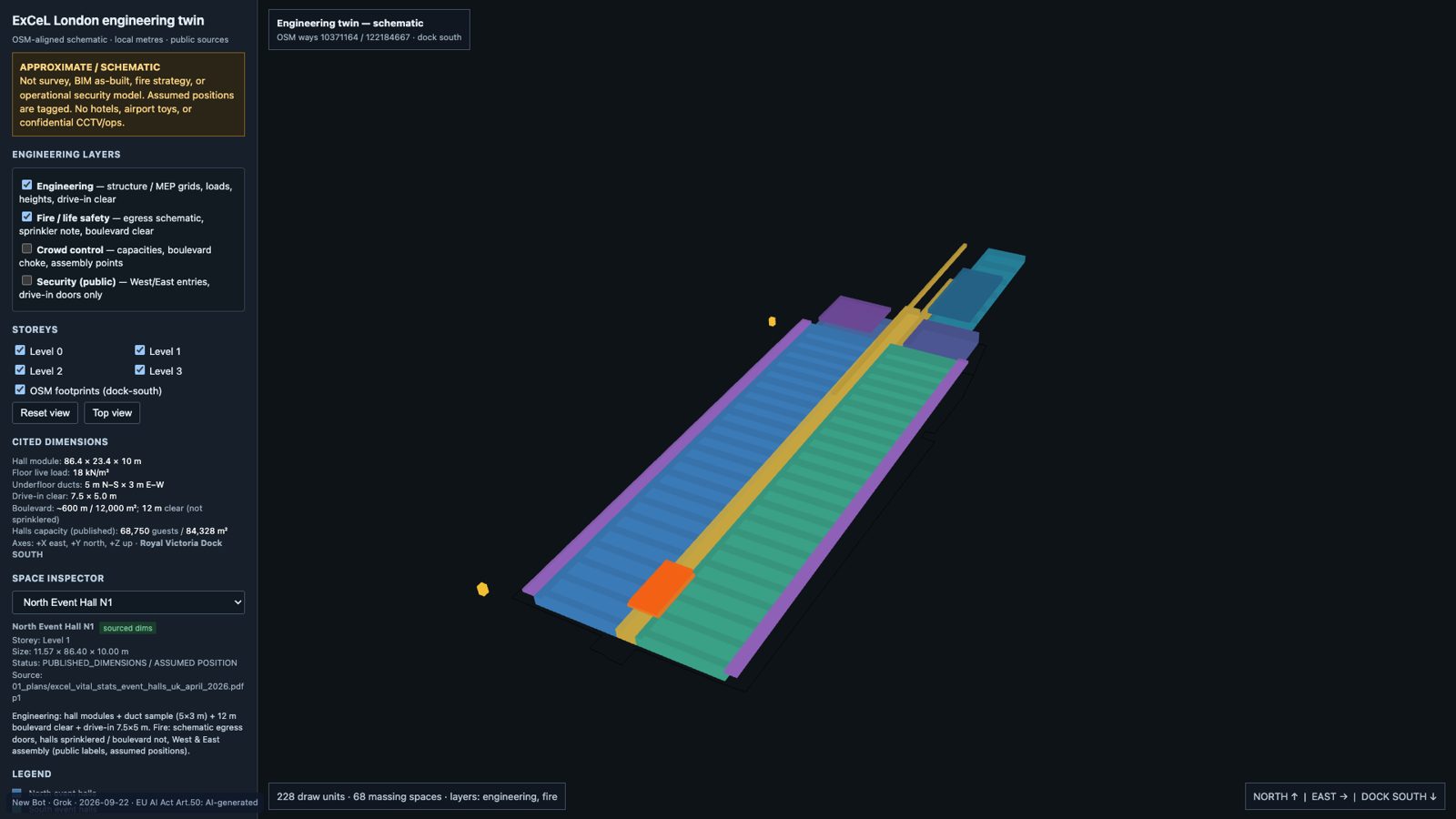
| Grok xAI | 22 Sep 2026 | A WebGL engineering twin with 68 massing spaces and a space inspector, plus IFC4 and GLB massing files, four GeoJSON layers and a schematic door schedule. | its own WebGL page, 0.9 MB |
| MiniMax M3 | 21 Sep 2026 | Source corpus only: 38 files, 28 PDFs, including the Master Level 0 plan and event risk assessments the other September runs did not find | none |
| Kimi | 21 Sep 2026 | Empty folder | none |
| WorkBuddy | 21 Sep 2026 | Empty folder | none |
| Yuanbao | 21 Sep 2026 | One CSV with eight document requests (as-built DWG and IFC, fire strategy, CCTV schedule), no model | none |
Every run started from the same folder convention: the public source corpus classed into plans, fire guidance, security framework, construction record and operations, with a manifest, provenance note and AI disclosure, then the model's own 3D deliverable. Later runs read the earlier folders; none edited them.


Blender 5.2 twin built by script from published dimensions, OpenStreetMap and Environment Agency LIDAR; Unreal Engine 5.8 project placed in Google Photorealistic 3D Tiles through Cesium.
Open the Claude Fable 5.1 model →
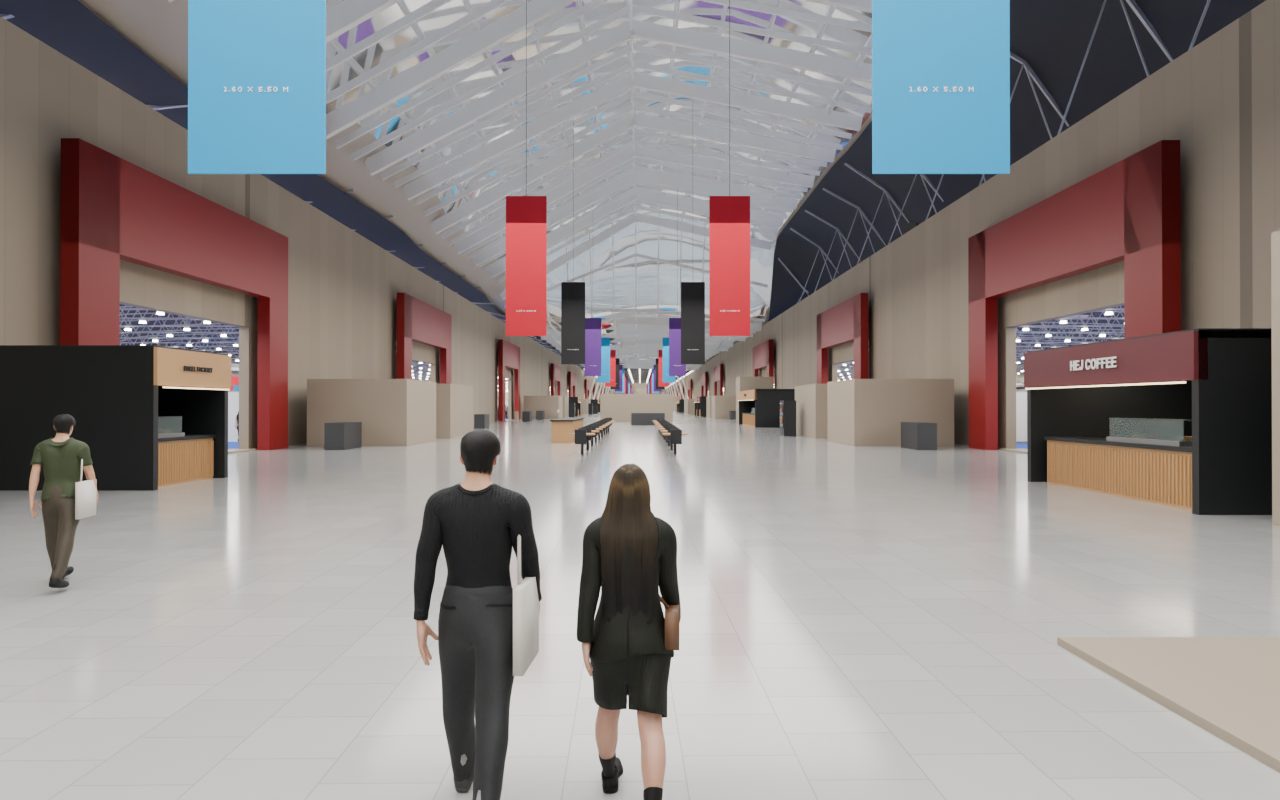
Blender twin v07 traced from the venue's CAD floor plans with OpenStreetMap, LIDAR and a satellite mosaic; Unreal Engine 5.8 project with a MetaHuman crowd and JuPedSim pedestrian scenarios.
Open the Claude Opus 5.5 model →

Plan-derived continuation of the Opus 5.5 baseline: a traced Maritime facilities layer, a coverage audit and visual passes v08 and v09 over the Boulevard and retail units in Blender 5.3.
Open the GPT-6.1 Sol model →

A single-file WebGL egress twin: 67 massing volumes, 76 marked exits, the Boulevard, assembly points and the London City Airport runway 09 approach, with the capacity figures from the source corpus in its panel.
Open the Claude Opus 5 model →

A WebGL engineering twin with 68 massing spaces and a space inspector, plus IFC4 and GLB massing files, four GeoJSON layers and a schematic door schedule.
Open the Grok model →WebGL deliverables were captured in headless Chrome on an Apple M5 while a script turned their own camera through a full orbit. GLB exports were rendered in Blender 5.2 as turntables with an October sun. The Fable 5.1 twin was rendered from its Blender scene with EEVEE and from its Unreal Engine 5.8 project with the Movie Render Queue, inside Google Photorealistic 3D Tiles. The clips were joined by ffmpeg with a title overlay per segment naming the model, the deliverable, its date and its file path.
The web models on each page are the deliverables themselves: the two single-file WebGL viewers run as published, and the GLB exports are shown in three.js after meshopt compression (the GPT-6.1 Sol file is also simplified to half its triangles).
ExCeL London vital statistics, floor plans and organiser guidance; Home Office and ProtectUK guidance; GLA and LB Newham planning and flood documents; the BCSA and Steel for Life Phase 3 structural record; OpenStreetMap (ODbL); Environment Agency LIDAR (Open Government Licence); Google Photorealistic 3D Tiles through Cesium ion (Unreal render only); Esri World Imagery (Opus 5.5 ground).
All twins are schematic models from published dimensions, not surveys or as-built drawings. Nothing here comes from the venue's internal documents. AI-generated content under Regulation (EU) 2024/1689 Art. 50; deployer Bart Sakwerda, London.